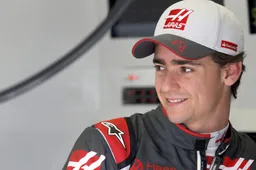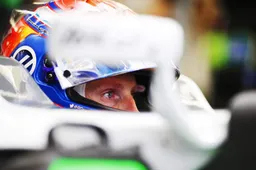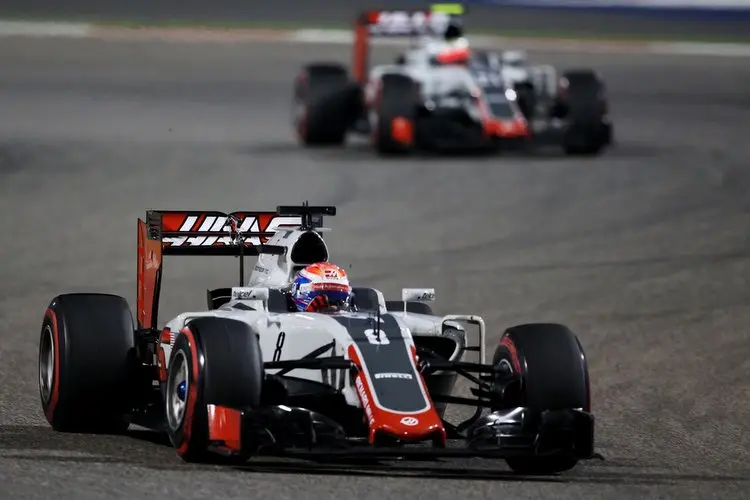
After a rocketing start to its debut season in the FIA Formula One World Championship, Haas F1 Team came back to Earth last weekend in the Chinese Grand Prix in Shanghai.
The first American Formula One team in 30 years shot the moon when driver Romain Grosjean finished sixth in the season-opening Australian Grand Prix and then backed it up by orbiting to an even more impressive fifth-place finish two weeks later in the Bahrain Grand Prix.
But in Round 3 at China, Haas F1 Team’s metaphorical space exploration became grounded when Grosjean and teammate Esteban Gutiérrez struggled with the aerodynamic and mechanical balance of their respective VF-16s. After back-to-back point-scoring efforts to open the season, Grosjean finished out of the points in 19th. Gutiérrez finished five spots ahead in 14th.
All was not lost, however, since both drivers finished the race, something that even with the accolades earned in Australia and Bahrain, hadn’t happened prior to China. Gutiérrez’s finish was his first of the year after enduring consecutive retirements in Rounds 1-2.
With both success and adversity now squarely in its rearview mirror, Haas F1 Team can target the upcoming Russian Grand Prix in Sochi for its next mission – both drivers scoring point-paying finishes.
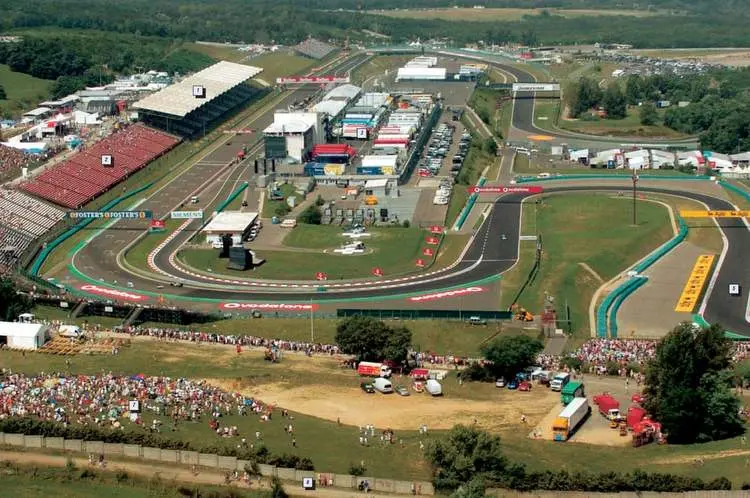
Sochi Autodrom is a 5.848-kilometer (3.634-mile), 18-turn circuit that is the third-longest track on the Formula One calendar behind only Spa-Francorchamps (7.004 kilometers/4.352 miles) and Silverstone (5.891 kilometers/3.660 miles). Winding along the immediate outskirts of the Olympic Village that anchored the 2014 Winter Olympics, Sochi has hosted only two grand prix.
Despite the short tenure, Sochi is best known for its smooth surface, which puts grip at a premium. Tire degradation is minimal compared to most venues, allowing teams to employ a one-stop strategy while still giving its drivers the freedom to push hard – but not too hard. Sochi is an exceptionally technical circuit, characterized by hard braking into low-speed corners followed by the need for a smooth throttle on exit as drivers put their car’s power to the pavement.
Finding this equilibrium comes via a driver’s innate feel for the edge of control and his team’s in-depth understanding of the racecar. It’s a balance made all the more difficult by the sophisticated complexity of the modern-day Formula One car. It has forced teams to employ actual rocket scientists in order to wring all it can from the package it places on the track.
The May 1 Russian Grand Prix is not a mission to Mars, but in Haas F1 Team’s sojourn to Sochi, the lessons learned from its breakthroughs and bumps gives the hard-working outfit a solid launchpad for an upward trajectory.
Sochi Autodrom
- Circuit Length: 5.848 km (3.364 miles)
- Laps: 53
- Race Distance: 309.745 km (192.467 miles)
- Date: May 1
- Broadcast: CNBC
- Time: 7 a.m. ET (Pre-Race)
- 8 a.m. ET (Start)
- Valtteri Bottas holds the race lap record at Sochi (1:40.896), set in 2014 with Williams.
- Lewis Hamilton holds the qualifying lap record at Sochi (1:38.338), set in 2014 with Mercedes.
The Sochi Autodrom is one of the many new Formula One circuits designed by Hermann Tilke. It is an exceptionally technical circuit, characterized by hard braking into low-speed corners. However, it is also one of the longest tracks in Formula One, as only Spa-Francorchamps (7.004 kilometers/4.352 miles) and Silverstone (5.891 kilometers/3.660 miles) are longer. In total, there are 12 right-hand and six left-hand corners, with a 650-meter (2,133 foot) straight between the first and second turns.
Of Sochi’s 5.848-kilometer (3.634-mile) layout, 1.7 kilometers (1.056 miles) are run on public roads. The surfaces of both the public road and the purpose-built portions are incredibly smooth, and the track remained consistent between its debut in 2014 and when Formula One returned last October. Tire degradation is minimal compared to most tracks, allowing for teams to employ a one-stop strategy while still giving drivers the freedom to push hard.
The Sochi Autodrom is one of four Formula One venues with ties to the Olympics. Sochi hosted the 2014 Winter Olympics and the city’s massive buildup was specifically for those games. Prior to Sochi, the Circuit de Barcelona – Catalunya was home to the start/finish line for the road team time trial cycling event when Barcelona hosted the 1992 Summer Olympics.
The backstraight at the Circuit Gilles Villeneuve in Montreal runs adjacent to the Olympic rowing basin used during the 1976 Summer Olympics. And the Magdalana Mixhuca Sports City, in which the Autodromo Hermanos Rodriguez is located, hosted numerous events during the 1968 Summer Olympics in Mexico City.
During the course of this weekend’s Russian Grand Prix in Sochi, lows will range from 6-10 degrees Celsius (43-50 degrees Fahrenheit) to highs of 14-17 degrees Celsius (57-63 degrees Fahrenheit). The median cloud cover ranges from 89 to 94 percent (mostly cloudy), and the average probability of rainfall on any given day is 47 percent. Relative humidity ranges from 55 percent (mildly humid) to 97 percent (very humid), with a dew point varying from 3 degrees Celsius/37 degrees Fahrenheit (dry) to 12 degrees Celsius/53 degrees Fahrenheit (very comfortable). The dew point is rarely below -2 degrees Celsius/28 degrees Fahrenheit (dry) or above 14 degrees Celsius/57 degrees Fahrenheit (comfortable). Typical wind speeds vary from 0 kph/0 mph to 18 kph/11 mph (calm to gentle breeze), rarely exceeding 27 kph/17 mph (moderate breeze).
DYK? The original Russian Grand Prix was held 103 years ago in St. Petersburg, and it was won by a local, Georgy Suvorin in a Mercedes. The race was run again the following year, won by German driver Willy Scholl, again in a Mercedes.
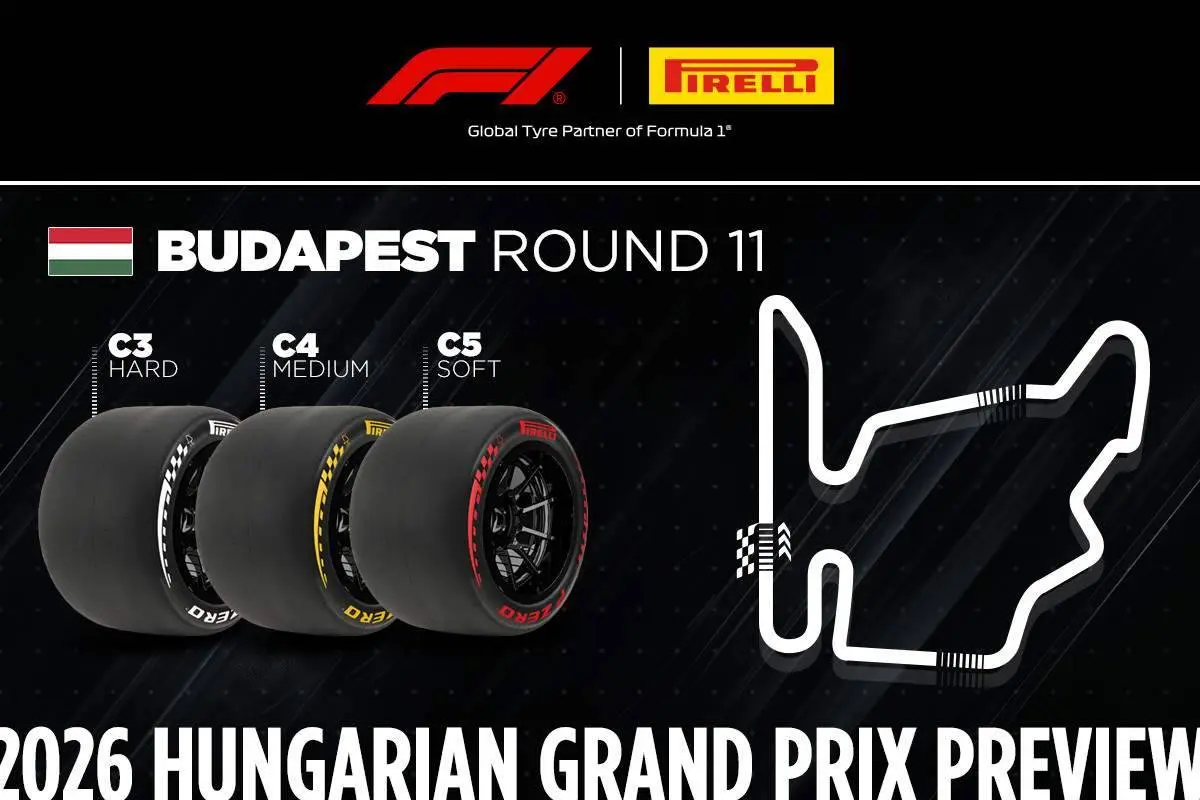
Pirelli is bringing three tire compounds to Russia:
- P Zero White medium – less grip, less wear (used for long-race stints)
- P Zero Yellow soft – more grip, medium wear (used for shorter-race stints and for initial portion of qualifying)
- P Zero Red supersoft – highest amount of grip, highest amount of wear (used for qualifying and select race situations)
- Two of the three available compounds must be used during the race. Teams are able to decide when they want to run which compound, adding an element of strategy to the race. (If there are wet track conditions, the Cinturato Blue full wet tire and the Cinturato Green intermediate tire will be made available.)
- A driver can use all three sets of Pirelli tires in a race. For example, if they used the P Zero Red supersoft to advance from Q2 to Q3, they would start the race on those tires and attempt to make some lightning-quick laps to gain a margin over their counterparts before pitting for the P Zero White medium. Then depending on circumstances that unfold during the race, another pit stop could be made for the P Zero Yellow soft, allowing the driver to better attack during the race’s closing laps.
- Pirelli provides each driver 13 sets of dry tires for the race weekend. Of those 13 sets, drivers and their teams can choose the specifications of 10 of those sets from the three compounds Pirelli selected. The remaining three sets are defined by Pirelli – two mandatory tire specifications for the race (one set of P Zero White mediums and one set of P Zero Yellow softs) and one mandatory specification for Q3 (one set of P Zero Red supersofts). Haas F1 Team’s drivers have selected the following amounts:
- Grosjean: one set of P Zero White mediums, two sets of P Zero Yellow softs and 10 sets of P Zero Red supersofts
- Gutiérrez: one sets of P Zero White mediums, two sets of P Zero Yellow softs and 10 sets of P Zero Red supersofts
Guenther Steiner, Team Principal
After two very strong races to start the season, China proved to be a difficult weekend. While not the outcome you would’ve liked, was there a silver lining in that it helped keep the team grounded and forced everyone to dig even deeper to find solutions?
“I think at some point we always knew we’d have a setback, and it came in our third race. We’ll just try again in Russia to get it right and end up where we should be.”
“I think at some point we always knew we’d have a setback, and it came in our third race. We’ll just try again in Russia to get it right and end up where we should be.”
Grosjean’s experience was one of the many reasons Haas F1 Team hired him. During a weekend like what the team experienced in China, how valuable was his feedback in finding ways to improve the car?
“Romain’s feedback was very valuable, as always. We just couldn’t get the car to do what we wanted it to do. We had a problem with Esteban’s car, so he went out very little on Friday, which was part of our overall problem. We cannot make mistakes like that over the entire weekend. Not even Romain can catch up if we are not using our time as efficiently as possible. When Romain noted something was not right, we went back to our original (front) wing – our proven wing. With a rookie driver, he may have said we need to check something. Romain knew it wasn’t right and he knew we didn’t have enough time to experiment with it, so we needed to go back to something we knew.”
“Romain’s feedback was very valuable, as always. We just couldn’t get the car to do what we wanted it to do. We had a problem with Esteban’s car, so he went out very little on Friday, which was part of our overall problem. We cannot make mistakes like that over the entire weekend. Not even Romain can catch up if we are not using our time as efficiently as possible. When Romain noted something was not right, we went back to our original (front) wing – our proven wing. With a rookie driver, he may have said we need to check something. Romain knew it wasn’t right and he knew we didn’t have enough time to experiment with it, so we needed to go back to something we knew.”
For the first time this season, Gutiérrez was able to get in a full race at China, allowing Haas F1 Team to have both cars running at the finish. How important was that achievement for Gutiérrez, but also for the team, as they had to manage two cars at the same time for an entire race?
“The silver lining is we finished with two cars, which was a first for us. It wasn’t as successful as we wanted it to be, position-wise. We had seven pit stops total with the two drivers and they all worked well. We gained a lot of confidence in our pit stops, but we learned that managing two cars during a race is a lot more difficult that managing one. Now we are better prepared to take two cars to the finish, as we should.”
“The silver lining is we finished with two cars, which was a first for us. It wasn’t as successful as we wanted it to be, position-wise. We had seven pit stops total with the two drivers and they all worked well. We gained a lot of confidence in our pit stops, but we learned that managing two cars during a race is a lot more difficult that managing one. Now we are better prepared to take two cars to the finish, as we should.”
You’re a new team with only three races under its belt. If there was a way you could arrive at a venue more prepared, what would it be?
“As a new team, I would want an opportunity to test a few more days than the other teams. Give the new teams a freebie with three or more days of testing to get to know the car better, to get the team working better together so you can avoid the small mistakes you make early on that sometimes have big consequences. It’s wishful thinking, but knowing what I know now would have helped avoid the problems we had in China.”
“As a new team, I would want an opportunity to test a few more days than the other teams. Give the new teams a freebie with three or more days of testing to get to know the car better, to get the team working better together so you can avoid the small mistakes you make early on that sometimes have big consequences. It’s wishful thinking, but knowing what I know now would have helped avoid the problems we had in China.”
Would testing be about trying out various parts and pieces on the car, or more about getting the team more time to familiarize themselves with the car?
“It’s more about the team working together and getting to know the car better than trying to invent something new. If you have one new piece of equipment, you have very little time during the weekend to get the team together and know what to look for and really jell together. It’s not about going faster. It’s about not making mistakes so you don’t go slower. In general, it would be nice to have a few more days of testing.”
“It’s more about the team working together and getting to know the car better than trying to invent something new. If you have one new piece of equipment, you have very little time during the weekend to get the team together and know what to look for and really jell together. It’s not about going faster. It’s about not making mistakes so you don’t go slower. In general, it would be nice to have a few more days of testing.”
Would you like Haas F1 Team to take part in the Pirelli tire test that will help develop the 2017 tire?
“Unfortunately, we don’t have a 2015 car. All we have is a 2016 car, so we cannot do it. But it wouldn’t be something we would jump on because we’d rather concentrate on what we have now. We still have a lot to learn with this car.”
“Unfortunately, we don’t have a 2015 car. All we have is a 2016 car, so we cannot do it. But it wouldn’t be something we would jump on because we’d rather concentrate on what we have now. We still have a lot to learn with this car.”
We’ve had three grand prix so far this year and rain has been a part of two of them, at least in the days leading up to the race. While rain is an unwelcome sight at the racetrack, has the experience of running in the rain during practice at Australia and China benefited the team in that it’s one less new experience for them to encounter?
“I don’t think it matters one way or the other. The quantity of rain is always different. For sure you always learn, but I’d rather learn on dry conditions because there’s so much more you can take away. With wet conditions, you never have a standard wet setup. Dry is usually pretty standard and you can use it all the time.”
“I don’t think it matters one way or the other. The quantity of rain is always different. For sure you always learn, but I’d rather learn on dry conditions because there’s so much more you can take away. With wet conditions, you never have a standard wet setup. Dry is usually pretty standard and you can use it all the time.”
The first turn of the first lap of a grand prix is both exciting and chaotic. But in your role of team principal, how nerve-wracking is that moment, when one wrong move by someone else can ruin a weekend’s worth of work?
The Sochi Autodrom runs around the Olympic Village, as Sochi hosted the 2014 Winter Olympics. Do you follow the Olympics when they take place? Do you have a preference for either the Winter or Summer Olympics, and is there a specific event you like to watch?
“Coming from the mountains, I follow the winter games more closely. I’d say downhill skiing is what I follow most.”
“Coming from the mountains, I follow the winter games more closely. I’d say downhill skiing is what I follow most.”
Latest News

Loading