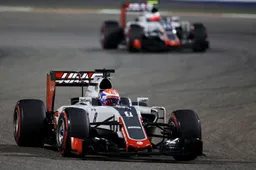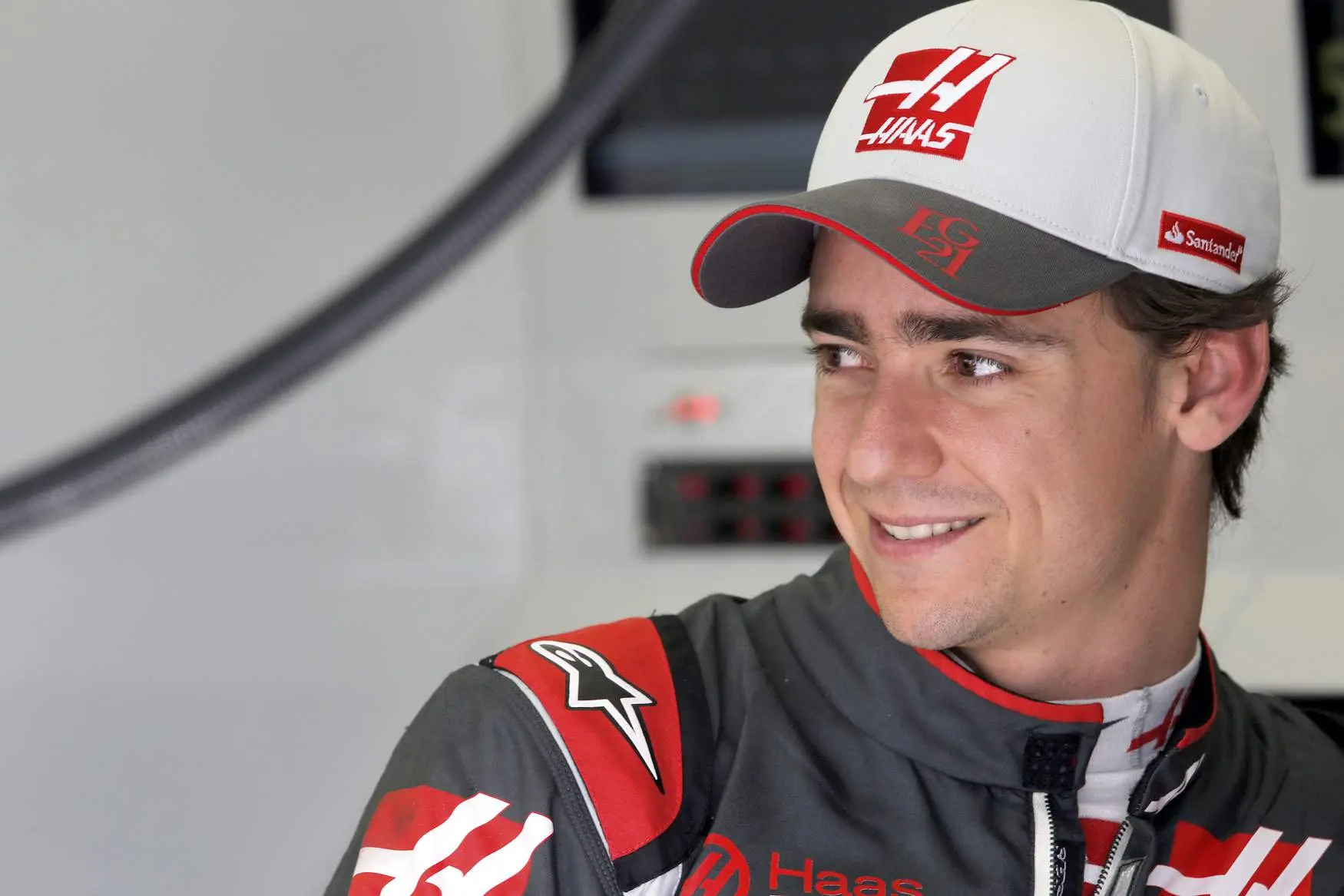
Esteban Gutierrez is finally getting his fair share of luck after with the Haas team, he now looks forward to his fourth race with the team at the Russian Grand Prix in Sochi.
China marked your first completed race in 2016. How was it to finally be able to run a full race distance, especially after the adversity you faced with the car on Friday that only allowed you four laps?
“It was a very big relief to finally do a lot of consecutive laps. I was enjoying the car and the race so much that I could have continued for another 50 laps, probably. It was quite a tricky situation by not being able to practice on Friday and having the wet session on Saturday morning. Basically, we didn’t have many laps under our belts and it was quite a challenge to arrive into qualifying directly without any preparation, but still having to do proper laps. I think we managed it pretty well as a team.”
“It was a very big relief to finally do a lot of consecutive laps. I was enjoying the car and the race so much that I could have continued for another 50 laps, probably. It was quite a tricky situation by not being able to practice on Friday and having the wet session on Saturday morning. Basically, we didn’t have many laps under our belts and it was quite a challenge to arrive into qualifying directly without any preparation, but still having to do proper laps. I think we managed it pretty well as a team.”
When the car is difficult to drive, what are some of the things you do behind the wheel to get the best out of the car?
“You can influence the car with your driving style. You just have to adapt. If I have an understeering car, I do a certain driving style and the other way around if I have an oversteering car. We have a lot of tools too, as you can see on the steering wheel with all the buttons we have. We have some tools there at our fingertips where can try and fix it.”
“You can influence the car with your driving style. You just have to adapt. If I have an understeering car, I do a certain driving style and the other way around if I have an oversteering car. We have a lot of tools too, as you can see on the steering wheel with all the buttons we have. We have some tools there at our fingertips where can try and fix it.”
Tire management was crucial at China, as the degradation rate was high. Now we go to the other end of the spectrum in Russia, where the track’s smooth surface means tires tend to last longer. Can you explain how you had to manage your tires in China compared to what you’ll be able to do with your tires in Russia?
“It’s quite different because in China, the main limitation was the front axle, and the front left tire was very sensitive. Russia is totally the opposite. It’s actually the rear tires that are the limitation, and at the same time, it’s a very low degradation track. So, the focus will be totally different, and it will allow us to have a bit more flexibility on strategy. I think our car has been pretty reasonable in tire degradation, so we can look forward to a positive weekend in Russia.”
“It’s quite different because in China, the main limitation was the front axle, and the front left tire was very sensitive. Russia is totally the opposite. It’s actually the rear tires that are the limitation, and at the same time, it’s a very low degradation track. So, the focus will be totally different, and it will allow us to have a bit more flexibility on strategy. I think our car has been pretty reasonable in tire degradation, so we can look forward to a positive weekend in Russia.”
The first corner of the first lap in every race seems chaotic. How do you balance seizing opportunity to advance your position with taking care of your racecar so that it doesn’t get damaged?
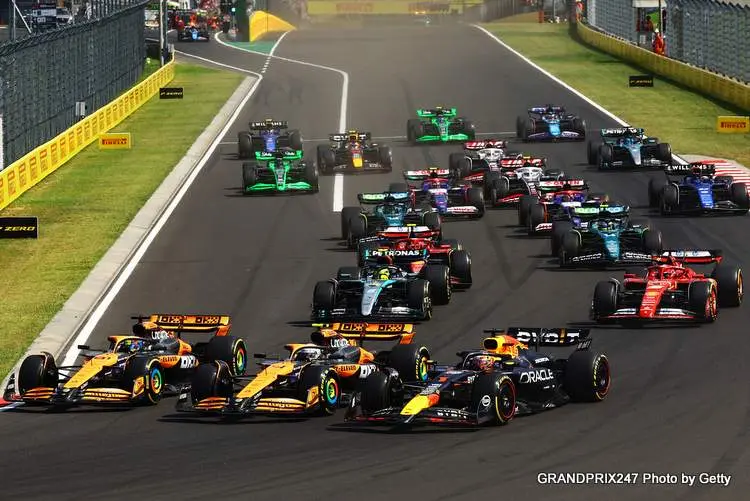
“It’s very important to get away from the crashes. In China into turns one and two, I had to avoid many pieces flying and cars crashing into each other. Obviously, it’s not ideal because by the time you try to avoid something in front, you also lose some positions from the back. I think it’s also important that from the start into turn one you have already made some positions by doing a good start. We’ve managed to do that in the last two grand prix. I plan to keep improving the start in order to get better and better to always be in a very good position into turn one and the next few corners.”
“It’s very important to get away from the crashes. In China into turns one and two, I had to avoid many pieces flying and cars crashing into each other. Obviously, it’s not ideal because by the time you try to avoid something in front, you also lose some positions from the back. I think it’s also important that from the start into turn one you have already made some positions by doing a good start. We’ve managed to do that in the last two grand prix. I plan to keep improving the start in order to get better and better to always be in a very good position into turn one and the next few corners.”
This year marks your first full Formula One season since 2014. In 2015, you spent a lot of time on the simulator and observing at races in the role of reserve driver at Ferrari. How do you take what you learned in the simulator and apply it to your time in the car, particularly this weekend at Sochi?
“The most important thing is that last year I was able to experiment a lot with my driving style in the simulator, and that gave me a pretty good knowledge of where I wanted to be and also develop different driving styles in order to adapt to different circumstances. I take every opportunity I can to be in the simulator. It helps in the development of the car’s setup, but also for myself. It gives me a wider selection of driving styles for me to adapt to any circumstance.”
“The most important thing is that last year I was able to experiment a lot with my driving style in the simulator, and that gave me a pretty good knowledge of where I wanted to be and also develop different driving styles in order to adapt to different circumstances. I take every opportunity I can to be in the simulator. It helps in the development of the car’s setup, but also for myself. It gives me a wider selection of driving styles for me to adapt to any circumstance.”
What is your favorite section of the Sochi Autodrom and why?
“I love the first sector. It’s a nice, big braking into turn one, then you have the long turn three which is flat out. Then you have a series of medium-speed corners which are also quite fun.”
“I love the first sector. It’s a nice, big braking into turn one, then you have the long turn three which is flat out. Then you have a series of medium-speed corners which are also quite fun.”
Explain a lap around the Sochi Autodrom.
“You arrive into turn one – it’s very big braking, quite a fairly long straight. Then you go out from turn one and arrive into turn three, which is a very fast, high-speed corner usually flat out. You arrive into turn four – it’s a medium-speed corner, quite important to get brake balance with the proper settings as you come from turn three which has a lot of lateral load. Next corner is turn five, which is a 90-degree corner. It’s a fourth-gear corner, and you can use all the curb available. Then you have an off-banking corner, so the track is going away from the apex to the exit of the corner, and this puts a bit of trickiness into the traction of the car. You have some medium-speed corners before the backstraight, which is not really a backstraight because it has a few corners which are part of the straight. The next corner is a hairpin. You arrive on the braking with a lot of lateral, and this requires a very different brake balance because it’s quite a big braking with a lot of cornering, which is a little bit like Bahrain. Then you exit the very slow-speed corner with a lot of lateral trying to prepare for the next corner, which is off-banking again, followed by a left-hander that is also off-banking. There’s a small straight before the last two corners, which are both 90 degrees. It’s important to have the tires up to temperature because you need the traction. It’s a track that is pretty stop-and-go. It requires a very different setup to what we had in China.”
“You arrive into turn one – it’s very big braking, quite a fairly long straight. Then you go out from turn one and arrive into turn three, which is a very fast, high-speed corner usually flat out. You arrive into turn four – it’s a medium-speed corner, quite important to get brake balance with the proper settings as you come from turn three which has a lot of lateral load. Next corner is turn five, which is a 90-degree corner. It’s a fourth-gear corner, and you can use all the curb available. Then you have an off-banking corner, so the track is going away from the apex to the exit of the corner, and this puts a bit of trickiness into the traction of the car. You have some medium-speed corners before the backstraight, which is not really a backstraight because it has a few corners which are part of the straight. The next corner is a hairpin. You arrive on the braking with a lot of lateral, and this requires a very different brake balance because it’s quite a big braking with a lot of cornering, which is a little bit like Bahrain. Then you exit the very slow-speed corner with a lot of lateral trying to prepare for the next corner, which is off-banking again, followed by a left-hander that is also off-banking. There’s a small straight before the last two corners, which are both 90 degrees. It’s important to have the tires up to temperature because you need the traction. It’s a track that is pretty stop-and-go. It requires a very different setup to what we had in China.”
The Sochi Autodrom runs around the Olympic Village, as Sochi hosted the 2014 Winter Olympics. Do you follow the Olympics when they take place? Do you have a preference for either the Winter or Summer Olympics, and is there a specific event you like to watch?
Latest News

Loading