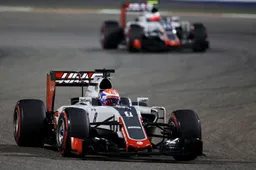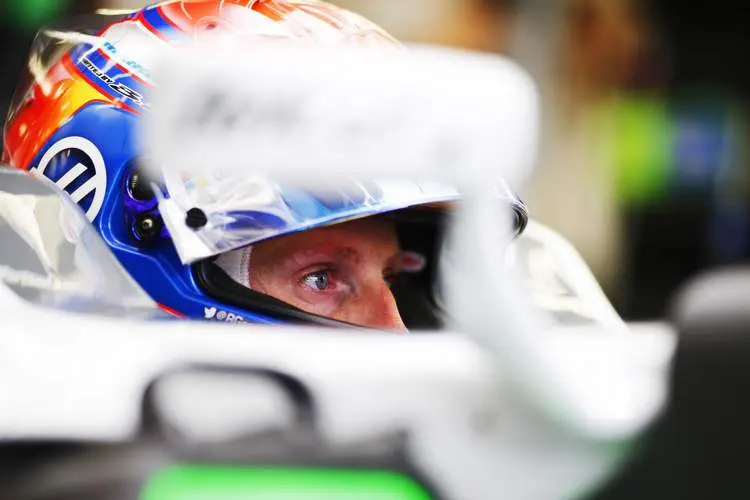
Romain Grosjean and his Haas team enjoyed a heady couple of races at the start of the 2016 season, but they came down to earth with a bump in China - now the Frenchman looks ahead to the Russian Grand Prix at Sochi Autodrom.
After two very strong races to start the season, China proved to be a difficult weekend. While not the outcome you would’ve liked, was there a silver lining in that it helped keep the team grounded and forced everyone to dig even deeper to find solutions?
“It was a difficult weekend for us and certainly not the outcome we had wanted. It still feels like it was a negative weekend, but in the near future, I’m sure we’ll see positives from it because it’s in the tough situations you learn the most. Hopefully, we can learn what happened. If anything was wrong with the car, what can we do better? What can we do differently? How do we react in a better way if we find ourselves in a similar situation? I think it’s one of those things you have to face as a new team, but I’m sure we’re going to react very well, as we have done so far every time.”
“It was a difficult weekend for us and certainly not the outcome we had wanted. It still feels like it was a negative weekend, but in the near future, I’m sure we’ll see positives from it because it’s in the tough situations you learn the most. Hopefully, we can learn what happened. If anything was wrong with the car, what can we do better? What can we do differently? How do we react in a better way if we find ourselves in a similar situation? I think it’s one of those things you have to face as a new team, but I’m sure we’re going to react very well, as we have done so far every time.”
When the car is difficult to drive, what are some of the things you do behind the wheel to get the best out of the car?
“You have a few tools you can use in the car to change and fine-tune things like the aero balance. But when you’re not very happy with your car and the setup’s not behaving the way it should be, it’s very difficult in a very competitive world to recover.”
“You have a few tools you can use in the car to change and fine-tune things like the aero balance. But when you’re not very happy with your car and the setup’s not behaving the way it should be, it’s very difficult in a very competitive world to recover.”
Your experience was one of the many reasons Haas F1 Team wanted you, as you’re able to provide strong feedback on what the car is doing. Obviously, you had to do a lot of work inside the car at China, but what kind of work did you have to do outside the car in an attempt to make it better?
“Formula One is a sport where you’re on your own in the car, but there are a lot of people behind you, from mechanics in the garage and the engineers setting up the car, through to the team owner and our sponsor, Haas Automation. We spend a lot of time debriefing and trying to find the best solutions for any problems we have. It’s something I very much like. It’s very interesting trying to find the best setup whenever you have issues or problems. Experience helps in those situations. Sometimes it’s not quite everything you need, but it helps you to find the problems or the solutions.”
“Formula One is a sport where you’re on your own in the car, but there are a lot of people behind you, from mechanics in the garage and the engineers setting up the car, through to the team owner and our sponsor, Haas Automation. We spend a lot of time debriefing and trying to find the best solutions for any problems we have. It’s something I very much like. It’s very interesting trying to find the best setup whenever you have issues or problems. Experience helps in those situations. Sometimes it’s not quite everything you need, but it helps you to find the problems or the solutions.”
Tire management was crucial at China, as the degradation rate was high. Now we go to the other end of the spectrum in Russia, where the track’s smooth surface means tires tend to last longer. Can you explain how you had to manage your tires in China compared to what you’ll be able to do with your tires in Russia?
“China is one of those tracks where it’s completely front-limited. The front-left tire suffers the most from the circuit. Russia is a very different one. It’s going to be more in line with Bahrain, so that’s going to be great. I hope we get the car back to where we want it and the better the setup, the easier it is to manage your tires.”
“China is one of those tracks where it’s completely front-limited. The front-left tire suffers the most from the circuit. Russia is a very different one. It’s going to be more in line with Bahrain, so that’s going to be great. I hope we get the car back to where we want it and the better the setup, the easier it is to manage your tires.”
The Sochi Autodrom has hosted only two grand prix. How consistent was the track from 2014 to 2015, and do you expect the track surface to behave similarly to what you experienced last year?
“The first year on a new track is always tricky because there is a lot of oil coming from the new tarmac. After a year it gets better. I think Russia will be much more in line with 2015 than 2014, and that should be a bit better for us.”
“The first year on a new track is always tricky because there is a lot of oil coming from the new tarmac. After a year it gets better. I think Russia will be much more in line with 2015 than 2014, and that should be a bit better for us.”
What is your favorite section of the Sochi Autodrom and why?
“I like turn three. It’s a very high-speed corner. I went a bit too fast there last year, but it’s a fun place. I think the corners flow into each other quite nicely. It’s a good track to drive.”
“I like turn three. It’s a very high-speed corner. I went a bit too fast there last year, but it’s a fun place. I think the corners flow into each other quite nicely. It’s a good track to drive.”
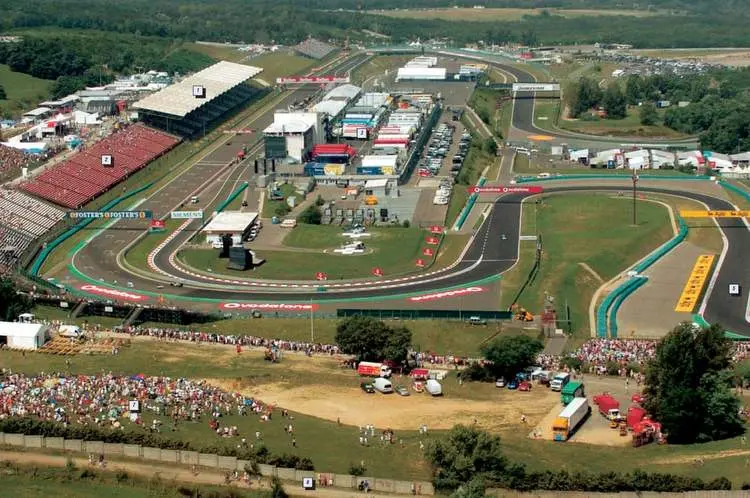
Explain a lap around the Sochi Autodrom...
“There’s a very long straight line to start, followed by big braking into a right-hand side corner, taken in third or fourth gear. Then you have the famous turn three, which is flat out in qualifying. Then you go into turn four – you can carry quite good speed into it. The next few corners are very similar. They flow nicely and you enjoy some good speed in the car. Then you go on the backstraight, again with very tricky braking. Then the last section of the track is much slower, in particular the last two corners. The pit entry is also a bit tricky. The finish line is straight at the last corner, so depending if you’re on a qualifying lap or a racing lap, each one is different.”
“There’s a very long straight line to start, followed by big braking into a right-hand side corner, taken in third or fourth gear. Then you have the famous turn three, which is flat out in qualifying. Then you go into turn four – you can carry quite good speed into it. The next few corners are very similar. They flow nicely and you enjoy some good speed in the car. Then you go on the backstraight, again with very tricky braking. Then the last section of the track is much slower, in particular the last two corners. The pit entry is also a bit tricky. The finish line is straight at the last corner, so depending if you’re on a qualifying lap or a racing lap, each one is different.”
The Sochi Autodrom runs around the Olympic Village, as Sochi hosted the 2014 Winter Olympics. Do you follow the Olympics when they take place? Do you have a preference for either the Winter or Summer Olympics, and is there a specific event you like to watch?
Fernand Grosjean, Romain’s grandfather, was a Swiss alpine skier who competed at the 1948 Winter Olympics in St. Moritz, Switzerland, and at the 1952 Winter Olympics in Oslo, Norway. In 1948, he finished eighth in the alpine skiing downhill competition and 16th in the combined event (downhill and slalom). In 1952, he finished 11th in the giant slalom competition. – Ed.
Latest News

Loading