Formula 1 Prize Money Breakdown: Prize Money Insights for Winners and Teams
F1 NewsWednesday, 20 May 2026 at 07:40
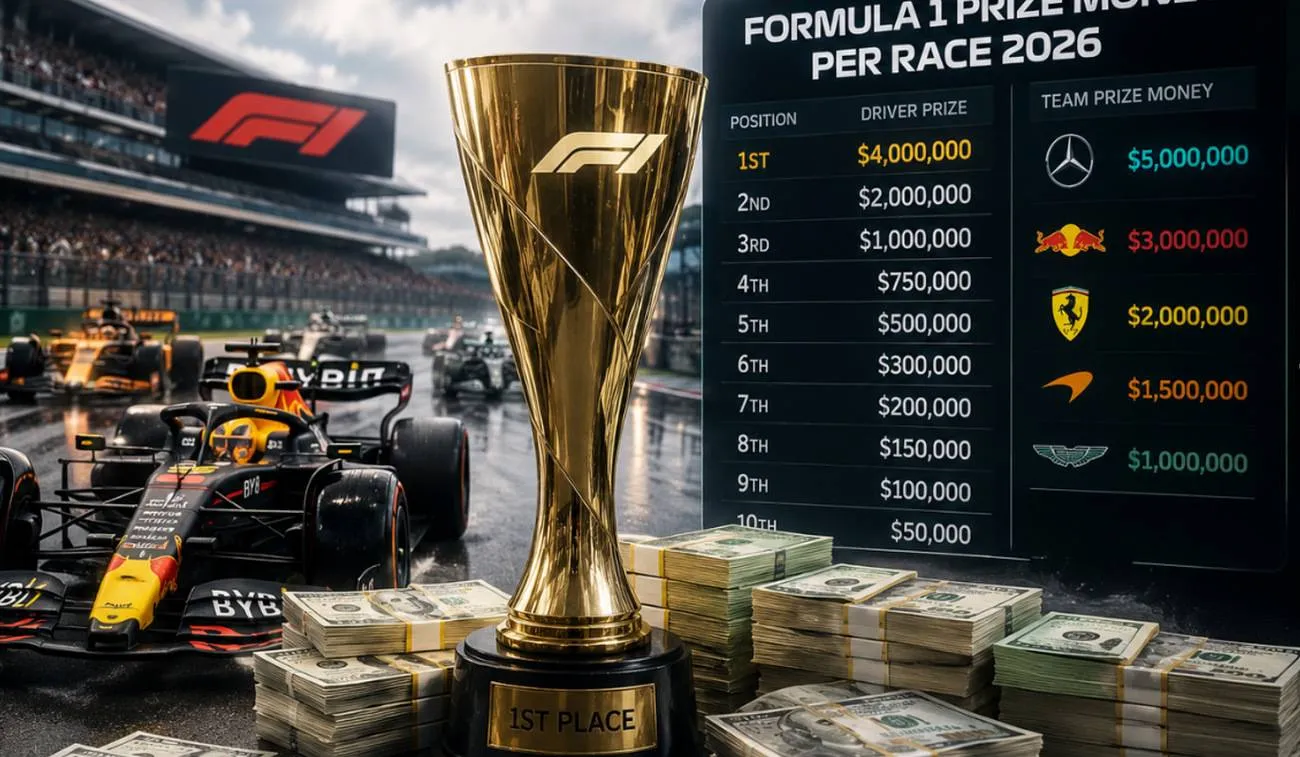
Formula 1 Prize Money Per Race 2026: What F1 Winners and Teams Really Make?
Formula 1 financially has never been
larger in the history than it is going into the 2026 season. Global TV
audiences, billion-dollar sponsorship deals, luxury hospitality packages, and
manufacturer investment are only a few of the ways that contribute to the sport
generating huge amounts of money every year.
One of the most pressing questions
fans often discuss is about formula 1 prize money per race and how much of this
income is actually shared with the teams and drivers. It is not as simple as just giving out
prize money to the winner of each Grand Prix.
For one thing, unlike in tennis or golf
where prize money is given directly to the winners, Formula 1 has a very
intricate system for the money distribution which takes into account a lot of
aspects like constructors' standings, commercial deals, historic bonuses,
sponsorship incentives and driver contracts.
Race winners certainly get
performance bonuses but the overall financial landscape is vastly bigger.
Followers of motorsport analysis, predictions, and betting markets on different
betting sites
keep a keen eye on how the financial muscle of teams influences their
performance during the season.
How Formula 1 Generates Billions in Annual Revenue

Formula 1 is not merely a racing
championship nowadays. It works as a worldwide entertainment business that brings in billions
annually. The championship moves from continent to continent, draws hundreds of
millions of viewers, and even hosts races in cities that are ready to pay huge
sums to stay on the calendar.
The Role of Global Broadcasting Rights in F1 Profits
For now, broadcasting rights continue to
be the number one revenue stream for Formula 1. Leading sports channels all
over Europe, North America, Asia, and the Middle East invest huge amounts of
money to get exclusive live race coverage. Recently, streaming services have
also played a major factor in increasing the sport's value.
The surge in demand after the Netflix era
has turned Formula 1 into a widely recognized product in
areas where the sport had difficulty before. The US, in particular, is one of
the quickest-growing markets for the championship.
Each television contract is a direct
contributor to the pot of money that eventually gets divided among the teams.
The higher the worldwide viewership figures, the bigger the financial
distributions will be.
Sponsorship Deals Driving Team and Championship Earnings
Sponsorship money is everywhere in
Formula 1. Teams show many corporate partners on their cars, drivers' suits,
pit garages, and hospitality areas.
Luxury brands, crypto companies,
airlines, technology firms, and automotive manufacturers are all vying for
exposure. A single title sponsorship deal can be worth tens of millions
annually.
The expansion of aston martin f1 2026
ambitions has demonstrated how manufacturers turn Formula 1 into a worldwide
marketing platform. The brand value worldwide can be significantly boosted
through the worldwide exposure created by a successful season.
Why Formula 1 Remains One of the Richest Sports in the World

Formula 1 mixes top-line technology, star
culture, and luxury branding along with global TV broadcasting all into one
bundle. Not many sports can provide such a worldwide exposure level.
The presence of corporate leaders, stars,
political figures, and the extremely wealthy is what makes race weekends
special. Just the hospitality packages can run into thousands per guest.
Through sponsorships, hosting fees, merchandise, and media rights, Formula 1
turns into one of the most lucrative sports ecosystems in the world.
How Formula 1 Prize Money Is Distributed in 2026
Unlike many other sports, Formula 1 does not simply issue equal prize
checks to all after every race weekend. The distribution method is largely
based on the overall championship performances.
The Financial Distribution Structure of FIA and Formula One Management Pays
Formula One Management earns revenue
through television rights, sponsorship deals, race hosting fees, and commercial
partnerships. Part of this revenue is shared with the teams.
The biggest share of the money is given
based on the final positions of constructors in the championship. Teams that
are higher up the standings get much larger payouts.
This method recognizes the ability to
stay competitive over time rather than winning just one or two races.
Historic Bonuses and Special Payments for Elite Teams
Some teams receive extra payments because
of historic agreements or their legacy being recognized. Scuderia Ferrari has
been very visible in receiving commercial bonuses as a result of their historic
importance in Formula 1.
Nevertheless, F1 rewards legacy value
because such iconic teams bring in audiences, attract sponsorships, and garner
worldwide attention.
Formula 1 Prize Money Per Race 2026 Explained

Fans often think that drivers get the
prize money directly after every Grand Prix win. Actually, contracts with the
teams and bonus arrangements differ greatly.
Amount of Money that Grand Prix Winners Might Make
Winning a Formula 1 race does not have a
officially predetermined amount of cash. On the contrary, teams go about
performance bonuses distribution according to their own agreements.
For example, a race winner bonus for
leading drivers could be as low as $100, 000 or as high as $1 million,
completely depending on the stipulations of the contract.
Therefore, the formula 1 prize money per
race is not uniform across the grid.
The very big-name drivers sometimes trade
huge incentive programs linked to wins, podiums, pole positions, and
championships.
Performance Bonuses Tied to Podium Finishes
Most contracts go beyond rewarding only
wins.
In fact, drivers can be paid bonuses for
things such as:
●
Getting on the podium
●
Getting pole position
●
Recording fastest lap
●
Winning sprint race
●
Being in top positions of
championship
●
Producing good result for
constructors' championship
These types of incentives together with
direct salary can possibly double one's annual income. For example, the
question how much do f1 drivers make per race is mostly linked to contract
negotiations and the team standards that are performance driven.
What Formula 1 Drivers Really Earn From Winning Races

Generally, people just consider how much
does a formula 1 driver make, but Formula 1 payments are quite complex.
Salary Components and Bonuses Based on Results
Each driver's fixed salary is vastly
different.
Top-tier drivers end up with pre-bonus
annual salaries in the range of tens of millions. New talents usually earn much
less their first year but their contracts are performance-linked and therefore
increase with time.
Conversations about george russell salary
have reached a fever pitch since he is proving to be one of the main players in
present-day Formula 1. His subsequent salary potential will most probably be
strongly influenced by his level of competitiveness in the world championship
for the coming seasons.
How Championship Clauses Increase Driver Income
Championship bonuses may radically change
a driver's annual income.
Winning a world title might be the
catalyst for a player to receive:
●
Large bonuses worth millions of
dollars
●
Contract renewals without any
interruption
●
Increased shares in sponsorships
●
Much bigger image rights
remittances
This is why championship competitions are
not only very lucrative from a financial perspective but also extremely
prestigious from a sporting point of view.
Superstar Contracts vs. Midfield Salaries
Though the gap has slightly narrowed, it
is still very wide between the best drivers and the rest of the pack.
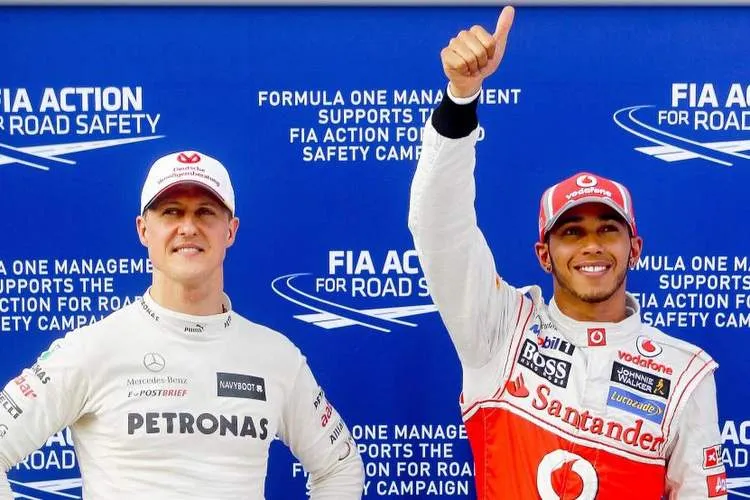
Seasoned pros like Lewis Hamilton not
only enjoy huge salaries but also global marketability and multiple
championship titles.
At the same time, newcomers such as
Oliver Bearman are on relatively small pay packets and will work their way up
as they get more exposure on the big stage.
The demand for oliver bearman f1
development has risen recently as young British drivers are very attractive
from both commercial and competitive angles.
The Teams Making the Most Money in Formula 1

The biggest teams rule the financial side
as well as the track.
Why the Biggest Car Manufacturers Receive the Largest Amount of Money
Success is a factor that generates money
circulation in Formula 1.
Victorious teams get:
●
Major sponsors
●
More skilled staff
●
Greater sales of merchandise
●
More extensive global fanbases
●
Higher media visibility
Therefore, these elite teams continue to
have their winning factors over the years.
Commercial Value Created by Championship Success
Championship-winning teams get
transformed into top-notch global brands.
A successful season can really push up
sponsorship rates to a great extent. Brands look for partnerships with winners
as being on-screen during race broadcasts gives exposure that is equivalent to
very high advertising value.
In fact, the significance of it rises
even more when we talk about the moment of the major technical reset happening
along with the 2026 F1 car regulations.
F1 vs Other Sports Prize Money Comparison
Unlike many major motorsports, F1 runs quite a different system.
NASCAR and IndyCar payout system vs F1

NASCAR and IndyCar quite often openly
show the prize money for each race.
F1, in comparison, is much more focused
on the distribution of commercial revenues over the whole year and on the
private contracts.
Therefore, Formula 1 teams usually have
much larger overall budgets even though the race winnings are less visible to
the public.
Why Formula 1 Teams Have Larger Budgets
Nowadays, Formula 1 teams have a vast
number of staff that work across different departments such as engineering,
aerodynamics, strategy, logistics, and marketing.
Although the cost cap regulation is in
effect, leading teams still spend huge amounts of money on their operations.
The technological level of modern Formula
1 is still beyond comparison with other motorsport categories.
Hidden Revenue Streams Beyond Official Prize Money
Winning a race is just a small slice of
income for a driver.
Sponsorships Bonusing Drivers for Wins
For many, sponsorship contracts come with
bonus payments extra that are often linked to winning races or overall
championships as well.
If a driver wins a number of races,
sponsors might be willing to pay extra bonuses since their brands gain more
worldwide exposure through the drivers.
Thus, figuring out a Formula 1 driver's
earnings breakdown is not as straightforward.
How Race Hosting Agreements Increase Formula 1 Wealth
Masterminds of world's greatest cities
pay gigantic hosting fees to secure a date of their Formula 1 calendar races.
Governments and tourism boards think
about Grand Prix weekends as first-rate economic opportunities that bring
global visitors and international media attention.
This revenue is one of the helping
factors that raise the global commercial value of the championship.
The Future of Formula 1 Financial Growth

Formula 1 looks like one of the
industries ready for major financial expansion.
Why Expanding Global Audiences Could Increase Payouts
The championship remains popular in North
America, Asia, and the Middle East. New audiences result in more broadcasting
facilities, larger advertising deals, and stronger commercial leverage.
In case growth persists, teams could be
looking at an unprecedented revenue share in the coming decade.
Will Formula 1 be Able to Generate Record-Breaking Revenues for its Teams Before 2030?
Simultaneously, the ongoing narratives
about lewis hamilton news, speculations on lewis hamilton ferrari future, and
discussions on lewis hamilton contract negotiations are raising worldwide
interest beyond the mere aspect of racing, highlighting the star's appeal.
Having British drivers in Formula 1, has
always been a source of commercial value as well as UK and worldwide fans'
interest in Formula 1. Therefore, fans keep a keen eye on the current British
F1 drivers who represent the new generation trying to continue the tradition
started by legendary champions such as Hamilton.
In the end, the amount of prize money
that F1 drivers receive for each race, is only a fraction of the whole picture.
The real financial powerhouse of Formula 1, is an extensive commercial system,
where wins, titles, endorsements, and worldwide entertainment come together to
form one of the richest sports sectors all over the world.

Latest News


Loading