Formula 1 driver salary figures, net worth breakdowns and earnings data for the richest
F1 Drivers NewsThursday, 12 March 2026 at 12:56

Formula 1 is one of the most expensive sports on the planet to participate in, and at the top of that financial structure sit the drivers themselves.
That financial drama is part of what draws millions of fans into F1 betting markets each season: when a driver signs a record-breaking contract or switches teams, betting lines on race winners and championship outcomes shift almost immediately.
South African fans following those movements often do so through hollywoodbets spina zonke, one of the region's most widely used platforms for F1 races and outright markets.
This article examines what f1 drivers make at various points in the pay scale, how the richest figures in the sport's history accumulated their fortunes, and what factors — beyond raw championship wins — determine where a driver lands on the earnings spectrum.
How F1 Driver Salaries Are Structured

Before examining individual cases, it is worth understanding how F1 racer salary packages are typically constructed. Base salary is only one component. Most top-tier contracts include performance-related bonuses tied to race wins, podium finishes, and championship positions.
Image rights — the commercial use of a driver's name, likeness, and personal brand — are frequently negotiated separately and can represent a significant portion of total earnings for drivers with strong public profiles.
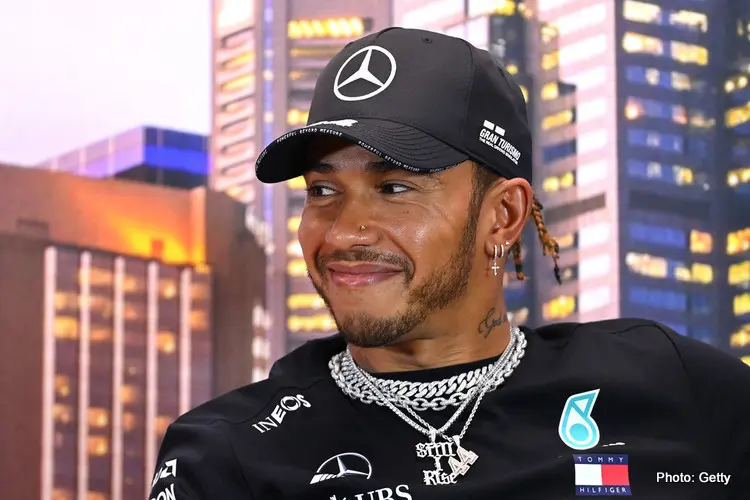
Sponsorship deals, managed either directly or through a driver's management company, add another layer. For drivers at the very top of the sport, personal sponsorship income can rival or exceed their team salary. Lewis Hamilton's commercial partnerships, for example, have consistently generated income independent of whatever Mercedes or Ferrari paid him as a base wage.
The average f1 driver salary across the full grid is harder to pin down than popular coverage suggests. While the top five earners skew the average considerably upward, drivers in the lower half of the grid — particularly those backed by sponsorship rather than hired purely on merit — may earn as little as $1–2 million per year, with some junior drivers at new or smaller teams commanding even less.
Current Salary Landscape: What the Grid Earns in 2026

Precise salary figures in Formula 1 are not publicly disclosed by teams or the FIA, and estimates circulating in the media vary. The figures below represent widely cited estimates based on reports from sports business publications and are subject to change with each contract cycle.
| Driver | Estimated Annual Salary (2025–26) | Team |
| Max Verstappen | ~$55–60 million | Red Bull |
| Lewis Hamilton | ~$50 million | Ferrari |
| Fernando Alonso | ~$25–30 million | Aston Martin |
| Charles Leclerc | ~$20–25 million | Ferrari |
| Lando Norris | ~$20 million | McLaren |
| George Russell | ~$15 million | Mercedes |
| Carlos Sainz | ~$10–12 million | Williams |
| Mid-grid drivers | $2–8 million | Various |
| Sport | Top Annual Earnings (Approx.) | Primary Driver |
| Formula 1 | $55–60 million (Verstappen) | Base salary + bonuses |
| Football (Soccer) | $100–130 million (top players) | Transfer fees + wages |
| Basketball (NBA) | $50–60 million (top players) | Salary cap structures |
| Tennis | $20–40 million (top players) | Prize money + endorsements |
| Golf | $20–50 million (top players) | Tour earnings + sponsorship |
Figures are estimates based on publicly available reporting and should be treated as approximate.
These numbers represent only base and reported contractual salary. Total earnings including endorsements and image rights are likely to be materially higher for the top names on this list.
The Five Richest Drivers in F1 History
1. Michael Schumacher — Estimated Net Worth: ~$790 Million

Michael Schumacher sits at the top of any F1 net worth ranking by a considerable margin, with estimates placing his accumulated fortune close to $790 million — effectively a billionaire when assessed in Australian dollars.
Seven World Championships, 91 race victories, and a decade-long association with Ferrari at the height of the sport's commercial growth made Schumacher not only the best-paid driver of his era but one of the highest-earning athletes in any sport during the 2000s.
Schumacher's salary at Ferrari during his dominant years between 2000 and 2004 was reported to reach approximately $80 million per year in combined earnings — a figure that, adjusted for inflation, still ranks among the largest ever paid to a racing driver. His commercial partnerships with major global brands added substantially to that total over his career.
Beyond racing, Schumacher's name remained one of the most commercially valuable in motorsport even after his retirement in 2012. His status as the sport's defining figure for an entire decade ensured that his brand retained significant market value long after he left the cockpit.
From a historical f1 betting perspective, Schumacher's dominance during the early 2000s was so complete that championship markets became commercially unviable for bookmakers — his odds were consistently so short they offered little incentive to casual bettors.
2. Lewis Hamilton — Estimated Net Worth: ~$304 Million

Lewis Hamilton is the sport's most statistically successful driver — 105 wins, 104 pole positions, seven championships — and the second wealthiest in its history. His net worth is estimated at approximately $304 million, accumulated through a combination of high-value team contracts over nearly two decades at the top of the sport, substantial personal sponsorship income, and investments including a minority stake in the Denver Broncos NFL franchise.
Hamilton's move to Ferrari for the 2025 season was reported to involve a contract worth approximately $50 million per year, cementing his status as one of the highest-paid athletes in global sport. His commercial profile — built through partnerships in fashion, music, and lifestyle brands — extends well beyond traditional motorsport sponsorship.
His influence on f1 betting odds has been significant throughout his career. During the Mercedes dynasty years of 2014 to 2020, Hamilton was the overwhelming championship favourite in every pre-season market. Fans who used f1 betting strategies built around identifying market value were frequently confronted with the challenge that Hamilton's dominance made genuine value difficult to find at headline prices.
3. Fernando Alonso — Estimated Net Worth: ~$264 Million

Fernando Alonso is, as of 2026, the most experienced driver in Formula 1 history. Two World Championships (2005, 2006), a career spanning more than two decades across multiple teams, and an enduring commercial profile have combined to place his estimated net worth at approximately $264 million.
Alonso's longevity in the sport is itself a financial asset. Each contract renewal with a major constructor — Renault, McLaren, Ferrari, Alpine, Aston Martin — has reflected his status as a marquee name with proven crowd appeal. His salary at Aston Martin during his current stint is estimated in the region of $25–30 million per year.
What makes Alonso's financial story distinctive is his sustained relevance across different regulatory eras. Unlike many former champions who retire once their competitiveness fades, Alonso has remained a race winner at Le Mans, a championship contender in IndyCar, and a points finisher in Formula 1 well into his forties.
That sustained performance has kept his value to sponsors high. Among fans engaged with F1 betting, Alonso has long been considered an attractive proposition in race podium markets — particularly at circuits where experience and racecraft outweigh outright car pace.
4. Kimi Räikkönen — Estimated Net Worth: ~$254 Million

Kimi Räikkönen retired from Formula 1 at the end of the 2021 season as the sport's most experienced driver in terms of race starts — a record since surpassed by Alonso. His estimated net worth of approximately $254 million reflects an unusually long career at the sport's top level, a 2007 World Championship with Ferrari, and a commercial appeal rooted in his famously reserved public persona.
The "Iceman" identity — nonchalant, direct, apparently indifferent to the pressures of elite competition — became one of the most recognisable personal brands in motorsport. That distinctiveness made Räikkönen commercially attractive in ways that went beyond his on-track results. His partnerships with major global brands, including long-running associations with energy drink and consumer goods companies, contributed substantially to earnings beyond his driving salary.
His f1 racer salary in peak years at Ferrari and Lotus was estimated between $15 and $40 million per year depending on the period. Over a career spanning from 2001 to 2021, with only a two-year break between 2010 and 2011, the cumulative income from racing alone was considerable.
5. Niki Lauda — Estimated Net Worth: ~$203 Million

Niki Lauda's $203 million estimated net worth at the time of his death in 2019 reflected a career that extended far beyond the cockpit. Three World Championships (1975, 1977, 1984) and one of the most dramatic sporting stories in history — his survival and return from the 1976 Nürburgring fire — established him as a global figure. But it was his activity in aviation that built much of his commercial fortune.
Lauda founded three airlines across different periods of his post-racing life: Lauda Air, Niki, and Laudamotion. His understanding of logistics, risk management, and high-pressure operations — skills honed over a career in Formula 1 — translated directly into business acumen. He also served as a non-executive chairman at Mercedes, playing an instrumental role in convincing Lewis Hamilton to join the team in 2013.
As a figure, Lauda represented the archetype of the driver-turned-businessman. His income from racing in the 1970s and early 1980s was modest by modern F1 salary standards — the sport's commercial infrastructure was still developing — but his post-racing business activity more than compensated.
What Determines an F1 Driver's Salary?

How much does an F1 driver make? The answer depends on a combination of factors that go well beyond lap times.
Marketability is arguably as important as performance at the highest level of the pay scale. A driver who generates significant social media following, attracts sponsorship interest from non-endemic brands, and maintains a compelling public profile will command a premium over an equally fast but less commercially visible competitor.
Team budget sets an absolute ceiling. A driver contracted to a mid-field team, regardless of talent, cannot command the same base salary as a driver at Red Bull, Ferrari, or Mercedes, because the team's total resource base simply does not permit it.
Nationality and market play a role that is rarely discussed openly. Drivers from large or commercially active markets — the United Kingdom, Germany, Spain, Finland — have historically attracted higher levels of sponsorship interest, which teams factor into negotiation.
Contract length and leverage matter significantly. A driver who has won a championship and has multiple competing offers commands different terms than a driver seeking a seat renewal with limited alternatives.
F1 Salary vs. Other Sports: A Comparative Snapshot

| Driver | Estimated Annual Salary (2025–26) | Team |
| Max Verstappen | ~$55–60 million | Red Bull |
| Lewis Hamilton | ~$50 million | Ferrari |
| Fernando Alonso | ~$25–30 million | Aston Martin |
| Charles Leclerc | ~$20–25 million | Ferrari |
| Lando Norris | ~$20 million | McLaren |
| George Russell | ~$15 million | Mercedes |
| Carlos Sainz | ~$10–12 million | Williams |
| Mid-grid drivers | $2–8 million | Various |
| Sport | Top Annual Earnings (Approx.) | Primary Driver |
| Formula 1 | $55–60 million (Verstappen) | Base salary + bonuses |
| Football (Soccer) | $100–130 million (top players) | Transfer fees + wages |
| Basketball (NBA) | $50–60 million (top players) | Salary cap structures |
| Tennis | $20–40 million (top players) | Prize money + endorsements |
| Golf | $20–50 million (top players) | Tour earnings + sponsorship |
F1 driver salary at the very top of the sport is broadly comparable to elite NBA and NFL players, though it trails the absolute peak of global football earnings. The key distinction is that F1 offers a far smaller number of seats — 20 drivers race at any given time — making the value of a top-tier contract relatively higher per position available than in team sports with larger rosters.
The Betting Dimension: Driver Value and Market Perception

The relationship between driver earnings and F1 betting markets is more nuanced than it might initially appear. Championship favourites — those with the highest F1 betting odds of success — tend to be drivers at well-funded teams with proven track records. The market effectively prices in the same factors that teams use when setting salaries: recent form, team resource advantage, track record under pressure, and reliability.
During periods of sustained dominance — Schumacher's early 2000s, Hamilton's mid-2010s, Verstappen's recent four-title run — F1 betting strategies focused on alternative markets tend to generate more analytical interest than the outright championship. Podium markets, fastest lap betting, and head-to-head driver comparisons all become more viable when the championship leader is priced too short to offer meaningful value.
Fans who engage with F1 betting regularly cite driver salary and contract news as informal signals of confidence within teams. A major contract extension for a current champion, or a high-value signing by a team, often correlates with short-term movement in outright and race-winner markets — not because salary directly determines performance, but because it reflects the team's internal assessment of where their competitive advantage lies.
Money talks
F1 driver salary figures tell a story that is as much about the sport's commercial growth as about individual achievement. The gap between Lauda's post-racing business empire and Verstappen's current $55 million annual package reflects seventy years of Formula 1 transforming from a wealthy enthusiast's sport into a global entertainment property.
The richest F1 drivers in history — Schumacher, Hamilton, Alonso, Räikkönen, Lauda — are united not just by talent but by timing, marketability, and the ability to remain relevant across contract cycles. Understanding how much F1 drivers make requires accounting for all of these variables simultaneously, rather than treating salary as a simple function of race wins.
The figures will continue to rise. Formula 1's expansion into new markets, the ongoing growth of broadcast revenues, and the increasing commercialisation of the sport's digital footprint all point toward a salary landscape in ten years' time that may make today's figures look modest.
Latest News



Loading