Remembering Riccardo Paletti: An almost fogotten terrible day at the 1982 Canadian Grand Prix
F1 HistoryWednesday, 20 May 2026 at 07:30
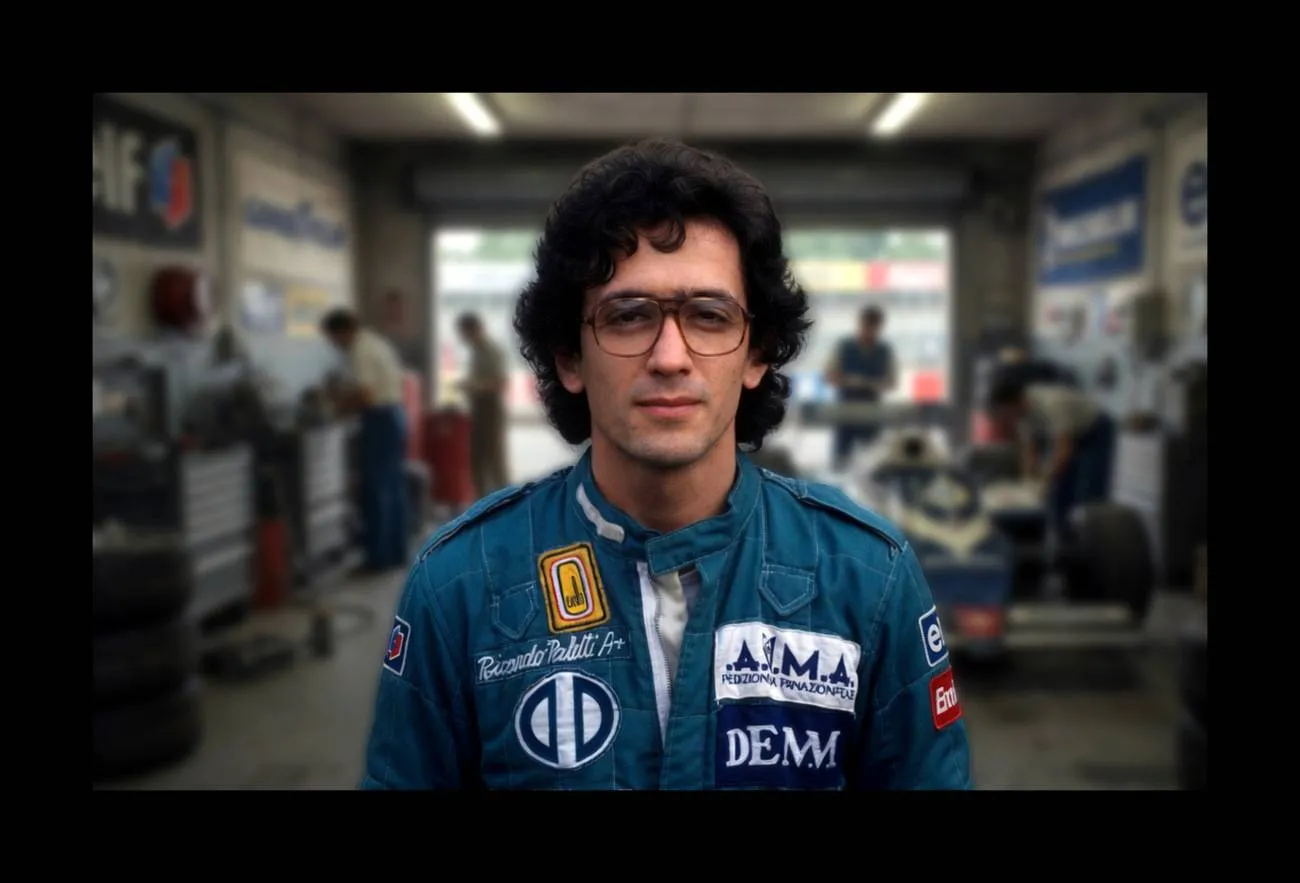
Riccardo Paletti, born on 15 June 1958, was an Italian racing driver who competed in Formula 1 for Osella in 1982.
For fans of our sport, deaths in Formula 1 freeze that particular moment in time forever. Paletti's was one of them, for those who were around following the sport during one of its deadliest eras. When monster Turbos shared the track with V8s and V10s.
He was killed at the start of the Canadian Grand Prix in Montreal in only his second Formula 1 start, two days short of his 24th birthday. And his mother was there.
It happened on a grey Sunday afternoon in Montreal on 13 June 1982, at a time when Formula 1 was beautiful, terrifying and utterly merciless. Drivers climbed into cars knowing death was part of the deal. Some accepted it. Some ignored it. Others never had enough time to understand it. Paletti barely had.
The young Italian arrived in Canada still trying to establish himself in Formula 1 with the tiny Osella team. He was inexperienced, eager, nervous and learning the hard way in one of the sport’s deadliest eras.
His mother Gina sat in the grandstands ready to watch her son race properly in Formula 1 for the first time on a full grid. In a few days, they were supposed to celebrate his 24th birthday together. Instead, she would end the day at his hospital bedside.
The start itself became chaos within seconds. Pole sitter Didier Pironi’s Ferrari stalled on the grid after his clutch stuck. Pironi desperately waved his arms to warn the field behind him as yellow flags appeared.
Mayhem at the start
The lights had remained on unusually long before turning green, adding confusion to the launch. Most drivers managed to avoid the stationary Ferrari.
Then Raul Boesel clipped one of Pironi’s wheels. His car snapped sideways into Eliseo Salazar. Around them, others scattered in avoidance. Geoff Lees became involved as debris and confusion exploded across the track.
Just behind the chaos came Paletti. From the row 12 on a grid of 26 cars, accelerating hard, he simply never saw the stopped Ferrari in time. Reports estimate he struck Pironi’s car at somewhere between 150 and 185 km/h. The impact was horrific.
The nose of the Osella disintegrated instantly. Pironi’s Ferrari was launched forward and spun across the circuit before making further contact with Lees’ Theodore. Paletti’s car remained destroyed at the scene, the young Italian trapped motionless inside the wreckage.
Pironi immediately jumped from his Ferrari and ran back towards the Osella. As other drivers climbed clear of their own damaged cars, Pironi tried frantically to help Paletti, pulling at bodywork and attempting to release his harness.
Professor Sid Watkins and the medical team arrived within seconds. Watkins lifted Paletti’s visor and immediately feared the worst. His eyes remained closed. There was no reaction.
Then the fuel ignited. The Osella’s ruptured tank erupted into flames around the cockpit. Pironi, Watkins and the marshals were forced backwards as thick black smoke swallowed the car. For several agonising moments nobody could reach Paletti.
The scene became unbearable. Marshals battled the fire with extinguishers while smoke rolled across Circuit Gilles Villeneuve. The race was red flagged immediately. Drivers returned silently to the pits already suspecting what had happened.
Rescuers spent more than 25 minutes cutting Paletti free

When rescuers finally reached Paletti, the situation was catastrophic. His legs had been shattered. His chest had absorbed devastating trauma. Medical reports later revealed a torn aorta and massive internal bleeding.
Dr Jacques Bouchard would later state Paletti had almost certainly died within minutes of impact. The long extraction effort changed nothing. But nobody on the circuit knew that yet.
Rescuers spent more than 25 minutes cutting him free from the destroyed Osella while fears remained that leaking fuel could reignite. He was eventually airlifted to Royal Victoria Hospital in Montreal.
Forty minutes later, Riccardo Paletti was pronounced dead.
The news was initially withheld from the paddock. Formula 1 in 1982 simply carried on. Another start was organised later that evening. Osella withdrew their remaining car of Jean Pierre Jarier. Pironi, deeply shaken after helping at the crash scene, was never the same that day.
And yet, beyond the horror of Montreal, there was a young man whose story barely had the chance to begin. A rookie, who could've been, might've been but never was. But died trying.
Born in Milan to Gianna and Arietto Paletti, Riccardo came from wealth. His father was a successful businessman involved in construction and the Italian distribution of Pioneer electronics. Unlike many young Italians obsessed with Ferrari and racing from childhood.
Paletti family funded Riccardo's racing promise

At 13, Paletti initially had little interest in motorsport. Instead he became Italian junior karate champion. He was also talented enough in alpine skiing to be considered for the national youth team. Racing arrived late. Only around the age of 19 did he seriously commit to motorsport. Money undoubtedly opened doors.
His father funded his early single seater career heavily, but that alone never guarantees speed. In Formula Super Ford during 1978, Paletti immediately showed promise. He led his debut race for 18 laps, scored two second places and finished third in the championship. He was raw, but quick.
Formula 3 followed, then Formula 2. Results remained inconsistent, as expected from someone who had entered racing far later than most rivals, but flashes of genuine talent appeared. By 1981 in European Formula 2 with Onyx Racing, Paletti suddenly looked like a driver beginning to understand his craft.
At Silverstone he finished second behind Mike Thackwell. At Hockenheim he set the fastest lap before retiring. At Thruxton he finished third.
For a brief moment he sat near the top of the championship standings alongside names like Stefan Johansson. Those inside the paddock started paying attention. Not because he was rich. Because he looked capable. But Formula 1 in the early 1980s was brutal for ambitious young drivers.
Seats were bought as much as earned. Sponsors dictated careers. Wealthy backers pushed drivers upwards before they were ready. Paletti became one of those victims. Pioneer wanted Formula 1 exposure. Osella needed money. Paletti wanted more time in Formula 2.
The sport gave him none. For 1982, he joined the tiny Italian Osella squad alongside veteran Jean Pierre Jarier in the hopelessly uncompetitive FA1C Cosworth. The car was slow, fragile and dangerous. Paletti himself reportedly admitted Formula 1 intimidated him.
He was not wrong. The season became a nightmare almost immediately. He failed to qualify repeatedly. Mechanical failures haunted him. At Detroit, after finally qualifying, he lost a wheel in warm up and never started the race.
1982 Formula 1 season was drowned in tragedy

In San Marino, Paletti made his Formula 1 debut only because much of the grid boycotted the event amid the FISA vs FOCA war. Two races later, he was dead. It is impossible to separate Paletti’s death from the era itself.
Gilles Villeneuve had been killed only weeks earlier at Zolder. Pironi himself would suffer career ending injuries later that same season at Hockenheim. Drivers still raced in fuel-laden ground effect cars with fragile chassis, poor crash protection and circuits lined by concrete and steel. They were gladiators and fighter pilots rolled into one.
Paletti became the second Formula 1 fatality of that terrible year and the last driver killed during a Grand Prix weekend until Roland Ratzenberger and Ayrton Senna died at Imola in 1994.
Yet history often forgets Paletti. Villeneuve became immortal. Senna became mythology. But, like many lesser known race drivers who were stolen from life too soon, Paletti faded into the mists of time. The polite young Italian with glasses who arrived too soon and disappeared too fast. But his story matters.
Because Formula 1 has always had drivers like Riccardo Paletti. Young men pushed upwards by ambition, sponsors, money and dreams before they were fully prepared. Some survive long enough to become legends. Others never get the chance.
Today, the Autodromo Riccardo Paletti at Varano de’ Melegari carries his name. A chapel in Monza honours his memory. He lies buried in Milan. Italy’s victorious 1982 World Cup football team dedicated their triumph to both Villeneuve and Paletti.
And somewhere in the history of Formula 1, frozen forever in black smoke at the start line in Montreal, remains the image of a 23-year-old young man whose life ended before it truly began.
In fact it ended, right there, opposite where the pole position winning driver will start this weekend's Canadian Grand Prix on Sunday. Think about that when you watch the start.

Latest News
Loading