Outside Line: Jokes aside, why not V10s engines for Formula 1? Who needs manufacturers?
F1 OpinionSaturday, 04 April 2026 at 12:31
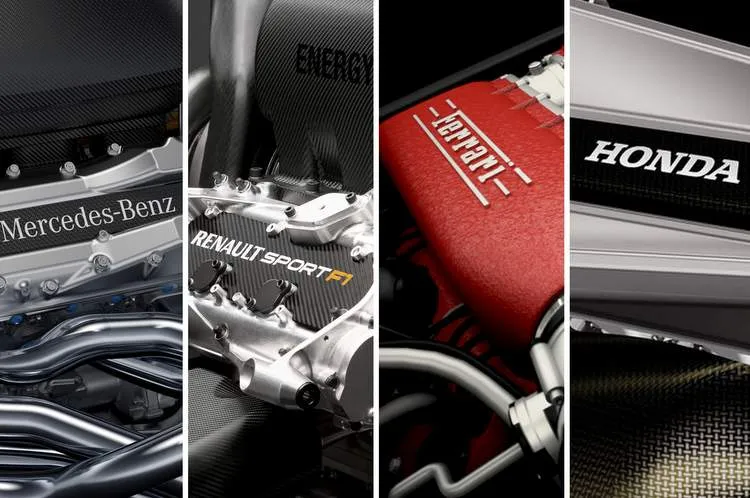
Who needs manufacturers in Formula 1? I’m going to argue that if you look back at the history of our sport, they have actually been a benign tumour, yo-yoing in and out of our world whenever it suits them.
Right now, I, like many true Formula 1 fans, am perturbed and concerned about the FOM-slop and outright spin-doctoring of the narrative that’s been served to us simply to conceal the truth from the deluge of new investors and fans attracted to the sport, amid this Netflix-triggerd boom in interest, believing that they can cover up what has been a major ball drop.
Granted, we are told there is nothing that can be done to fix this problem. That in itself is a damning indictment of the leadership of our sport. And horrid to think for some of us old timers who might not be around in 2030.
Formula 1 and the regime in charge right now, went down a rabbit hole that they now cannot escape from. But that is a paradoxical story we have covered often, and will continue to cover. But this piece is about that, it is about the alternatives to return our sport to good health.
When I set out to do an in-depth study of the best engine concept for Formula 1, using the AI tools at my disposal, what came back was something very palatable. It ticked almost every box for what fans want and what the sport needs to regain the credibility it once had.
Audi brings Formula 1 into disrepute? Are they sportswashing VW crimes?

Let's rewind. It is because of a manufacturer that we are here. Audi, in particular, carries a heavy share of the blame for these rules. If you trace the origins of this fiasco, it leads back to their demands.
What is Audi? Part of Volkswagen, the same group at the centre of one of the biggest emissions scandals in modern motoring history. And one could argue their presence on the grid actually brings Formula 1 into disrepute, and they are simply using this F1 excursion to clean their permanently stained window. Why?
Ponder this: Volkswagen’s “Dieselgate” scandal involved installing illegal “defeat devices” in about 11 million diesel cars between 2009 and 2015. These systems detected emissions tests and activated controls to pass, but disabled them in real driving, causing up to 40 times higher pollution.
Initially blamed on engineers, investigations revealed senior management involvement in the deception to protect its “clean diesel” strategy. The fallout led to severe reputational damage, CEO Martin Winterkorn’s resignation, and billions paid in fines, settlements, and global vehicle buybacks.
Who needs Audi in Formula 1?

VW, the owners of Audi, that shaped this direction for which Formula 1 dropped on their knees for. Who needs VW and by extension Audi in our sport?
Having made such a song and dance, given the concessions Formula 1 made to bring them in about the direction of the 2026 era F1 PUs, you would think they would at least have their act together when they kick-start their foray. But they don’t. They are rubbish. And they are led by Ferrari reject, Mattia Binotto. Enough said.
I will make a prediction based on my gut: Audi will get tired of running at the back. Because for the next five years, with what they have produced, they are not going to be anywhere near the front anytime soon.
These manufacturers arrive believing they will win. The old five-year plan presentation is rolled out from the 'How to Start a F1 Team for Dummies'. Publicly, they downplay expectations. Internally, it is another story.
No major corporation invests hundreds of millions into a project if they are told they will run at the back for five years. They are sold a different vision. Plug and play, straight into the midfield and winning after five years, which largely clueless (about F1) organisations buy into.
And then reality intervenes. When that Audi rolled out in Melbourne, ouch. China, ouch. Japan, ouch.
Ditto Cadillac, who brought a knife to a machine gun fight! Do they really believe that by attaching their name to an unproven structure, they can compete at the highest level of Formula 1? Is this what happens when due diligence and common sense are absent at the highest level of an auto monster like General Motors?
How long will Cadillac last in Formula 1?

If the Cadillac sh!tshow we have witnessed carries on for a year or two, they will pull the plug. No matter what agreements are in place. If this Formula 1 venture costs them money and damages their reputation, they will walk away.
No one pitched Cadillac a five-year plan to run at the back. I have no receipts, but I will make an educated guess that they were sold a midfield dream from day one, and they were going for wins in five years. Instead, they are five seconds off the pace!
No surprise, these regulations delivered a thunderous reality check. Only the top three or four Formula 1 teams know what's going on, sort of. No one gets these complex F1 PUs fully. A playing field that was leveling has been sharply tilted. The 'Have-Nots' are way behind the 'Haves' again.
That is why I say they will leave because that is exactly what manufacturers have always done in this sport. That means eleven teams become nine.
What does history show? Look at Honda. They were dominant in the eighties, supplying McLaren and Williams later. Then they left. Then they returned with their own team, poured hundreds of millions into it, and just as they were turning the corner, they pulled out.
Ross Brawn acquired that operation for a pound, as the story goes. The following year, 2009, that same Honda team, rebranded Brawn GP, won the championship with Jenson Button, with Rubens Barrichello second. Same drivers as the previous years.
That was effectively a Honda team winning the title. The only difference was a Mercedes engine bolted onto the back. And while Honda watched from the sidelines, that team evolved into Mercedes, the most dominant force in modern Formula 1, delivering 15 titles in a decade under Toto Wolff. That must hurt back home in Japan!
Honda is like the genius who fell on his head and emerged retarded

But Honda returned with McLaren. They struggled. Now they are back with Aston Martin, and again, they are struggling. That is the manufacturer's cycle. How long will they last?
Renault is another case. While also successful as a team, one could argue their best years in Formula 1 were as an engine supplier. Jaguar came and went, and is now Red Bull. T
Even Toyota tried Formula 1. After spending over a billion dollars, surrounded by the wrong people, they withdrew, leaving a hole in the grid.
This brings us to Haas and a good case in point for the garagistes versus manufacturers debate. Since Guenther Steiner’s departure, Ayao Komatsu has steadied that ship and aligned the team with Toyota Gazoo Racing, a serious motorsport force with success across multiple disciplines.
I hope for the good of the sport that Haas does not sell out, but rather partners with them as their power unit and technical partners. Because if Toyota pull the plug, Gene Haas' team does not disappear, he can revert to an alternative power supplier.
If it becomes Toyota, and they drop the ball, or things go bad economically or whatever excuse they need, they will eventually, they will pull out. They withdrew from Formula 1 at the end of the 2009 season citing severe financial losses from the global economic downturn.
It was also a good excuse for Toyota to ditch its massive money-losing F1 project, which remained the biggest flop in motorsport history until recently. Aston Martin now owns that 'accolade'.
So if you scratch Audi, and Cadillac and a possible Toyota-owned outfit, when a crisis or recession hits or a leadership change in said organisations, they will pull the plug. And we will be lucky if it is not simultaneously. If it is, that leaves us with eight teams!
A renaissance of garagistes to secure Formula 1 future

Enzo Ferrari built road cars to fund racing. That is why they came to exist. Toto Wolff built Mercedes into a dynasty. But these are anomalies in relation to other manufacturers. Formula 1 is in the DNA of the patrons. But manufacturer projects driven by corporate agendas can disappear overnight. Especially during times of recession and wars. Watch this space!
That is why we do not need Manufacturers to own teams. They are transients, junkies looking for a quick fix to their brand. A return to the garagistes makes the most sense. We need proper racing teams not corporations.
We need teams like the original garagistes McLaren and Williams. The last of them, Haas. And a benchmark one, Red Bull. Even if engines change. Even if suppliers come and go. Teams with racing in their DNA endure.
Over the past decade or so, Formula 1 has become a whore to money. With Liberty Media in charge of milking profits from it at all costs. Their energetic wind-up soldier of misfortune, CEO Stefano Domenicali, flogging FOM-slop unashamedly.
They sold Formula 1's soul for Audi, when they might have shown astute leadership and done a basic study of what the sport really needs, what made it brilliant and a magnet for new fans. For sure, those who witnessed the V10 era know that what we have now is not what we signed up for.
As I processed the absence of thrill and excitement, replaced by confusion and dismay, while I watched the first three GPs of the year, I asked the question: What is the ideal, most effective Power Unit, aka engine formula for Formula 1?
With that in mind, I wonder what engineers would have to say about the viability of the engine Formula 1 outlined and presented by the AI trio. I felt the 'thesis' had life beyond April Foolery, and in case you have not read it, it is duplicated below.
The Right Formula

"Base deep search on these factors: Stick to the ethos of making the fastest engines for road racing. Factor in the development, build and running costs of the ideal PUs. Tap into what F1 drivers, fans, official and respected pundits have suggested, sustainability is vital as well as popularity within the community."
With those instructions, Grok, Gemini and ChatGPT got to work, providing a ton of information which I cherry-picked and collated for my own understanding and an ideal world.
The ideal Formula 1 engine regulations, based on comprehensive analysis of historical popularity, would centre on a naturally aspirated 3.0 litre V10 (or a very close variant) running on 100% advanced sustainable fuels. Total power output would be strictly capped at 1,200 bhp to deliver the required performance headroom while balancing all criteria.
This formula draws directly from fan favourite eras while incorporating modern sustainability and cost controls. It aligns with ongoing FIA discussions as of 2025 to 2026 about potentially accelerating a V10 return on sustainable fuels as early as 2028 to 2029, possibly shortening or replacing the 2026 V6 hybrid regulations.
Why are V10s so popular?
Fan polls, rankings, and social sentiment consistently crown the 1995 to 2005 3.0 litre naturally aspirated V10 era as the pinnacle:
- Goodwood GRR ranking: Number one by a wide margin. “The scream, pitch, volume, and relentless howl… no comparison.” A multi manufacturer golden age featuring Ferrari, Mercedes, BMW, Honda and others, with high rev drama reaching 18,000 to 20,000 rpm.
- V8 era (2006 to 2013): Strong second or third, but still in the shadow of the V10s. Loved for sound, but less visceral.
- 1980s turbo era: Exceptional power at 1,200 to 1,500 bhp in qualifying trim, but costly, unreliable, and ultimately banned due to safety and expense.
- Current and 2026 V6 hybrids: Efficient, but widely criticised as quiet, complex, and lacking character.
V10s and V12s consistently deliver the emotional appeal fans describe as a “screaming monster.” A modern V10 revival on sustainable fuel has been repeatedly floated by FIA president Mohammed Ben Sulayem, as well as team principals including Horner, Brown, and Wolff, who have described the concept as “romantic” and “hugely attractive.”
Sustainability
- 100% advanced sustainable drop in fuels such as e fuels derived from carbon capture, waste, or renewable biomass, powered by renewable energy. Already mandated for 2026 and proven in demonstration runs, including Sebastian Vettel driving historic cars. Carbon neutral across the lifecycle, with no need for major engine architecture changes.
- Net result: A significantly greener solution than historic naturally aspirated eras, while maintaining relevance to road fuel technology and aligning with Formula 1’s 2030 net zero target, without compromising spectacle.
Performance, speed and 1,200 bhp cap
- Historical baseline: Late era V10 engines produced approximately 900 to 1,000 bhp at over 19,000 rpm. With modern materials, electronics, and sustainable fuels, output could realistically reach or exceed 1,100 bhp from internal combustion alone.
- Performance target: With optimisation, engines can be tuned to reach the regulated 1,200 bhp cap purely through combustion, delivering extreme performance without electrical assistance.
- Outcome: Higher straight line speeds, sharper throttle response, and more predictable power delivery compared to hybrid systems. A return to full driver control without energy management constraints.
- This configuration would pair effectively with lighter chassis, significantly improving racing quality and driver engagement.
Simplicity and cost effectiveness
- Substantially reduced complexity compared to hybrid systems, eliminating expensive electrical components, batteries, and energy recovery systems.
- Lower development and maintenance costs: Naturally aspirated V10 engines are simpler to design, build, and run, reducing long term financial burden on manufacturers.
- Commercial value: Increased spectacle through sound and performance drives fan engagement, sponsorship, and global appeal without the extreme research and development costs associated with hybrid systems.
Full conceptual regulations set (targeting 2028 onwards)
| Aspect | Specification | Rationale |
| Configuration | 3.0 litre naturally aspirated V10 | Maximum fan appeal and sound |
| Fuel | 100% advanced sustainable drop in e fuel | Carbon neutral sustainability |
| Power cap | 1,200 bhp total | Controlled performance and excitement |
| Rev limit | 18,000 to 20,000 rpm | Iconic high rev characteristics |
| Cost controls | Strict cap with standardised components | Financial sustainability |
| Cycle duration | 5 to 7 year homologation | Stability for manufacturers |
This framework revives the defining sound and character of Formula 1’s golden era while meeting modern sustainability targets. It simplifies technology, reduces costs, and enhances spectacle, delivering the combination of speed, emotion, and value that both fans and stakeholders increasingly demand.
With growing momentum inside the FIA and across the paddock, this concept is no longer purely theoretical. If the current regulations continue to disappoint, a return to V10 power could move from discussion to reality.
Here is your proofread and refined version, with improved clarity, structure, and technical consistency while preserving your intent and tone:
The ideal Formula 1 power unit rollout can be structured as a two phase transition to a conceptual 3.0 litre naturally aspirated V10 (1,200 bhp total cap on 100% advanced sustainable drop in fuels). This approach leverages existing preserved V10 hardware for a fast, low cost Phase 1 bridge, before moving to clean sheet modern units in Phase 2.
It aligns with ongoing FIA discussions as of early 2026 about accelerating a V10 return on sustainable fuels as early as 2028 to 2029, while giving manufacturers breathing room after the 2026 regulations.
The approach maximises speed to market, cost savings, sound, performance, and sustainability, while remaining within the FIA’s $130 million annual power unit cost cap.
Phase 1: Old School V10s
Goal: Rapidly revive preserved 1998 to 2005 era V10 engines, or exact replicas based on original designs, as a low-risk, highly sustainable, maximum-spectacle interim solution.
This delivers the iconic sound and approximately 950 to 1,050 bhp from internal combustion alone, with further optimisation targeting the 1,200 bhp cap through modern calibration and efficiency gains, while validating sustainable fuel use ahead of a full redesign.
Feasibility and precedents
Major manufacturers retain extensive archives of V10 engines, including Ferrari, Mercedes, BMW, Honda, Toyota, and Renault Mecachrome. These units are preserved with full documentation, CAD data, and rebuild capability.
Sustainable fuels are a true drop in solution requiring no fundamental engine redesign. Sebastian Vettel demonstrated this in 2022, running historic Formula 1 machinery on fully carbon neutral synthetic fuel without modification.
Restoration and rebuild expertise is already well established, both in house and through specialist firms supporting historic racing programs.
Required upgrades
- Fuel system and calibration: Updated injectors, pumps, and ECU mapping to optimise 100% sustainable fuels
- Internal upgrades: Modern materials, coatings, and lightweight components to safely support 18,000 to 19,500 rpm and higher output
- Ancillaries and safety: Updated cooling, lubrication, electronics, and chassis integration
- Reliability package: Extended endurance testing to meet modern race calendar demands
Timeline
- April 2026: Regulations approved and engines selected
- June 2026: Dyno testing and initial builds
- December 2026: Reserve driver test week and integration
- 2027: Race deployment
Cost estimates
Phase 1 remains well below the $130 million cap, typically using 20 to 30 percent of available budget.
| Cost category | Estimated cost | Comparison |
| Per rebuilt V10 | $0.4 to 0.8 million | Approximately 95% lower than hybrid units |
| Customer season supply | €6 to 9 million | Approximately 40 to 50% lower |
| Manufacturer development | $50 to 120 million | Significantly lower than hybrid programs |
These figures reflect historical V10 costs, adjusted for inflation, combined with modern rebuild and optimisation requirements.
Execution advantages
- Existing infrastructure and facilities
- Parallel development with minimal disruption
- Standardised components for faster integration
- Low production volumes
- Reduced technical risk
This phase delivers immediate fan engagement, validates sustainable fuels, and reduces cost pressure across the grid.
Phase 2: New Age V10s
Goal: Develop a clean sheet 3.0 litre naturally aspirated V10 optimised for sustainable fuels and capped at 1,200 bhp.
Development follows a standard cycle:
- Year 0: Regulation finalisation and design
- Year 1: Combustion and dyno development
- Year 2: Track validation
- Year 3: Homologation and rollout
Costs remain consistent with earlier estimates, at $0.8 to 1.5 million per unit and $300 to 600 million total development over 3 to 4 years.
Data gathered from Phase 1 significantly reduces development risk and iteration cost, potentially improving efficiency by 20 to 30 percent.
Overall benefits of the two phase approach
- Immediate return of V10 sound and spectacle
- Controlled transition to modern, optimised engines
- Full sustainability through advanced fuels
- Significant cost reduction compared to hybrid systems
- Greater accessibility for independent teams
- Regulatory flexibility for the FIA
This phased model is technically viable, cost-effective, and aligned with both fan expectations and industry requirements.
It represents the fastest and most practical route to reintroducing V10 power to Formula 1, combining heritage appeal with modern sustainability and engineering efficiency.
With growing momentum inside the paddock, such a transition is no longer theoretical. If the current regulations fail to deliver, this pathway offers a credible and compelling alternative.

Latest News
Loading

