FIA to ditch 2026 Power Units for V10 engines in 2027, backed by Formula 1 drivers and team bosses
F1 NewsWednesday, 01 April 2026 at 08:30
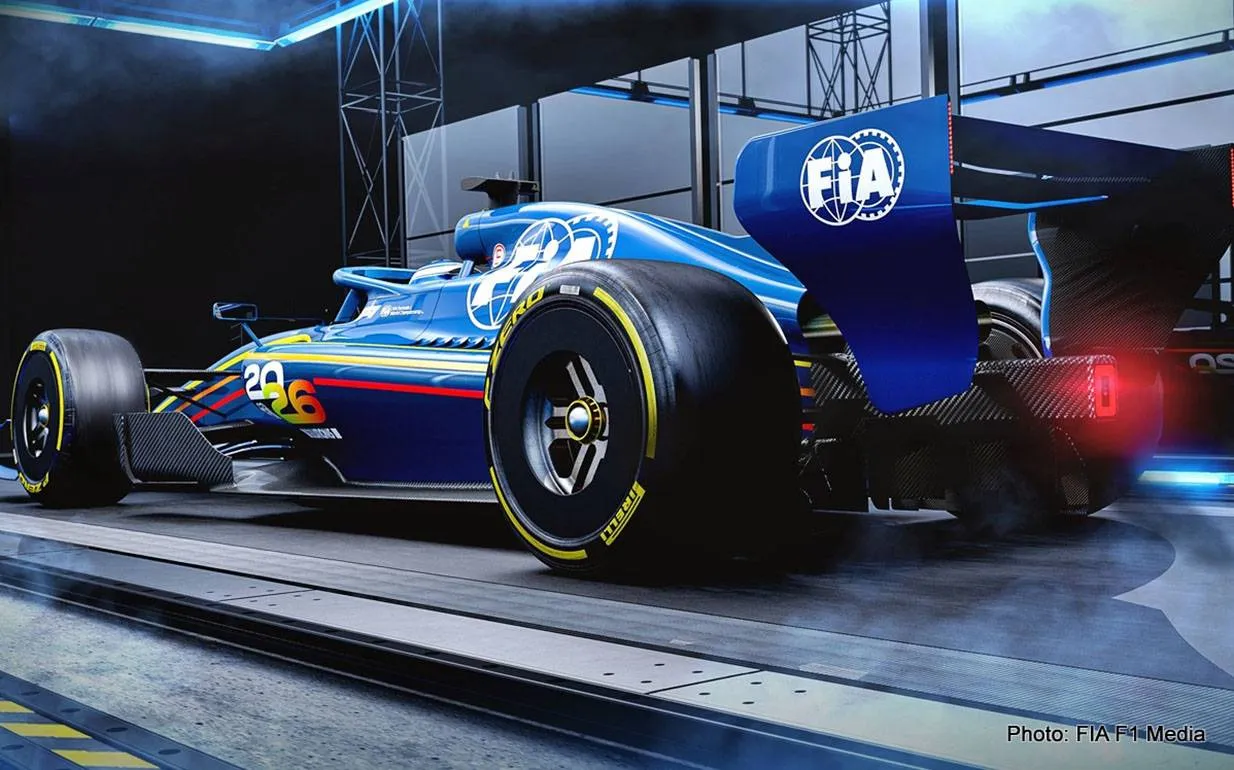
The FIA has finally relented, watching as Formula 1 enters an era of power units few can fully comprehend, they called a secret meeting with World Champions and team bosses of the four major teams, to thrash out a solution. And it is V10s!
The 2026 power units are too expensive, too complex, and increasingly unpopular. After the opening three races of the season, the situation has already begun to look farcical with safety concerns emerging. Formula 1 is in crisis, and the FIA knows it. They are reacting.
They are the rule makers, the custodians of the sport. While Bernie Ecclestone handed over the commercial rights, now held by Liberty Media, the FIA still controls the regulations. When they need to act to protect the crown jewel of global motorsport, they have both the authority and the responsibility to do so, autocratically if need be.
According to leaked emails in our possession, an announcement is imminent. The current power units will become the shortest-lived in modern Formula 1 history, with a return to V10 engines now firmly on the table, and will replace the current PUs from 2027 onwards.
FIA president Mohammed Ben Sulayem hinted at this direction over a year ago, when he floated the idea of bringing back naturally aspirated V10 engines running on sustainable fuel.
He said at the time: "We should consider a range of directions including the roaring sound of the V10 running on sustainable fuel. Whichever direction is chosen, we must support the teams and manufacturers in ensuring cost control on R&D expenditure."
FIA: Enough is enough!

At the time, the idea was scoffed at and dismissed by many within the paddock. Now, that idea has gathered momentum as part of greater emergency to save and preserve the ethos of Formula 1.
The proposal is understood to involve retaining the current aerodynamic regulations through to 2030, while replacing the hybrid power units with simpler, naturally aspirated V10 engines as an interim solution for 2027, with the new-era-V10s slated for 2028 release.
Sources report that Ben Sulayem was in direct contact with key figures across the sport, including World Champions and team principals, in an effort to build consensus.
A meeting in Switzerland, hosted by the FIA president, brought together World Champions Lewis Hamilton, Fernando Alonso, Max Verstappen, Lando Norris, along with team bosses including Laurent Mekies, Zak Brown, Fred Vasseur and Toto Wolff.
Sebastian Vettel, a big believer in sustainable V10s for Formula 1, headed the think tank, working alongside the FIA’s technical team to develop a solution that is both cost-effective and aligned with fan expectations.
Formula 1 community backlash forces FIA response

The driving force behind this sudden shift is understood to be the growing backlash from fans, who have made it clear that the current direction does not reflect what they expect from Formula 1.
The FIA now appears ready to exercise its ultimate authority over the rules in an attempt to restore balance between commercial interests and the core identity of the sport.
The current generation of power units, developed at enormous cost over recent years, risks becoming a short-term experiment that failed to deliver.
Instead of enhancing racing, the new systems have been criticised for creating cars that prioritise energy management over flat-out driving, with drivers effectively managing systems rather than pushing to the limit.
The message from the FIA is clear. They are prepared to take back control of the sport’s direction.
There will be resistance. The commercial stakes are high, and the investment in current technology has been significant. But the governing body believes it has the support of fans, and that may prove decisive.
What is now unfolding marks a turning point. A reset aimed at delivering a version of Formula 1 that aligns once again with what people expect: simpler, louder, faster cars, and drivers pushing at the limit.
If confirmed, it would be one of the most dramatic regulatory reversals in the sport’s history, driven not by long-term planning, but by the urgent need to fix a direction that has clearly gone wrong.
Below is the leaked study and action plan to go live with these rules in 2027, no matter the costs or opposition to the plan. Take it or leave it is the attitude to save the F1 ship from sinking.
The Right Formula

The ideal Formula 1 engine regulations, based on comprehensive analysis of historical popularity, would centre on a naturally aspirated 3.0 litre V10 (or a very close variant) running on 100% advanced sustainable fuels. Total power output would be strictly capped at 1,200 bhp to deliver the required performance headroom while balancing all criteria.
This formula draws directly from fan favourite eras while incorporating modern sustainability and cost controls. It aligns with ongoing FIA discussions as of 2025 to 2026 about potentially accelerating a V10 return on sustainable fuels as early as 2028 to 2029, possibly shortening or replacing the 2026 V6 hybrid regulations.
Why are V10s so popular?

Fan polls, rankings, and social sentiment consistently crown the 1995 to 2005 3.0 litre naturally aspirated V10 era as the pinnacle:
- Goodwood GRR ranking: Number one by a wide margin. “The scream, pitch, volume, and relentless howl… no comparison.” A multi manufacturer golden age featuring Ferrari, Mercedes, BMW, Honda and others, with high rev drama reaching 18,000 to 20,000 rpm.
- V8 era (2006 to 2013): Strong second or third, but still in the shadow of the V10s. Loved for sound, but less visceral.
- 1980s turbo era: Exceptional power at 1,200 to 1,500 bhp in qualifying trim, but costly, unreliable, and ultimately banned due to safety and expense.
- Current and 2026 V6 hybrids: Efficient, but widely criticised as quiet, complex, and lacking character.
V10s and V12s consistently deliver the emotional appeal fans describe as a “screaming monster.” A modern V10 revival on sustainable fuel has been repeatedly floated by FIA president Mohammed Ben Sulayem, as well as team principals including Horner, Brown, and Wolff, who have described the concept as “romantic” and “hugely attractive.”
Sustainability
- 100% advanced sustainable drop in fuels such as e fuels derived from carbon capture, waste, or renewable biomass, powered by renewable energy. Already mandated for 2026 and proven in demonstration runs, including Sebastian Vettel driving historic cars. Carbon neutral across the lifecycle, with no need for major engine architecture changes.
- Net result: A significantly greener solution than historic naturally aspirated eras, while maintaining relevance to road fuel technology and aligning with Formula 1’s 2030 net zero target, without compromising spectacle.
Performance, speed and 1,200 bhp cap
- Historical baseline: Late era V10 engines produced approximately 900 to 1,000 bhp at over 19,000 rpm. With modern materials, electronics, and sustainable fuels, output could realistically reach or exceed 1,100 bhp from internal combustion alone.
- Performance target: With optimisation, engines can be tuned to reach the regulated 1,200 bhp cap purely through combustion, delivering extreme performance without electrical assistance.
- Outcome: Higher straight line speeds, sharper throttle response, and more predictable power delivery compared to hybrid systems. A return to full driver control without energy management constraints.
- This configuration would pair effectively with lighter chassis, significantly improving racing quality and driver engagement.
Simplicity and cost effectiveness
- Substantially reduced complexity compared to hybrid systems, eliminating expensive electrical components, batteries, and energy recovery systems.
- Lower development and maintenance costs: Naturally aspirated V10 engines are simpler to design, build, and run, reducing long term financial burden on manufacturers.
- Commercial value: Increased spectacle through sound and performance drives fan engagement, sponsorship, and global appeal without the extreme research and development costs associated with hybrid systems.
Full conceptual regulations set (targeting 2028 onwards)
| Aspect | Specification | Rationale |
| Configuration | 3.0 litre naturally aspirated V10 | Maximum fan appeal and sound |
| Fuel | 100% advanced sustainable drop in e fuel | Carbon neutral sustainability |
| Power cap | 1,200 bhp total | Controlled performance and excitement |
| Rev limit | 18,000 to 20,000 rpm | Iconic high rev characteristics |
| Cost controls | Strict cap with standardised components | Financial sustainability |
| Cycle duration | 5 to 7 year homologation | Stability for manufacturers |
This framework revives the defining sound and character of Formula 1’s golden era while meeting modern sustainability targets. It simplifies technology, reduces costs, and enhances spectacle, delivering the combination of speed, emotion, and value that both fans and stakeholders increasingly demand.
With growing momentum inside the FIA and across the paddock, this concept is no longer purely theoretical. If the current regulations continue to disappoint, a return to V10 power could move from discussion to reality.
Here is your proofread and refined version, with improved clarity, structure, and technical consistency while preserving your intent and tone:
The ideal Formula 1 power unit rollout can be structured as a two phase transition to a conceptual 3.0 litre naturally aspirated V10 (1,200 bhp total cap on 100% advanced sustainable drop in fuels). This approach leverages existing preserved V10 hardware for a fast, low cost Phase 1 bridge, before moving to clean sheet modern units in Phase 2.
It aligns with ongoing FIA discussions as of early 2026 about accelerating a V10 return on sustainable fuels as early as 2028 to 2029, while giving manufacturers breathing room after the 2026 regulations.
The approach maximises speed to market, cost savings, sound, performance, and sustainability, while remaining within the FIA’s $130 million annual power unit cost cap.
Phase 1: Old School V10s

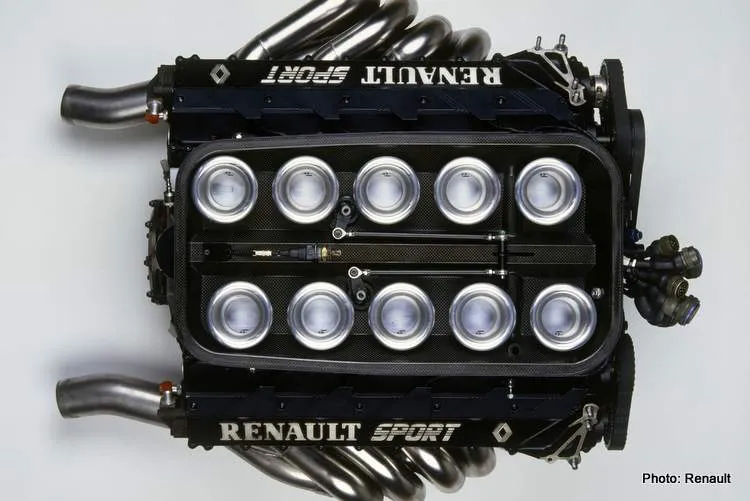
Goal: Rapidly revive preserved 1998 to 2005 era V10 engines, or exact replicas based on original designs, as a low-risk, highly sustainable, maximum-spectacle interim solution.
This delivers the iconic sound and approximately 950 to 1,050 bhp from internal combustion alone, with further optimisation targeting the 1,200 bhp cap through modern calibration and efficiency gains, while validating sustainable fuel use ahead of a full redesign.
Feasibility and precedents
Major manufacturers retain extensive archives of V10 engines, including Ferrari, Mercedes, BMW, Honda, Toyota, and Renault Mecachrome. These units are preserved with full documentation, CAD data, and rebuild capability.
Sustainable fuels are a true drop in solution requiring no fundamental engine redesign. Sebastian Vettel demonstrated this in 2022, running historic Formula 1 machinery on fully carbon neutral synthetic fuel without modification.
Restoration and rebuild expertise is already well established, both in house and through specialist firms supporting historic racing programs.
Required upgrades
- Fuel system and calibration: Updated injectors, pumps, and ECU mapping to optimise 100% sustainable fuels
- Internal upgrades: Modern materials, coatings, and lightweight components to safely support 18,000 to 19,500 rpm and higher output
- Ancillaries and safety: Updated cooling, lubrication, electronics, and chassis integration
- Reliability package: Extended endurance testing to meet modern race calendar demands
Timeline
- April 2026: Regulations approved and engines selected
- June 2026: Dyno testing and initial builds
- December 2026: Reserve driver test week and integration
- 2027: Race deployment
Cost estimates
Phase 1 remains well below the $130 million cap, typically using 20 to 30 percent of available budget.
| Cost category | Estimated cost | Comparison |
| Per rebuilt V10 | $0.4 to 0.8 million | Approximately 95% lower than hybrid units |
| Customer season supply | €6 to 9 million | Approximately 40 to 50% lower |
| Manufacturer development | $50 to 120 million | Significantly lower than hybrid programs |
These figures reflect historical V10 costs, adjusted for inflation, combined with modern rebuild and optimisation requirements.
Execution advantages
- Existing infrastructure and facilities
- Parallel development with minimal disruption
- Standardised components for faster integration
- Low production volumes
- Reduced technical risk
This phase delivers immediate fan engagement, validates sustainable fuels, and reduces cost pressure across the grid.
Phase 2: New Age V10s

Goal: Develop a clean sheet 3.0 litre naturally aspirated V10 optimised for sustainable fuels and capped at 1,200 bhp.
Development follows a standard cycle:
- Year 0: Regulation finalisation and design
- Year 1: Combustion and dyno development
- Year 2: Track validation
- Year 3: Homologation and rollout
Costs remain consistent with earlier estimates, at $0.8 to 1.5 million per unit and $300 to 600 million total development over 3 to 4 years.
Data gathered from Phase 1 significantly reduces development risk and iteration cost, potentially improving efficiency by 20 to 30 percent.
Overall benefits of the two phase approach
- Immediate return of V10 sound and spectacle
- Controlled transition to modern, optimised engines
- Full sustainability through advanced fuels
- Significant cost reduction compared to hybrid systems
- Greater accessibility for independent teams
- Regulatory flexibility for the FIAhttps://www.fia.com/
This phased model is technically viable, cost-effective, and aligned with both fan expectations and industry requirements.
It represents the fastest and most practical route to reintroducing V10 power to Formula 1, combining heritage appeal with modern sustainability and engineering efficiency.
With growing momentum inside the paddock, such a transition is no longer theoretical. If the current regulations fail to deliver, this pathway offers a credible and compelling alternative.
APRIL FOOLS!

Latest News
Loading