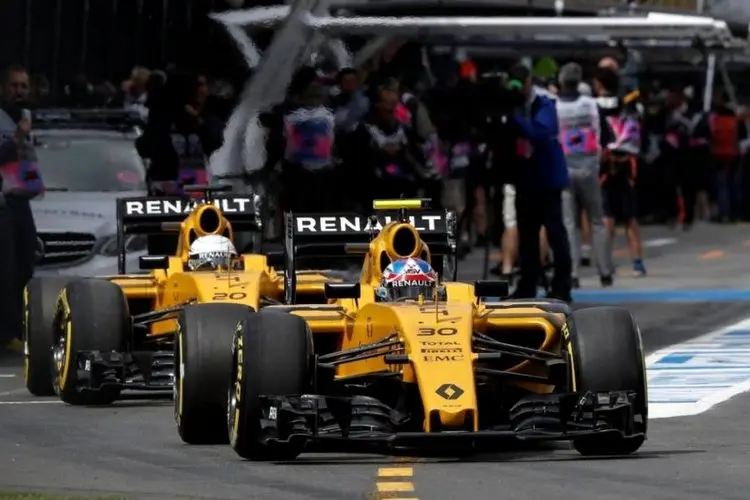
Renault preview the Russian Grand Prix, Round 4 of the 2016 Formula 1 World Championship, at Sochi Autodrom.
Cyril Abiteboul: I can’t hide the fact that the last race in China didn’t meet our expectations. We haven’t taken it lightly, but we now need to draw a line under the first three races of the season. The reality is that we need to keep pushing and improve overall performance, but without compromising on our 2017 potential, which is where our best chance of success lies. We can take inspiration from the solid work we have done on the engine, which now needs to replicated on the chassis side. That said, there’s a lot to look forward to in Russia, which is an important market for Renault. We have always aimed to use F1 as a vehicle for local market activities, as we did in China. We expect to have some other exciting announcements in the near future.
Q&A with Fred Vasseur
If China wasn’t the weekend the team wanted, it’s evolution rather than revolution which will bring the rewards reckons Racing Director, Renault Sport Racing, Fred Vasseur.
China: What went wrong?
It was a tough weekend for us from the beginning. The suspension issue on Kevin’s car meant we lost a lot of running time and this had a particularly detrimental effect this time. This meant that not only he missed out on running, but we didn’t accumulate the necessary comparison data between the tyres so making set-up choices for the rest of the weekend was a challenge. For Sochi we do expect an improvement from where we were in China, that’s for sure.
China: What went wrong?
It was a tough weekend for us from the beginning. The suspension issue on Kevin’s car meant we lost a lot of running time and this had a particularly detrimental effect this time. This meant that not only he missed out on running, but we didn’t accumulate the necessary comparison data between the tyres so making set-up choices for the rest of the weekend was a challenge. For Sochi we do expect an improvement from where we were in China, that’s for sure.
How’s the working relationship with both drivers?
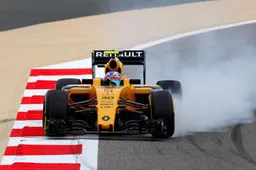
We work well together and the relationships are strong. We still have yet to have a clean race with both cars over the course of the weekend: Kevin had a puncture in Australia, then there was the red light issue in Bahrain, where Jolyon wasn’t able to race at all. Then China was a pretty difficult race weekend all round. You need good, solid trouble-free weekends to be able to make clear and steady progress, and that’s what we’re working towards.
We work well together and the relationships are strong. We still have yet to have a clean race with both cars over the course of the weekend: Kevin had a puncture in Australia, then there was the red light issue in Bahrain, where Jolyon wasn’t able to race at all. Then China was a pretty difficult race weekend all round. You need good, solid trouble-free weekends to be able to make clear and steady progress, and that’s what we’re working towards.
What were your thoughts on qualifying now it’s reverted to the familiar format?
I certainly recognised the system! I think it was exciting to the last moment in China so this was positive. In any qualifying format it’s never action at every turn, but I think the spectacle was good in Shanghai. Of course, the sport will always look to see where improvements can be made, and it’s good to see if sometimes we can learn from our mistakes too.
I certainly recognised the system! I think it was exciting to the last moment in China so this was positive. In any qualifying format it’s never action at every turn, but I think the spectacle was good in Shanghai. Of course, the sport will always look to see where improvements can be made, and it’s good to see if sometimes we can learn from our mistakes too.
Away from the track, how are developments coming for the team?
There is a lot going on that will not be seen yet and equally there’s a lot of good initiatives we have already seen. China was a good example where we had a new member for the Renault Sport Academy with Sun Yue Yang joining us as well as increased support for Asian Formula Renault. We announced an exciting new partner with APL, and one which allows us to focus on the human performance of the team. We also were able to showcase the team’s new Bell and Ross watch which well matches our team image and goals. It’s clear there are many strong building blocks being put in place. Certainly with the Academy we have a lot of work to do, but it’s very exciting and potentially very rewarding in many ways.
There is a lot going on that will not be seen yet and equally there’s a lot of good initiatives we have already seen. China was a good example where we had a new member for the Renault Sport Academy with Sun Yue Yang joining us as well as increased support for Asian Formula Renault. We announced an exciting new partner with APL, and one which allows us to focus on the human performance of the team. We also were able to showcase the team’s new Bell and Ross watch which well matches our team image and goals. It’s clear there are many strong building blocks being put in place. Certainly with the Academy we have a lot of work to do, but it’s very exciting and potentially very rewarding in many ways.
Where is the team focussing for improvements?
We are looking at every single detail. At Viry every detail of the power unit is being looked at and at Enstone every aspect of the chassis is being looked at. It’s not a question of focusing on one area, it’s a question of looking across the board at every detail. We know we have a lot to do, we know our targets so that is what we are working towards.
We are looking at every single detail. At Viry every detail of the power unit is being looked at and at Enstone every aspect of the chassis is being looked at. It’s not a question of focusing on one area, it’s a question of looking across the board at every detail. We know we have a lot to do, we know our targets so that is what we are working towards.
Q&A with Bob Bell
Outlining the reasons why Shanghai was a shocker for the team, Bob Bell looks to the next challenges. What are the challenges of the Sochi Autodrom?
It’s an interesting circuit in terms of engineering challenges. It is essentially a street circuit however the layout doesn’t demand maximum downforce. There are a lot of 90° corners so straight-line braking and traction are called for, with less emphasis on mid-corner balance. It is a demanding circuit for brakes and tends to require a harder tyre compound as there’s a significant loading on the tyres through the long turn three-four combination so it’s likely to be a one-stop race. Its stop-start nature means that fuel consumption is quite high and because of the nature of the track there’s more of a risk of the safety car coming out, so you have to remain poised with a variety of strategy permutations. It’s a track which in many senses is relatively straight-forward because of a preponderance of low-speed corners but it can easily throw some tactical issues because of tyre wear and higher risk of safety cars. It’s not the easiest circuit for overtaking and we also see issues with tyre warm-up. It’s probably not the most difficult circuit for us relative to our car’s current performance so a respectable job should be possible.
Outlining the reasons why Shanghai was a shocker for the team, Bob Bell looks to the next challenges. What are the challenges of the Sochi Autodrom?
It’s an interesting circuit in terms of engineering challenges. It is essentially a street circuit however the layout doesn’t demand maximum downforce. There are a lot of 90° corners so straight-line braking and traction are called for, with less emphasis on mid-corner balance. It is a demanding circuit for brakes and tends to require a harder tyre compound as there’s a significant loading on the tyres through the long turn three-four combination so it’s likely to be a one-stop race. Its stop-start nature means that fuel consumption is quite high and because of the nature of the track there’s more of a risk of the safety car coming out, so you have to remain poised with a variety of strategy permutations. It’s a track which in many senses is relatively straight-forward because of a preponderance of low-speed corners but it can easily throw some tactical issues because of tyre wear and higher risk of safety cars. It’s not the easiest circuit for overtaking and we also see issues with tyre warm-up. It’s probably not the most difficult circuit for us relative to our car’s current performance so a respectable job should be possible.
Last time out wasn’t the greatest display from the team; what went wrong?
Firstly we saw a rear suspension failure on Kevin’s car in the first session in Shanghai. We understood the problem and how to rectify it and were able to engineer and implement a solution whilst in Shanghai so we had no concerns with continuing to run the car. Of course, it shouldn’t have happened, but we understand what occurred and why so we’re confident we won’t see an issue of this type again.
Firstly we saw a rear suspension failure on Kevin’s car in the first session in Shanghai. We understood the problem and how to rectify it and were able to engineer and implement a solution whilst in Shanghai so we had no concerns with continuing to run the car. Of course, it shouldn’t have happened, but we understand what occurred and why so we’re confident we won’t see an issue of this type again.
What was the impact of this on the weekend?
The loss of track time for Kevin in FP1 after the failure and his subsequent non-running in FP2 did have ramifications, especially when we saw a wet FP3 the following day. This left us with a relative scarcity of data for dry set-up as normally you try different things across the two cars to be able to arrive at the best set-up. Kevin wasn’t able to give his usual feedback and didn’t get to run with the soft tyre in the dry for any long runs so when you look at it we lost 50% of our information base for set-up and we felt the pain of this in our race where the balance and then the wear meant a significant lack of performance from where we could or should have been.
The loss of track time for Kevin in FP1 after the failure and his subsequent non-running in FP2 did have ramifications, especially when we saw a wet FP3 the following day. This left us with a relative scarcity of data for dry set-up as normally you try different things across the two cars to be able to arrive at the best set-up. Kevin wasn’t able to give his usual feedback and didn’t get to run with the soft tyre in the dry for any long runs so when you look at it we lost 50% of our information base for set-up and we felt the pain of this in our race where the balance and then the wear meant a significant lack of performance from where we could or should have been.
Shanghai is quite a particular track, is this why we didn’t look too flash in the race?
We had an issue, which was shared by some other teams too, where the track varied a lot between Friday and Sunday and the information we accumulated on Friday led us to a race set-up which wasn’t that required when we raced on Sunday. This is a contribution of the track evolution over the weekend and the different weather conditions. Essentially, we took the wrong direction on balance and suffered because of this.
We had an issue, which was shared by some other teams too, where the track varied a lot between Friday and Sunday and the information we accumulated on Friday led us to a race set-up which wasn’t that required when we raced on Sunday. This is a contribution of the track evolution over the weekend and the different weather conditions. Essentially, we took the wrong direction on balance and suffered because of this.
Where are the improvements for the R.S.16 to come from?
We’ve seen a good step forward in performance from the power unit relative to last year and there’s more to come in that area. The next power unit upgrade will come as a step whereas on the chassis side it’s more of consistent evolution. We don’t have any specific problems with our car so it’s a case of improving downforce and grip as these are the areas where we’re lacking relative to our rivals, and this is a result of our late start to development. Aero and mechanical grip is where we want to make progress.
We’ve seen a good step forward in performance from the power unit relative to last year and there’s more to come in that area. The next power unit upgrade will come as a step whereas on the chassis side it’s more of consistent evolution. We don’t have any specific problems with our car so it’s a case of improving downforce and grip as these are the areas where we’re lacking relative to our rivals, and this is a result of our late start to development. Aero and mechanical grip is where we want to make progress.
Where does the development split lie between this year’s car and next year’s?
Circuit Data
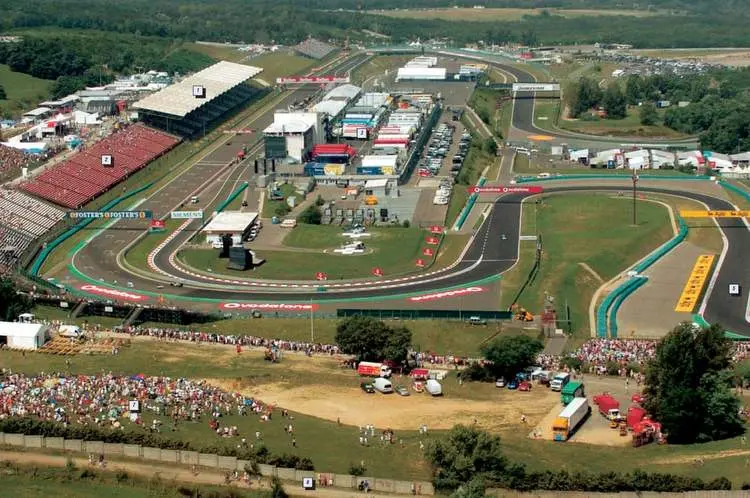
Sochi Autodrom has some very street-course aspects like the close walls and the numerous 90° turns, but its long straight, super-smooth surface and that long turn 3 mark it out as something different. Turn three puts a lot of energy through the tyres but the rest of the layout isn’t too demanding on the rubber. Don’t expect too many pit stops, but the close walls can mean safety car appearances.
Tyre Selection
- Supersoft: Softest available tyre but still strong enough for the turn three demands.
- Soft: Should be Mr Dependable here.
- Medium: Not expected to make the greatest amount of outings this weekend – and some teams have barely packed any in their suitcase.
Circuit Notes
Sochi may resemble a street track in look but, with two long straights and one high speed turn top speed will be around 330kph while the average speed is over 200kph. Approximately 60% of the lap is spent at wide open throttle, well above the ‘traditional’ street average. The lap opens with a short burst of wide open throttle. The pit straight blends into Turn 2, giving a total full throttle time of 15 seconds. There is only one other sustained period of wide open throttle round the lap, the curve from Turn 10 to 13 at the back of the track. This is around 900m and 12secs. With fuel consumption high, the focus is to recover as much energy as possible under braking. Of the 18 corners, nine are large stops so the MGU-K should be able to recover enough energy to balance out the thirsty ICE’s fuel consumption. Sector two is very point-squirt, with right-angled turns that give the MGU-K plenty of chance to recover energy. Turns 2 and 4 are the hardest stops and the car speed drops to 120kph, with each braking event around 2.0 seconds. The radial Turn 3 that rounds the Olympic arena is taken at full throttle.This sustained throttle use will give the MGU-H a steady stream of exhaust from which it can recover the lost heat energy.
- T01: Start/finish straight and approach to T2 is the fastest point on the circuit, with speeds over 330kph possible with DRS after 15secs full throttle.
- T02: Reasonable braking for T2 which could get crowded on first lap. Decent run off here means good overtaking opportunities.
- T03: Long T3 will punish an understeering car and make demands on front right tyre.
T08: A rapid sequence of significant braking demands and traction events through this section. - Circuit has reasonable braking demands, especially T4-T10 then T13-T18.
- T10: Exit from T10 to entry to T13 is second significant wide open throttle area of circuit with 900m in 12secs.
- T13: Correct line into T13 with heavy braking after flat out T11-T12 sequence will be a challenge.
- T14: Slowest corner, cars slowing to almost 80kph.
- T17: Very tight entry to pit lane to catch the unwary.
Memory Lane
November 2010. Russian President Vladimir Putin got behind the wheel of Renault F1 Team’s showcar in a spectacular demonstration in St Petersburg.
What we’ve been up to... Since China, Kevin’s been training, watching movies and chilling out with his girlfriend. He’s just watched Telladega Nights again saying ‘it just cracks me up! Jolyon’s been a regular visitor to Enstone and training hard.
Latest News

Loading