How does Formula 1 make money? Full breakdown of revenue at the highest level of motorsport
F1 NewsTuesday, 12 May 2026 at 01:21
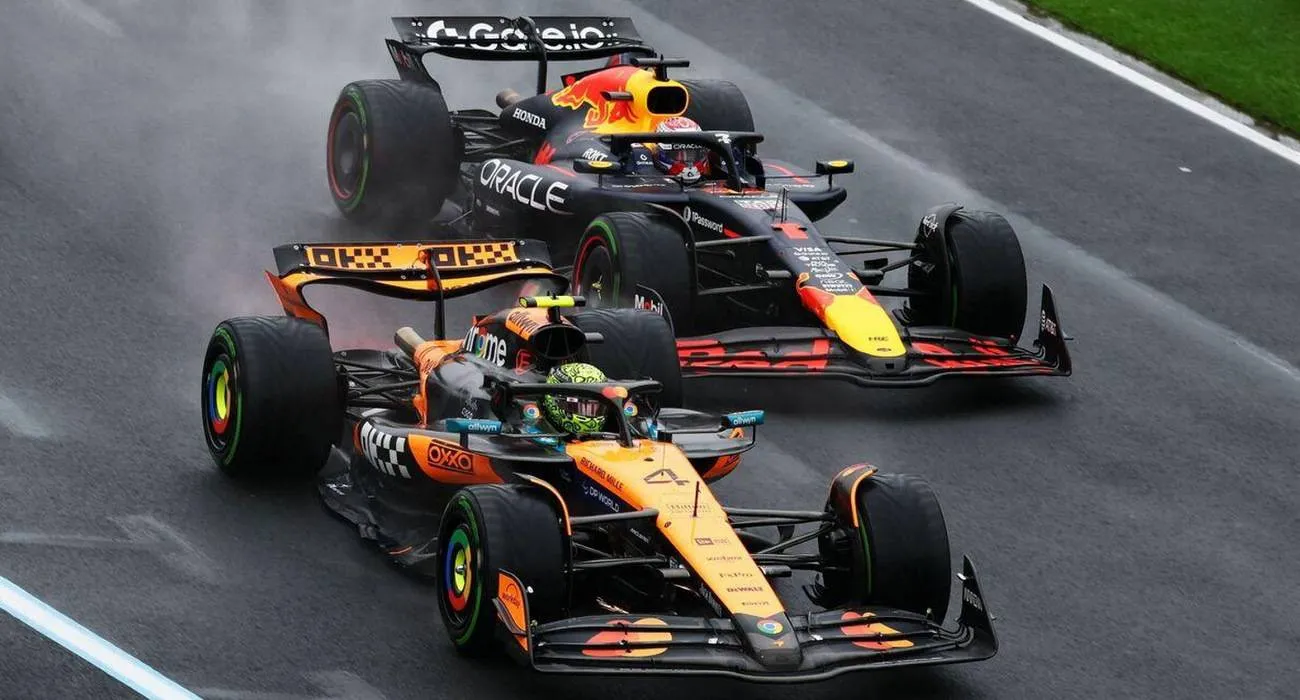
Formula 1 is one of the most financially complex sports in the world, and one of the fastest-growing.
The sport operates
in more than 20 countries, attracts hundreds of millions of television viewers and generated $3.87 billion in revenue in 2025. Yet the mechanics behind that figure remain largely opaque to most fans: who actually gets paid, by whom, and for what."
Where does F1's $3.87 billion come from?
F1's commercial model rests on four
primary revenue streams. Media rights lead the way, followed by race promotion
fees, sponsorship, and a combined category covering hospitality, licensing, and
digital services. Each grew independently in 2025, which underpins the
stability of Liberty Media's financial model.
| Revenue stream | Share of total (2025) | Estimated amount |
| Media rights | 31% | ~$1.20B |
| Race promotion fees | 27% | ~$1.03B |
| Sponsorship | 22% | ~$0.85B |
| Hospitality, licensing & digital | 20% | ~$0.77B |
| Total | 100% | $3.87B |
All of that revenue flows to Liberty
Media as the commercial rights holder. Approximately $1.4 billion (45%
of the total) is then redistributed to the competing teams as prize money under
the terms of the Concorde Agreement. The remaining 55% covers Liberty's
operational costs and generates profit for the group.
How F1 distributes its revenue to teams
The exact figures are private under the
terms of the Concorde Agreement, but enough detail has emerged through Liberty
Media's public filings and third-party analysis to understand the structure.
The prize pool splits across three
layers:
●
75% is
distributed based on each team's finishing position in the previous season's
Constructors' Championship.
●
20%
rewards historical performance based on top-three finishes across the preceding
ten seasons.
●
5%
goes to Ferrari as a guaranteed heritage payment written into every Concorde
Agreement, recognising the Scuderia as the only constructor to have competed in
every F1 season since 1950.
The practical result of this structure is
that McLaren, despite winning both the Drivers' and Constructors' Championships
in 2025, collected the fourth-highest prize payment on the grid. Ferrari, which
finished fourth in the Constructors' Championship and did not win a single
race, took home the largest cheque of any team.
| Team | Estimated 2025 payment |
| Ferrari | ~$277.7M |
| Mercedes | ~$230.8M |
| Red Bull | ~$202.9M |
| McLaren | ~$165.8M |
| Aston Martin | ~$109.3M |
| Alpine | ~$99.9M |
| Haas | ~$91.4M |
| Racing Bulls | ~$82M |
| Williams | ~$77.2M |
| Sauber | ~$63.1M |
All figures are estimates based on
Liberty Media's public filings and third-party calculations. Exact payments
remain private under the Concorde Agreement.
From 2026, the arrival of Cadillac as an
eleventh constructor changes the arithmetic. The prize pool now divides eleven
ways rather than ten. Cadillac paid a reported $450 million anti-dilution fee
upon entry, distributed as $45 million to each existing team as a one-time
offset.
Using 2025 figures as a baseline, Cadillac is estimated to receive
approximately $63 million in prize money during its debut season, while
McLaren's projected payment drops from $165.8 million to around $127.9 million
as a direct consequence of the expanded pool.
Media rights: F1's largest revenue stream
Media rights account for approximately 31%
of F1's total annual revenue, generating roughly $1.2 billion in 2025 from
broadcasting agreements across more than 180 territories. F1 sells its rights
market by market, and the value of those deals has risen sharply: the sport's
cumulative television audience reached 1.5 billion viewers in 2025, up from 400
million in 2015.
Apple's deal in the United States
illustrates how far that value has climbed. In October 2025, the company
secured exclusive US broadcasting rights for five years at a reported $140 to
$150 million per season, up from the $85 to $90 million ESPN had been paying
annually. US rights income effectively doubled in a single contract cycle, and
the deal positions F1 inside Apple's broader entertainment ecosystem, giving
the sport access to a distribution platform with over one billion active
devices globally. The same appetite for long-term commitment is visible in
Europe, where Sky Sports extended its agreements in the United Kingdom through
2034 and in Italy through 2032.
Beyond traditional broadcast, F1's own
streaming platform F1 TV has grown into a meaningful secondary revenue stream,
offering subscribers live race coverage, onboard camera feeds, and an archive
of historic races. The Netflix documentary series Drive to Survive also
played a measurable role in audience expansion, particularly among younger
demographics in North America, and contributed to the improved terms F1 was
able to negotiate with broadcasters from 2022 onwards.
Race promotion fees: paying to host a Grand Prix
Every circuit on the Formula 1 calendar
pays a fee to Liberty Media for the right to host a Grand Prix. Those fees
generated $1.03 billion in 2025, accounting for 27% of F1's total
revenue. With the calendar at 24 races in 2025, the maximum permitted under the
Concorde Agreement, growth in this segment comes primarily from escalator
clauses built into existing contracts rather than new additions.
Standard hosting agreements include
annual fee increases, giving Liberty Media a predictable and growing revenue
base regardless of on-track performance.
The Las Vegas Grand Prix operates under a
different model entirely. Rather than collecting a hosting fee from a
third-party promoter, F1 owns and manages the event directly, retaining the
full commercial upside of the weekend.
The 2025 edition sold out, drew over
300,000 fans across the race weekend, and generated an estimated economic
impact exceeding $1 billion for the Las Vegas region. Liberty Media has
indicated this direct-ownership approach could serve as a template for future
events in premium markets.
Ticket sales from race weekends flow
primarily to the local promoter, not to F1. The hosting fee is the mechanism
through which Liberty captures its share of the event's commercial value.
The
gap between circuits illustrates how commercial weight now drives calendar
decisions more than sporting heritage: Saudi Arabia and Bahrain each pay north
of $50 million per year, while the Monaco Grand Prix, one of the oldest events
in motorsport history with a race held every year since 1950, paid $20 million
annually under its previous contract, the lowest fee on the entire calendar.
Liberty Media pushed for a significant increase at renewal, and Monaco
ultimately signed a new deal through 2035 at reportedly double its previous
rate.
Sponsorship: how F1 and its teams sell their brand
Sponsorship generates 22% of F1's
total revenue, approximately $850 million in 2025, and operates across two
distinct tiers: partnerships sold by Liberty Media at sport level, and deals
negotiated independently by each constructor. The two reinforce each other, as
a stronger F1 brand raises the value of team partnerships, and high-profile
team sponsors amplify the sport's visibility.
At sport level, Liberty Media sells
partnerships that give brands official category exclusivity, branding across
all 24 race weekends, and integration into F1's media and hospitality
platforms. Global partners at the top of that structure pay between $40 and
$150 million per year.
The headline deal of the current era is the LVMH
partnership, active from 2025: the luxury conglomerate signed a 10-year
agreement covering Louis Vuitton as title partner for select Grands Prix, TAG
Heuer as official timekeeper replacing Rolex, and Moët Hennessy across
hospitality and podium celebrations.
The deal is reported to be worth
approximately $150 million per year, making it the largest commercial
partnership in F1's history. Aramco, Salesforce, and Crypto.com round out the
top tier, each committed through at least 2030.
F1's audience profile explains why
premium brands compete for these slots. Nielsen Sports estimates that global
interest in F1 has grown 5.7% since 2021, with the sport now boasting more than
750 million fans globally, 41% of whom are women, and the fastest-growing
demographic being females aged 16 to 24.
For luxury and technology brands, that
audience, skewing affluent, educated, and international, is difficult to
replicate through any other single sporting property.
Team-level sponsorship
The introduction of the cost cap in 2021
changed the logic of team-level sponsorship. Starting at $135 million per
season, the cap compressed budgets across the grid and pushed teams to maximise
commercial income to offset the ceiling. The limit has since been raised to
$215 million for 2026 to account for inflation and new cost categories, but the
structural shift it triggered remains in place.
By 2025, McLaren set a record with 53
active commercial partnerships, generating over $148 million in sponsorship
revenue for the season, more than any team in the sport's history. Their top
partners included Google at $40 million per year, British American Tobacco at
$30 million, and OKX at $25 million annually.
Beyond title deals, teams generate income
through a range of commercial partnerships, from technical agreements to
regional sponsors. HP became Ferrari's title partner from 2025 in a deal
estimated at approximately $100 million per year, matching Oracle's arrangement
with Red Bull and making both the joint-highest team sponsorship deals on the
grid.
Petronas, Mercedes' title partner, pays an estimated $70 million
annually. Stake, one of the biggest online casino platforms, served as
Sauber's title sponsor for the 2024 and 2025 seasons in a deal estimated at
around $50 million per year, before the team transitioned to Audi for 2026 with
fintech company Revolut taking over as title partner. Mastercard joined McLaren
as a naming partner for 2026.
Teams with manufacturer backing benefit
from an additional layer of shared resources that does not appear on standard
income statements.
Mercedes F1, for example, has historically accessed
Mercedes-Benz data centres, engineering infrastructure, and logistics networks
at below-market cost, representing significant value that smaller independent
teams cannot replicate.
Engine supply also generates direct
revenue for manufacturers. For the 2026 season, Mercedes supplies power units
to McLaren, Williams, and Alpine in addition to its works team. Ferrari
supplies Haas and Cadillac.
Red Bull Powertrains, developed in partnership with
Ford, powers both Red Bull and Racing Bulls. Honda supplies Aston Martin
exclusively, and Audi supplies its own works team. Engine lease agreements are
estimated to be worth between $15 million and $25 million per customer team per
season.
The combined effect of prize money, team
sponsorships, manufacturer support, and engine income means that the financial
gap between the top and bottom of the grid, while still wide, is substantially
narrower than it was before Liberty Media's reforms. That narrowing has not
dampened valuations, quite the opposite.
The average F1 team valuation reached
$2.31 billion in 2024 and $3.42 billion in 2025, more than double the 2023
figure, reflecting both the sport's commercial growth and the improved financial
sustainability of even the smaller constructors.
Other revenue: hospitality, licensing, and F1 TV
The remaining 20% of F1's revenue,
approximately $770 million in 2025, comes from a collection of sources that
have grown significantly under Liberty Media: premium hospitality, support
series, merchandising, licensing, and digital services.
The F1 Paddock Club is the most
profitable of these. Unlike general ticket sales, which flow to the local race
promoter, Paddock Club hospitality packages are sold directly by F1 and carry
high margins. A Paddock Club pass for a single race weekend can cost between
$5,000 and $15,000 depending on the circuit, covering trackside viewing suites,
gourmet catering, and access to the pit lane during select sessions.
With 24
races on the calendar and a waiting list at several events, this segment
generates consistent revenue regardless of race location.
The race weekend itself extends beyond
the main event. FIA Formula 2, FIA Formula 3, and the F1 Academy each run their
own media rights and sponsorship arrangements, with their races broadcast
alongside the main F1 weekend. These series also serve as talent pipelines,
which reinforces their narrative value to broadcasters and sponsors alike.
Beyond the track, digital services have
become an increasingly meaningful contributor. F1 TV, the sport's
direct-to-consumer streaming platform, offers live race feeds, onboard cameras,
and a full archive of historic content.
Subscriber numbers have not been
disclosed publicly, but Liberty Media has consistently cited F1 TV growth as a
strategic priority, particularly in markets where broadcast rights are locked
behind expensive pay-TV packages.
The 2025 film F1, produced by
Apple and starring Brad Pitt, added an unusual one-off dimension to this
category. The film grossed over $633 million at the global box office and
generated an estimated $40 million in embedded brand placements across race
sequences filmed at live Grand Prix weekends throughout the 2024 season.
While
not a repeatable revenue line, it demonstrated the commercial value of F1's
entertainment crossover potential and contributed directly to the audience
growth Apple is now banking on with its broadcasting investment.
F1's revenue growth since Liberty Media
F1 generated around $1.8 billion in
revenue in 2017, the year Liberty Media acquired the commercial rights. The
$3.87 billion recorded in 2025 is the result of eight years of consecutive
growth, driven by US expansion, new broadcast deals, and a surge in sponsorship
demand.
| Year | F1 revenue |
| 2017 | ~$1.8B |
| 2020 | ~$1.1B |
| 2022 | ~$2.6B |
| 2023 | ~$3.2B |
| 2024 | $3.41B |
| 2025 | $3.87B |
| Q1 2026 | $617M |
Q1 2026 revenue reached $617 million, up
53% year on year, driven by a combination of underlying commercial growth and
one additional race held in the quarter compared to Q1 2025. The 2026 calendar
is scheduled for 22 races following the cancellation of the Bahrain and Saudi
Arabian Grands Prix due to geopolitical tensions.
The new technical regulations
introduced for 2026, including a revised power unit architecture, have
attracted renewed manufacturer interest and are expected to support further
sponsorship growth through the second half of the decade.
Latest News
Loading