Time after time, we’ve seen new cars enter Formula 1 that don’t just help drivers win; they flat-out dominate the races.
Even though the Formula 1 organisation claims it’s a competition between drivers, not cars, these dominant F1 cars don’t just display speed; they also exploit regulation loopholes, benefit from genius engineering, and, of course, have an excellent driver to operate the machinery.
This combination of factors has created some of the most dominant cars in F1 history, which have redefined races and tournaments, creating historical moments for fans across the globe.
What is dominance in F1? Winning a championship doesn’t cut it; in order to be truly dominant, it must force rule changes, cause controversy and differences among fans and others involved in the organisation.
They need to win and break records, make all opposition feel inferior to whoever’s driving this vehicle. Discussions around performance and consistency often extend beyond motorsport too, with fans comparing statistics and trends across different entertainment sectors, including platforms such as NJ casino app services. The following list will provide knowledge on some of the most dominant vehicles in F1 history.
McLaren MP4/4 - 1988

One of the most dominant F1 cars of all time, driven by Ayrton Senna in the 1988 season, boasting 15 wins out of 16 races it participated in.
The reason for this car’s superiority was its powerful and reliable turbo engine, along with excellent aerodynamics, causing the car to move more efficiently. Ahead of its time, the McLaren MP4/4 presented problems all around the race track, producing speeds faster than other F1 cars everywhere on the track, a product of the vehicle's exceptional balance.
McLaren’s engineering made them untouchable; it became a question of which McLaren was going to win that season, rather than who was going to win this season.
Williams FW14B - 1992

If we’re talking about dominance, the Williams FW14B has to be mentioned, driven by Nigel Mansell in 1992 and winning nine races with ease; the championship was secured before the season even ended.
With admirable suspension, traction and a semi-automatic gearbox, the car seemed as if it was straight from the future. Part of its dominance was its ability to adapt to different tracks and conditions effectively using computers; this is what put this car so far ahead of others, as other vehicles would just rely on mechanical compromises.
As a result, cars were unable to mimic the Williams FW14B’s success within the same season. Making this one of the most dominant vehicles in the history of F1.
Ferrari F2004 - 2004

Perfection in a car, every flaw that was possible had been removed, and every single aspect of the car was tweaked until it reached perfection. With this car, Michael Schumacher won 13 races in 2004, each victory claimed like it was nothing.
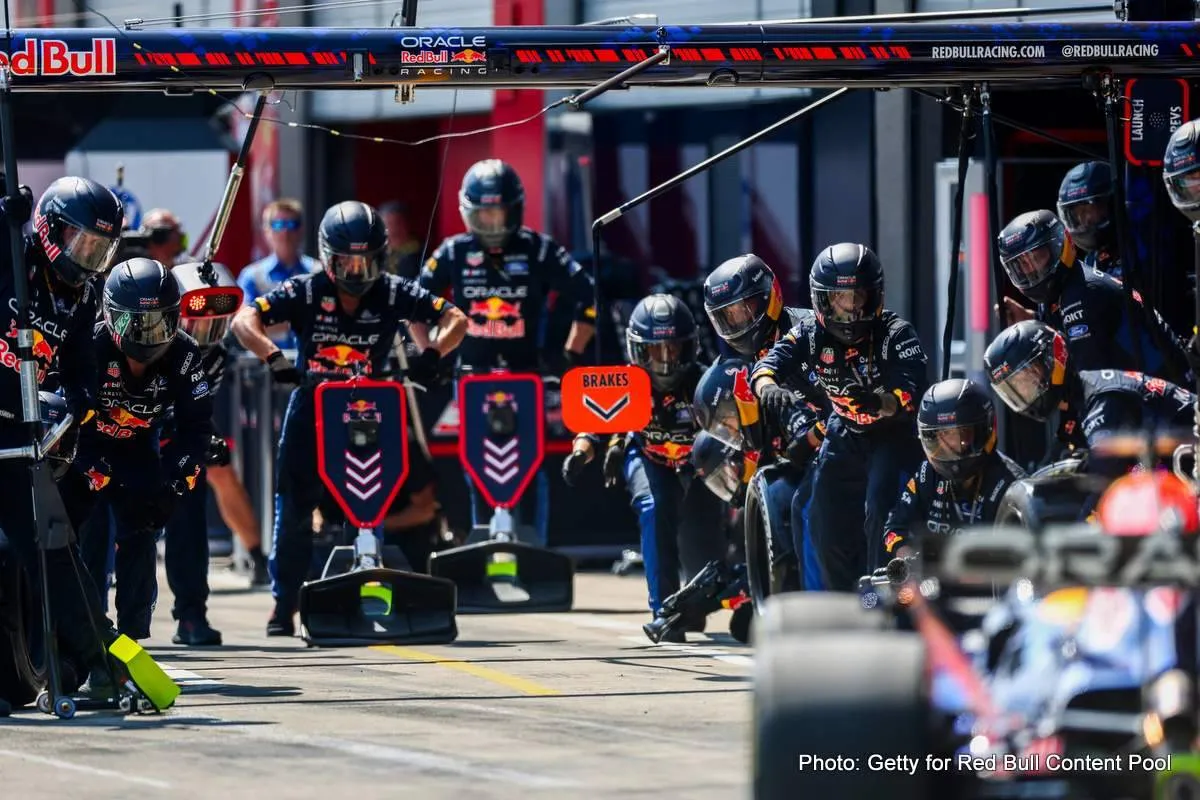
Despite the car’s quick nature, what really helped was the execution of the race and the excellent pit stops. Along with this, the Ferrari F2004 had surprisingly gentle tyres, as well as being reliable and adaptable when placed under stress.
Engineering wasn’t the only factor driving the Ferrari to win; the Ferrari F2004 was a statement from the organisation that they’re coming for it all, and nobody does it better than they do.
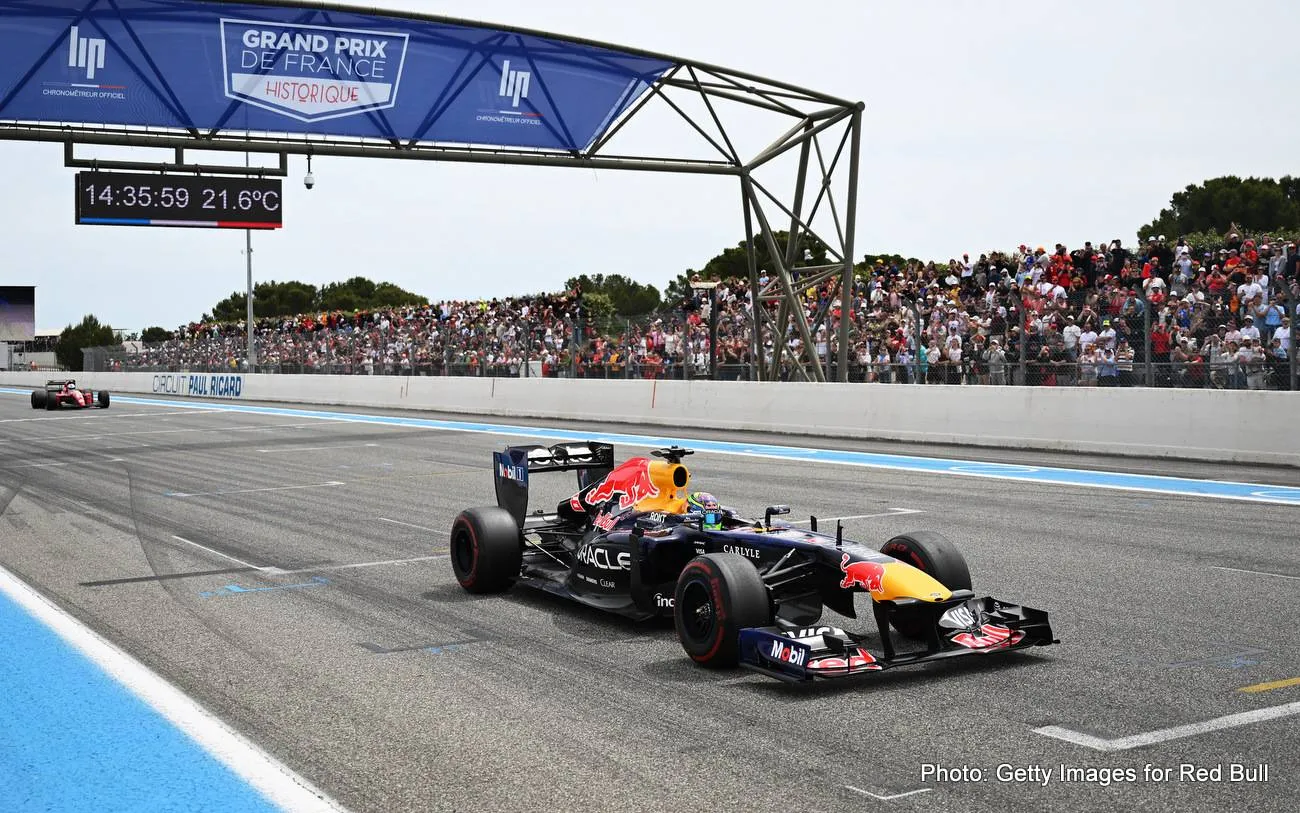
Red Bull RB9 - 2013

Although it had a slow start to the season, this was still one of the most dominant vehicles in F1 history. Towards the end of the season, Sebastian Vettel secured nine wins in a row to end the 2013 season with a championship.
Aerodynamics were utilised to the fullest, making the car extremely efficient, paired with good tyre management, making the Red Bull RB9 a force to be reckoned with, laps that are inconceivable, and momentum, which trumped out all of the other cars.
Not only did Red Bull out-engineer everyone else, but they destroyed all hopes and dreams of anyone else winning the 2013 championship.
Mercedes W07 - 2016

Many believe this is the best F1 car that has ever been built. Winning 19 out of 21 races, the efficiency of their high-power engine, along with some great aerodynamics, made the Mercedes W07 one of the most adaptable and consistent cars in the history of F1.
An optimised system also allowed for a large margin of error; small mistakes were easily recoverable; this forced other teams to fight to even get a small chance at beating the Mercedes W07. It created internal team battles between Lewis Hamilton and Nico Rosberg, shifting the focus away from the championship.
Therefore, due to its superiority not only mechanically but also systematically, this makes the Mercedes W07 one of the most dominant vehicles in the history of F1.
The Pros and Cons of dominance

Many organisations are held back by budget, politics, and limitations on their engineering. Dominant teams are constantly reiterating their vehicles until they reach absolute perfection.
This shows that to develop a truly dominant vehicle, you need to be able to commit to a prolonged developmental cycle, therefore allowing for more time to master different components of the vehicle.
However, dominant vehicles are also adept at finding loopholes in regulations, which can end their dominance after rule changes. Hence, this is why dominance is difficult to sustain and why development is a very long process.
Although these cars can create legendary moments, many fans get bored with totally dominant cars; this is because it makes the outcomes of races too predictable.
This is why rule changes are common once a dominant vehicle takes over; they take away from the entertainment factor of what makes F1 fun to watch, the unpredictability.
Although F1 always tries to chase unpredictable outcomes and a fair race between drivers, dominating vehicles always come back to the game, to break records and let the world know the limitless potential behind engineering and the rewards that come with perfecting the machinery behind an F1 car.
The most dominant F1 cars we’ve spoken about today were great due to perfect timing and a mastery of technology. The rule changes they’ve caused have shaped the league into what it is today; it’s not all just about championships.
Latest News
Loading