How Weather Conditions Change Strategy and Race Outcomes in Formula 1
F1 NewsMonday, 11 May 2026 at 01:42
Formula 1 is often described as the pinnacle of motorsport because it combines engineering, speed, strategy, and driver skill at the highest possible level.
While technology and preparation play enormous roles in determining success, there is one factor that remains impossible to fully control — the weather. Rain, heat, wind, and changing track conditions can completely transform the dynamics of a race, forcing teams and drivers to adapt in real time.
Unlike many other variables in Formula 1, weather can alter every aspect of a Grand Prix simultaneously. Tire behavior changes, visibility becomes more difficult, track grip evolves unpredictably, and strategic plans that seemed perfect before the race can suddenly become useless.
For fans who closely follow motorsport strategy and race analysis, these unpredictable elements are often what make Formula 1 especially compelling.
This broader engagement with fast-paced competition also extends into digital entertainment spaces, where platforms like (Turkish: bilinmeyen slot siteleri) reflect the same appeal of unpredictability, timing, and calculated decision-making.
The Importance of Track Conditions
Weather directly affects track conditions, and in Formula 1, track conditions determine how much grip is available. Grip is one of the most important elements in racing because it influences braking, cornering, acceleration, and tire performance.
On a dry track, teams can predict performance with relative accuracy. However, when rain begins to fall or temperatures fluctuate significantly, the track surface behaves differently. Drivers must quickly adapt their racing lines, braking points, and throttle control.
Even small changes in temperature can have a major impact. Hot conditions may increase tire degradation, while colder temperatures can make it difficult for tires to reach their optimal operating window.
Rain introduces an entirely different layer of strategy to Formula 1. Teams must decide not only when to switch tire compounds, but also which tires will provide the best balance between grip and durability.
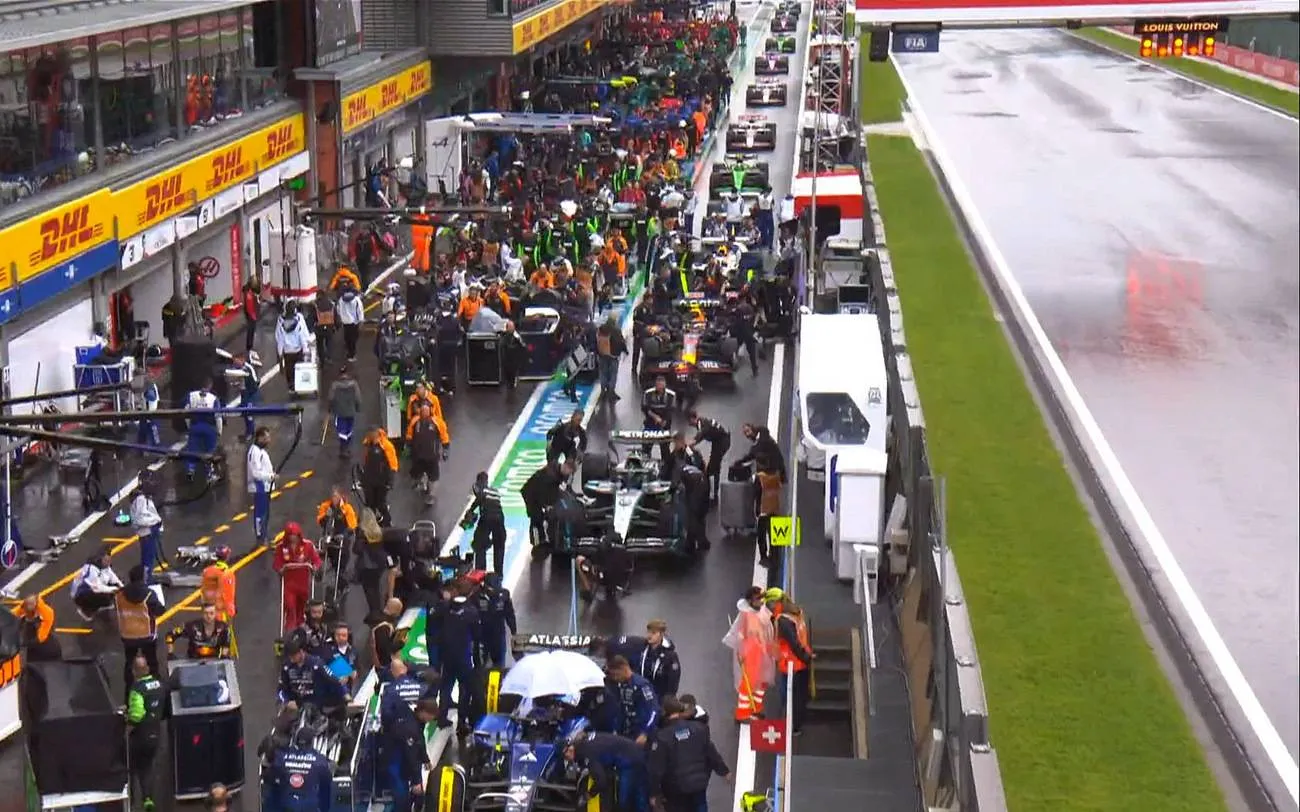
Wet-weather races are often unpredictable because conditions can change lap by lap. A track may be partially dry in one sector and completely wet in another. This creates difficult strategic decisions where timing becomes critical.
Switching to wet tires too early can cost valuable time if the track dries quickly. Waiting too long, however, can lead to loss of control or even accidents. Teams constantly monitor weather radar, sector times, and driver feedback to make these decisions.
Driver Skill Becomes More Visible
In dry conditions, modern Formula 1 cars are highly optimized, often reducing performance differences between drivers. In wet or changing conditions, however, driver skill becomes much more visible.
Great drivers are able to:
- Adapt quickly to changing grip levels
- Control the car smoothly in low-traction situations
- Identify alternative racing lines
- Manage tire temperatures effectively
Rain often rewards precision and confidence rather than outright car performance. This is one reason why wet races are frequently remembered as some of the most exciting and dramatic moments in Formula 1 history.
Wind and Aerodynamic Sensitivity
Wind is another weather factor that significantly influences Formula 1 performance. Modern F1 cars rely heavily on aerodynamics, and even moderate wind changes can alter how a car behaves.
Crosswinds can destabilize the car in corners, while headwinds and tailwinds affect braking distances and top speeds. Drivers must constantly adjust their approach depending on wind direction and intensity.
Teams also modify setup configurations to compensate for expected wind conditions. However, sudden changes during the race can still create unexpected challenges.
Heat and Tire Degradation
High temperatures create additional strategic complications. Formula 1 tires operate within a very narrow performance window, and excessive heat can accelerate tire wear dramatically.
When temperatures are high:
- Tires overheat more quickly
- Grip levels become inconsistent
- Drivers struggle to maintain pace over long stints
Teams must therefore adjust their race strategies, sometimes prioritizing tire preservation over outright speed. This can lead to more pit stops or more conservative driving styles.
A simplified overview of weather effects can be seen below:
| Weather Condition | Strategic Impact |
| Rain | Tire changes and reduced visibility |
| High Heat | Increased tire degradation |
| Cold Temperatures | Difficulty warming tires |
| Strong Wind | Aerodynamic instability |
| Changing Conditions | Constant strategic adaptation |
This table highlights how weather influences multiple aspects of race management simultaneously.
The Role of Team Communication
Weather-related strategy depends heavily on communication between drivers and engineers. Teams receive constant streams of data from weather systems, tire sensors, and track analysis tools.
Drivers also provide critical feedback from inside the car. They can identify grip changes, water accumulation, or drying sections of the circuit faster than some data systems.
This collaboration becomes especially important in unpredictable conditions, where decisions must be made within seconds.
Safety and Race Control Decisions
Weather conditions also influence safety procedures and race control decisions. Heavy rain can reduce visibility to dangerous levels, increasing the likelihood of accidents.
In extreme cases, races may start behind the safety car, be temporarily suspended, or even stopped entirely. These interruptions create additional strategic complexity, as teams must rethink tire choices, fuel management, and race pacing.
Such situations demonstrate how weather can influence not just racing performance, but the structure of the event itself.
Why Unpredictable Weather Creates Better Racing
One reason fans enjoy weather-affected races is that they disrupt the normal competitive order. Teams with dominant cars may lose their advantage, while drivers with exceptional adaptability can outperform expectations.
Unpredictable conditions create opportunities for bold strategic calls. A well-timed pit stop or an aggressive tire choice can completely change the outcome of a race.
This unpredictability adds tension and excitement because no team can fully rely on pre-race simulations or standard strategies.
Technology and Weather Prediction
Modern Formula 1 teams invest heavily in weather analysis. Advanced radar systems, meteorological models, and live forecasting tools help teams anticipate changing conditions.
Despite this technology, weather remains difficult to predict perfectly. A brief rain shower or unexpected temperature shift can still disrupt carefully planned strategies.
This balance between preparation and uncertainty is part of what makes Formula 1 strategically fascinating.
Psychological Pressure in Difficult Conditions
Driving an F1 car in extreme weather conditions is not only physically demanding but also mentally exhausting. Drivers must maintain concentration while dealing with reduced visibility, unpredictable grip, and constant pressure.
Mistakes become more likely under these circumstances, which is why mental composure is so important. Experienced drivers often excel in difficult weather because they remain calm and adaptable under pressure.
In today’s motorsport culture, fans actively analyze these performances and discuss strategy in real time. Communities like MelBet Facebook Türkiye illustrate how audiences stay connected to racing discussions, performance analysis, and the constantly evolving tactical side of Formula 1.
A Variable That No Team Can Fully Control
Formula 1 teams spend millions optimizing every detail of performance, from aerodynamics to tire management. Yet weather remains one of the few variables that cannot be completely controlled.
This unpredictability is part of what makes Formula 1 unique. It ensures that races are not determined solely by engineering superiority, but also by adaptability, decision-making, and driver skill.
And perhaps that is why weather continues to play such a powerful role in the sport, because in a world built around precision and control, it introduces an element of uncertainty that forces everyone on the grid to think differently, react faster, and adapt continuously from the first lap to the final flag.

Latest News



Loading