FIA and FOM broke Formula 1 and now they have a disaster on their hands without a solution
F1 NewsSunday, 12 April 2026 at 12:54
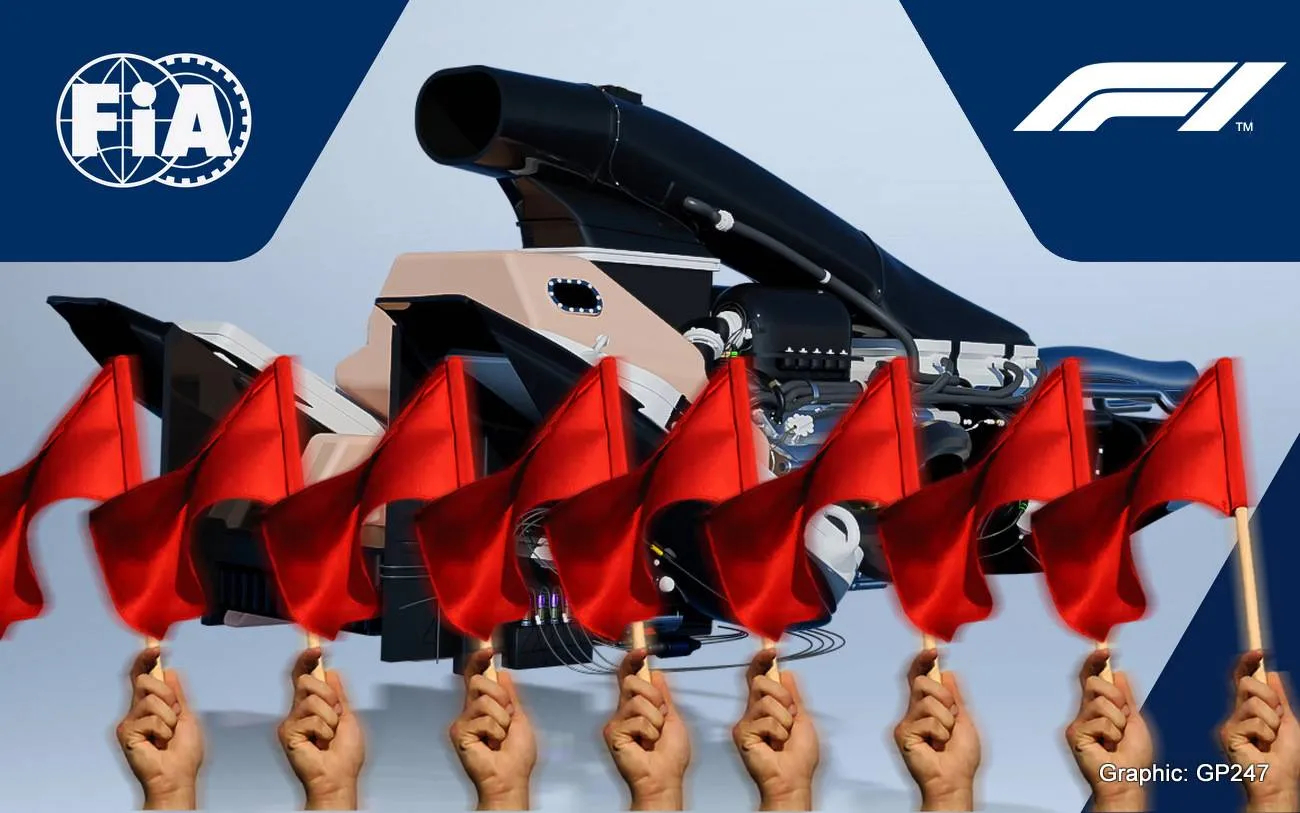
Three races into the 2026 Formula 1 World Championship season, and it is clear that the new engine rules are a disaster for the sport, and the worst is yet to come, with no fix in sight.
Disaster you may ask? A bit steep considering the rot in our war-ravaged world. Well, ask Ollie Bearman about that. We have seen some never-before-witnessed incidents, counterintuitive to every driver on the grid, potentially lethal starts and a big shunt at Suzuka last time out.
Near misses are plenty, and one mighty wake-up call at the venue, which robbed us of Jules Bianchi, for instance. Was he warning us from his perch in heaven?
Whatever the case, what really rocked the sport is how Formula 1 and FIA bosses have buried their heads in the sand, and out of their airborne asses are singing the praises of this new Formula 1. Dipping into low-life social media tactics to try to convince the massive Formula 1 fan base that what we are being dished out this season is good stuff
They are wrong, no matter the spin their is dissent and anger among true Formula 1 fans. Only sycophants and paid shills are on board, and against the tide as their defences in the media are ripped to shreds by fans, most aggrieved by what they have seen.
In an excellent analysis of the current state of the fairs in our sport, YouTuber Alberto Naska has finally put into layman's terms (sort of) why this 54,54% ICE and 45,46% (rounded to 50/50) electric formula does not work. Moreover, he verifies that the powers that be were told it would not work from the outset, as did drivers, teams and independent pundits.
This Power Unit rules package was always destined to be a flop in its current guise, and many other guises that the concept journeyed through. The naysayers were right. And it is even worse than we think, as Naska explains at great length and in great detail in his latest episode.
Alberto Naska: Formula 1 2026 a disaster they can't fix
Highly recommended you watch the whole video as Alberto Naska uses graphics to explain his findings. Below are summarised highlights of his excellent, albeit troubling, analysis.
These 2026 Formula 1 cars are a mess. I’m not even going to sugarcoat it. After three races, the picture is clear. The races can be entertaining, yes. But qualifying is broken, the drivers hate the way these cars behave, and the whole thing is starting to look like a joke to anyone watching closely.
So where is the problem? It’s the power unit. More specifically, it’s the way the power is split between the internal combustion engine and the electric motor. This near 50 50 concept sounds good on paper, especially if you want to please manufacturers chasing electrification, but in reality it just does not work in Formula 1.
And the key issue is not that electric technology is bad. It isn’t. Formula 1 builds some of the most advanced hybrid systems in the world. The problem is the way it has been implemented. You have an extremely powerful electric motor, but a tiny battery that cannot sustain it.
That battery can only deliver full power for a few seconds. So what do you have to do? You have to constantly recharge it while driving. That means every lap becomes an energy management exercise instead of a flat-out qualifying run.
The real problem is when the battery runs out

Now think about that. You can only deploy full electric power for roughly one third of a lap. So as a driver, you pick your moments. You use it on corner exits where it gives you the biggest gain. Fair enough. That is logical.
But then you hit the real problem. The battery runs out. And because the tracks were never designed to support this kind of system, there are not enough braking zones to recover the energy naturally. So teams start doing unnatural things.
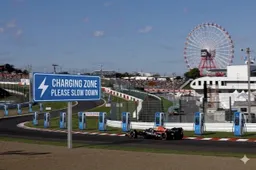
Lift and coast. Superclipping. Slowing the car on straights just to recharge the battery. It looks ridiculous, and worse, it feels wrong for the drivers. They are not racing flat out. They are managing a system.
And it gets even more absurd. Because the electric motor is so powerful, the time gained when you deploy it is bigger than the time you lose while recharging. So the system forces you into these behaviours. You cannot avoid it.
That is why the 50 50 split is the root of the problem. The electric side is too strong for what the battery can support, so everything becomes a compromise.
Then the FIA steps in with rules to control all of this. Safety concerns, traction control concerns, power delivery limits. And what do these rules do? They make things even worse.
Now you have fixed power delivery windows. Fixed increments. Fixed behaviour. So if a driver makes even a tiny mistake in qualifying, like a small snap of oversteer, the entire energy deployment for the rest of the lap is thrown off.
You might gain a bit of time in one section, but then you lose massively later because the battery state is wrong.
Pushing the car to the limit actually punishes you

Think about that for a second. In Formula 1 qualifying, pushing the limit should be everything. Here, it ruins your lap. Drivers have already said it. It is better to drive slightly under the limit to keep the system stable. That is completely backwards.
So can this be fixed? Not easily. You cannot just increase the power of the combustion engine overnight. The entire architecture is locked in. You cannot suddenly redesign fuel systems or engine components in a few weeks.
Reducing electric power sounds like a solution. Lower the output, stretch the usage. But that does not fix the core issue, which is the constant need to recharge.
You could play with the limits. Reduce how much energy can be harvested. Reduce how much can be deployed. Try to rebalance the system. Maybe make the cars slower but more predictable. That might help.
But the truth is, this is a fundamental design problem. Too much electric power, not enough energy storage, and too many rules trying to patch the consequences. And that is why we are here. Cars that are difficult to drive, unnatural in behaviour, and heavily constrained by systems instead of driver skill.
You look at it and you just wonder how Formula 1 ended up here.
Check out Alberto Naska on YouTube>>>
Latest News
Loading