Drivers wary ahead of Miami Grand Prix for make or break for Formula 1 engine rules
F1 NewsFriday, 01 May 2026 at 00:41
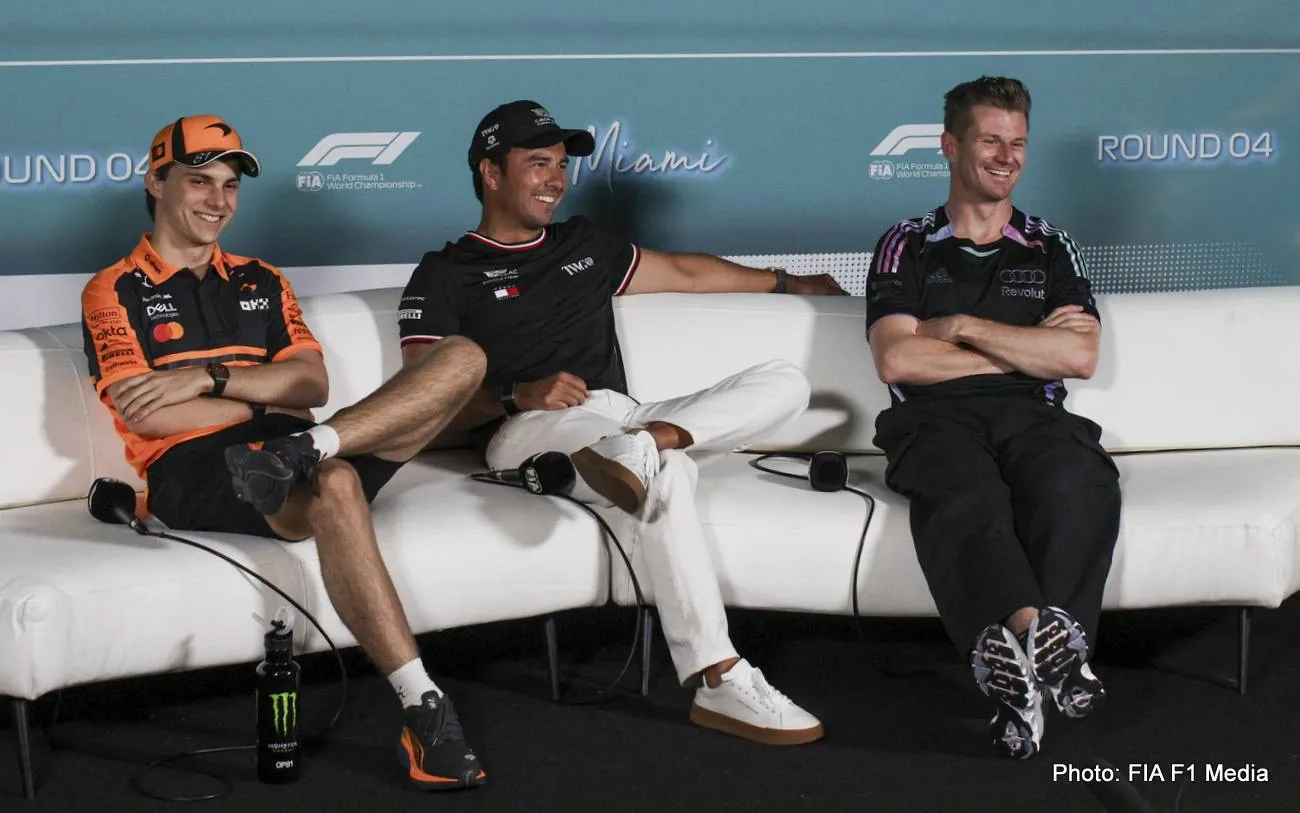
Formula 1 drivers said the Miami Grand Prix will provide the first real test of urgent rule tweaks aimed at reducing unsafe closing speeds and making the sport’s new power unit era less complicated and anti-racing.
After three troubled opening races in Australia, China and Japan, and in the wake Haas driver Ollie Bearman’s heavy crash at Suzuka, the FIA, Formula 1, teams and drivers agreed changes before this weekend’s race.
Speaking during the FIA-hosted press conference in Miami, Oscar Piastri said the changes were welcome: “The collaboration’s been good and trying to make changes. I think they’re a step in the right direction.
"How far they go to helping the problems, you’re never going to fix the problems without changing the hardware of the power units, but I think it’s a step in the right direction. In the simulator running I did, some things are a bit better, some things are really not very different, so we’ll have to wait and see just how it turns out on track," the McLaren driver added.
Audi’s Nico Hulkenberg said the tweaks were focused on safety and simplifying qualifying preparation: “Obviously in the spirit of safety, closing speeds, being able to push more in quali laps, opening quali laps, everything a little bit less complicated, more user-friendly, more pushy in quali.”
What happened in Suzuka was very scary

Cadillac’s Sergio Perez said the response showed the sport was willing to react quickly: “What happened in Suzuka was very scary and from a safety point of view there was urgency to change things. And for me it’s very good to see that we are open for changes in all areas: drivers, teams, FIA, Formula 1.”
Carlos Sainz also welcomed the reaction, but said Miami would not deliver a magic fix: “I don’t believe we will come up with a magic bullet here that will suddenly change everything, but I think all the changes are sensible and hopefully going to make things a bit more enjoyable from our part.”
Red Bull’s Isack Hadjar warned Miami may flatter the revised rules because the circuit is not among the most demanding for the new power units: “I don’t think it’s the most representative track. I don’t think it’s a challenging track for the power units we have. I think it’s going to look good, but on some other tracks it’s definitely going to be harder.”
The drivers also raised concerns about a possible wet race on Sunday, with Sainz questioning whether full electric deployment levels were needed in poor visibility: “I’ve always been a bit of an advocate for the 350 kilowatts not being needed and I hope that we could find a way to maybe reduce it down to 250 or 300 for the race.”
Sainz: Formula 1 should be flat out racing

World championship leader, Mercedes driver Kimi Antonelli said wet running had already been adjusted: “Although now with the changes, they clipped the power to 250 kilowatts for the wet and no boost, so that’s already a step forward in that regard.”
Piastri said bigger changes may still be needed beyond this season: “Some of those things we can tweak, like we have done. Some of those things you need to change in the medium term. Some of the things need a complete overhaul probably.”
Sainz summed up the contradiction facing Formula 1’s new era, saying the cars remain interesting to drive but too far removed from pure racing: “I enjoy having the time to think, but in reality F1 should be flat-out racing, so I have countered feelings and thoughts about that.”
Racing resumes after a forced hiatus due to the war. This weekend's Miami Grand Pris was meant to be the sixth round of the season, but with Bahrain and Saudi Arabia cancelled, the first race in the USA is the fourth on the revised calendar.
Arguably the most anticipated Grand Prix of this century but for all the wrong reasons, as Red Mist aptly described the race in Miami to be. Time will tell if the drivers are overly optimistic, or indeed the rule tweaks are a step in the right direction.
Latest News


Loading