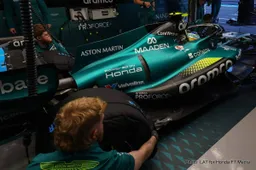
How can it be that a Formula 1 engine costs over $10-million? How is this progress?
F1 OpinionTuesday, 28 April 2026 at 10:27
Nigel Mansell has criticised the escalating cost of Formula 1 power units, describing the current financial landscape as excessive compared to the sport’s past.
1992 Formula 1 world champion, Mansell pointed to the price of modern F1 hybrid systems, which cost millions per unit and require extensive manufacturer support: “The cost of a current power unit, I think it's certainly over seven figures isn't it, just for one engine."
Mansell contrasted that with the affordability of the Cosworth DFV era, when independent teams could purchase competitive engines outright: “You don't have to look back too many years and certainly in our day, you got a great Cosworth DFV for $25,000 (£18,470). So, I mean that's in our lifetime and not that many years ago.”
He said lower costs in earlier decades contributed to a more competitive and accessible Formula 1 grid: “Back in the early 80s, it was only £2-3 million a year to pay everybody. Drivers, a team of 87-120 people. It was so vibrant back then because in the mid-80s, there were 46 cars trying to qualify for 26 places on the grid. It was outstanding. It was unbelievable how many Formula 1 teams there were.”
Mansell argued that rising technical complexity and frequent regulation changes have driven spending to unsustainable levels: “The cost element is outrageous, some of it. That's one for the powers that be isn't it. They regulate all that and it's not inexpensive to do what they're doing.”
He added that stability in engine rules could help contain costs, while greater technical freedom might reduce development pressure: “It would be lovely if they had a proper engine where everybody could do whatever they wanted to do to the engine but they can't do any more.
"The costs would come straight down. And if you have consistency, the costs come down even more. But if you keep changing things, to push the limits, the amount of money the manufacturers have to spend to get the engines to be as dynamic as they can, it's a fortune in the first few years," explained Mansell.
How is this progress?

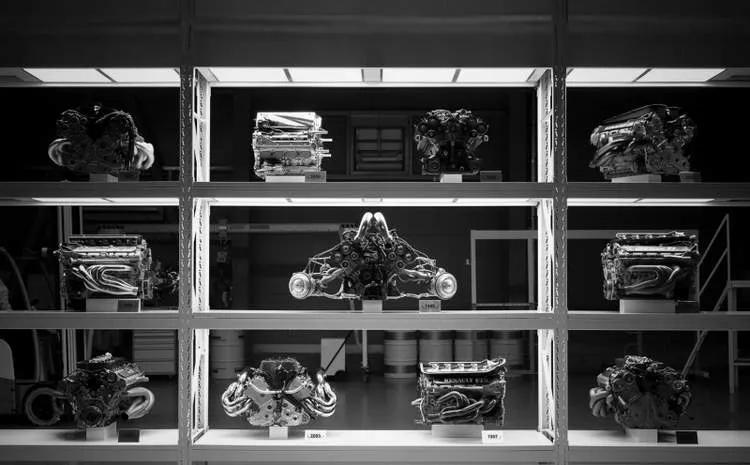
Historical analysis of Formula 1 engine costs confirms a clear trend: what began as a relatively accessible, standardised component in the late 1960s has evolved into one of the most complex and expensive engineering programmes in global sport.
The benchmark starting point remains the Cosworth DFV, introduced in 1967. Developed for £100,000 and sold to teams for £7,500, it offered a competitive, reliable package that private entrants could buy outright. In modern terms, that equates to roughly $200,000 per engine. Its simplicity and mass availability defined an era where independent teams could realistically compete.
Costs rose sharply in the 1980s with the arrival of turbocharged engines. Manufacturer involvement intensified, and the model shifted from ownership to leasing.
By the mid 1980s, engines cost $200,000 to $300,000 each, while full-season supply deals reached $5 million to $8 million. Development programmes escalated into the hundreds of millions, driven by extreme power outputs, complex materials, and intensive research.
From 1989 to 2005, naturally aspirated V10 engines became the standard, but spending continued to rise.
Per engine costs reached up to $1 million, with manufacturer programmes running at $150 million to $300 million annually. Customer teams paid up to $25 million per season. High rev limits, rapid development cycles, and exotic materials sustained the escalation.
The 2006 to 2013 V8 era introduced regulatory freezes to contain spending. While this slowed growth, engines still cost $1 million to $2 million each, and customer deals ranged between €8 million and €12 million per season. Complexity remained high despite limits on development.
Hybrid era redefined the cost structure

The 2014 introduction of turbo hybrid power units marked the largest financial leap in Formula 1 engine history.
Modern power units integrate internal combustion, turbocharging, and energy recovery systems. Development costs exceeded $1 billion per manufacturer, with Mercedes alone spending around $1.4 billion in the early hybrid years.
A single power unit is now valued at $10 million to $15 million, though teams lease packages capped at roughly €12 million to €15 million per season under current regulations.
The shift to hybrid systems, particularly the complex MGU-H, combined with strict reliability demands and limited unit allocations, has driven costs to unprecedented levels.
The analysis identifies regulatory change as the primary trigger for cost spikes.
Each major rule shift forces complete redesigns, rendering previous investment obsolete. The 2014 hybrid regulations and the now implmented 2026 rules, which remove the MGU-H and increase electric output, both required or will require vast new development spending.
To control this, the FIA has introduced a power unit cost cap set at $95 million annually, rising to $130 million, aimed at attracting new manufacturers such as Audi and Red Bull Ford.
A bargain at $10-million per power unit, and $95 million a year to runthe things? Not quite, and if you want to actually start it, bring in a platoon of engineers before tour car moves an inch on it's own power. How is that progress? (Source: AceOdds.com)


Latest News



Loading