Lessons for Formula 1: The EV gamble has Porsche in crisis and fighting for survival
Non-F1 NewsSunday, 10 May 2026 at 07:30
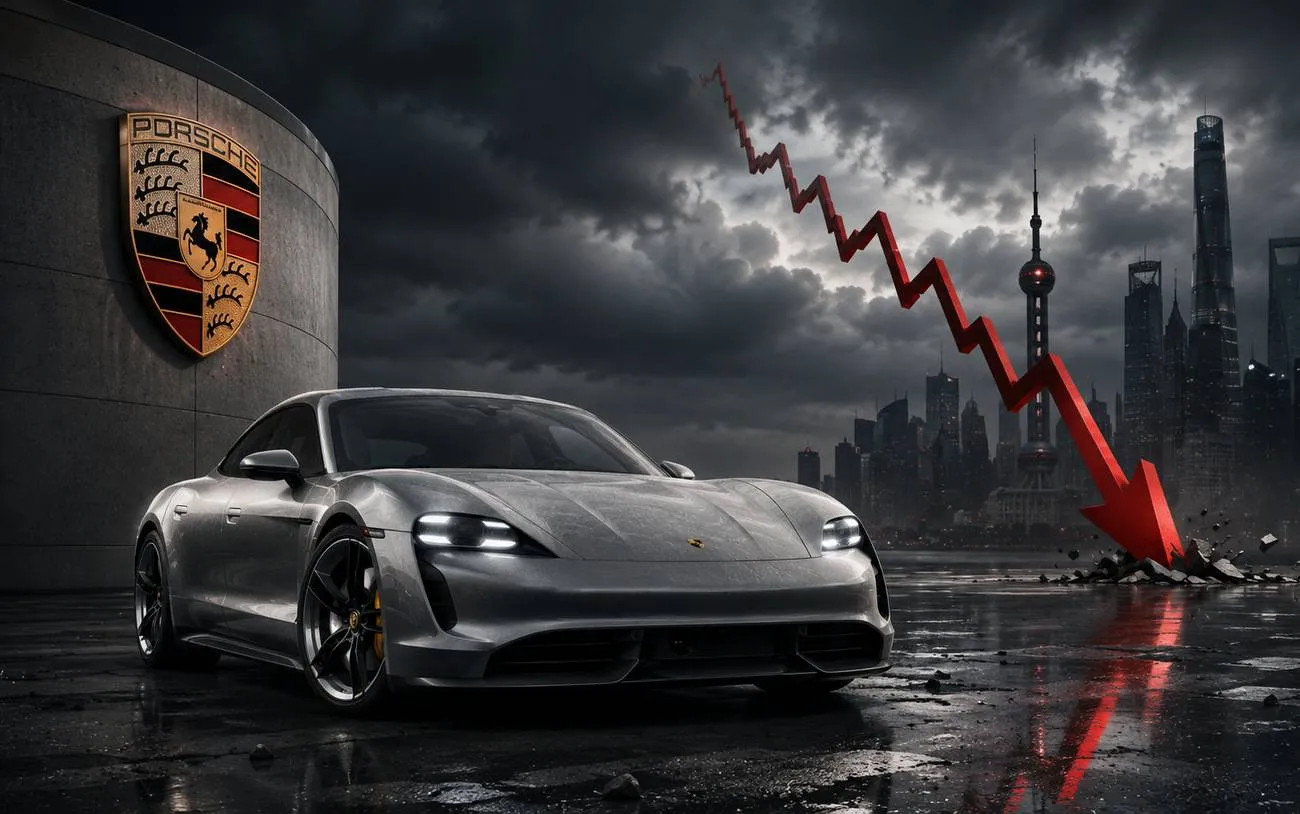
Porsche is facing one of the most difficult periods in its modern history after a dramatic collapse in profitability exposed the scale of the company’s failed electric vehicle expectations.
Therein lies the harsh lessons for Formula 1, blindly embracing electric technology in its infancy, fobbing off the tradiotnalist Internal Combustion Engine brigade only to have batteries explode their ambitions. And a massive technological leap by Chinese carmakers in the EV market.
The German manufacturer’s operating profit fell from €4.035 billion to just €40 million during the first 9 months of 2025, a decline of roughly 99%.
Full year figures later showed group operating profit dropped 92.7% to €413 million from €5.64 billion in 2024, while revenue declined 9.5% to €36.27 billion.
Although Porsche remains profitable, the numbers marked a sharp reversal for one of the automotive industry’s most successful luxury brands.
Much of the decline came from restructuring costs, battery investment writedowns, and tariff related pressures, but weakening EV demand and collapsing sales in China were at the centre of the downturn.
Porsche has since entered what new CEO Dr Michael Leiters describes as a period of “realignment”, with the company attempting to become leaner, faster, and more focused on profitability.
“For Porsche, 2026 is all about realignment,” Leiters explained. “Through clear measures, we are making the sports car manufacturer leaner and faster. We are also aligning our product portfolio even more consistently with our customers’ wishes.”
Taycan no longer driving Porsche’s future

The problems trace back to Porsche’s aggressive electric strategy launched earlier in the decade.
Following the introduction of the Taycan in 2020, Porsche targeted more than 80% electric vehicle sales by 2030 and invested heavily in EV platforms, software, infrastructure, and battery development.
At the time, the company appeared to be in a dominant position.
Porsche sold 309,000 vehicles in 2022, generated €6.8 billion in profit, and completed a major IPO valued at nearly €75 billion.
The Taycan initially strengthened Porsche’s position as a premium EV manufacturer, selling around 41,000 units in 2023 while winning several industry awards. But by 2024, momentum had reversed sharply.
Global Taycan sales fell almost 49% to roughly 20,800 units as concerns grew around reliability, software quality, depreciation, and real world range performance.
Multiple recalls linked to battery short circuit risks also damaged confidence in the model.
The Taycan increasingly struggled against rivals offering stronger range figures, more advanced software ecosystems, and lower pricing.
Tesla remained dominant in the premium EV segment, while Chinese manufacturers accelerated rapidly with newer technology and more competitive pricing.
Collapse in China becomes Porsche’s biggest problem

China, once Porsche’s largest market accounting for around 30% of global sales, became the company’s biggest area of concern.
Sales in the country fell 28% in 2024 to around 57,000 vehicles before dropping a further 26% in 2025 to roughly 42,000 units.
The decline reflected a major shift in Chinese consumer preferences.
Brands such as BYD, NIO, and Xiaomi expanded aggressively with electric vehicles focused heavily on software integration, AI systems, smartphone connectivity, and autonomous driving technology.
Xiaomi’s SU7 emerged as one of the strongest examples of the new competition facing traditional European manufacturers.
Porsche reportedly responded with significant discounts on several models, including the Taycan, as dealers struggled with excess inventory and weaker demand.
The move helped clear stock but also raised concerns about the long term impact on Porsche’s premium positioning.
Battery setbacks and strategy reset

At the same time, Porsche’s wider EV investment strategy encountered further setbacks.
Battery supplier Northvolt entered bankruptcy proceedings in 2025, disrupting Porsche’s long term battery plans and forcing the company to scale back parts of its internal battery operations.
Porsche also reduced staffing at Cellforce, its battery subsidiary, while writing down hundreds of millions of euros in related investments.
The electric Macan suffered delays linked to software development problems, while future electric projects, including the 718 Boxster and Cayman replacements, were pushed back.
Internally, tensions also emerged over the company’s direction.
Several senior management changes took place during the crisis period, while Oliver Blume stepped down as Porsche CEO ahead of 2026. Former McLaren executive Michael Leiters was appointed to lead the restructuring process.
Porsche has since abandoned its strict 80% EV sales target for 2030 in favour of a broader multi powertrain strategy combining combustion engines, hybrids, and electric vehicles.
The company also announced around 3,900 job cuts by 2029 as part of a wider restructuring programme.
“At Porsche, 2026 is all about realignment,” Leiters said again while outlining the company’s new “Strategy 2035” programme. “The transformation is challenging and requires consistent action and discipline.”
Finance chief Dr Jochen Breckner added: “The realignment lays the foundation for sustainable profitability and long term value creation.”
Porsche searching for balance in changing market

Despite the severity of the downturn, Porsche is not facing collapse. The company remains one of the strongest luxury automotive brands globally and expects improved performance beyond 2025 as restructuring measures take effect.
Porsche’s Q1 2026 results suggested early signs of stabilisation despite continued pressure.
The company reported group operating profit of €595 million for the first quarter of 2026, down from €762 million in the same period last year, while revenue fell 5.2% to €8.40 billion. Vehicle deliveries dropped 14.7% to 60,991 units.
However, Porsche maintained its full year 2026 forecast and achieved a 7.1% operating return on sales, at the upper end of its expected range.
Automotive net cashflow also improved significantly from €198 million to €514 million, supported by tighter cost discipline and reduced investment spending.
Porsche said it would continue prioritising its “Value over Volume” strategy, focusing on higher margin products rather than pure sales growth.
Battery electric vehicles represented 19.8% of deliveries during Q1 2026, down from 25.9% a year earlier, highlighting the company’s growing shift back towards combustion and hybrid models.
However, the crisis exposed how quickly the global premium car market has changed.
Traditional brand prestige and motorsport heritage are no longer enough on their own in the EV sector, particularly in China where software capability and connected technology increasingly define customer expectations.
Porsche now finds itself trying to balance 2 very different customer bases. Traditional buyers still prefer combustion engines and driving character, while EV customers increasingly prioritise software integration, charging infrastructure, AI systems, and digital ecosystems.
How successfully Porsche manages that transition may define the company’s next decade. Meanwhile, Formula 1 should pay attention to the reality of hitching their wagon to an electric or semi-electric concept in the future. (Additional Source: Nimbus)
Latest News

Loading