Hidden Science of Formula 1 Pit Stops: Every Millisecond Counts
F1 HistoryWednesday, 15 July 2026 at 06:55
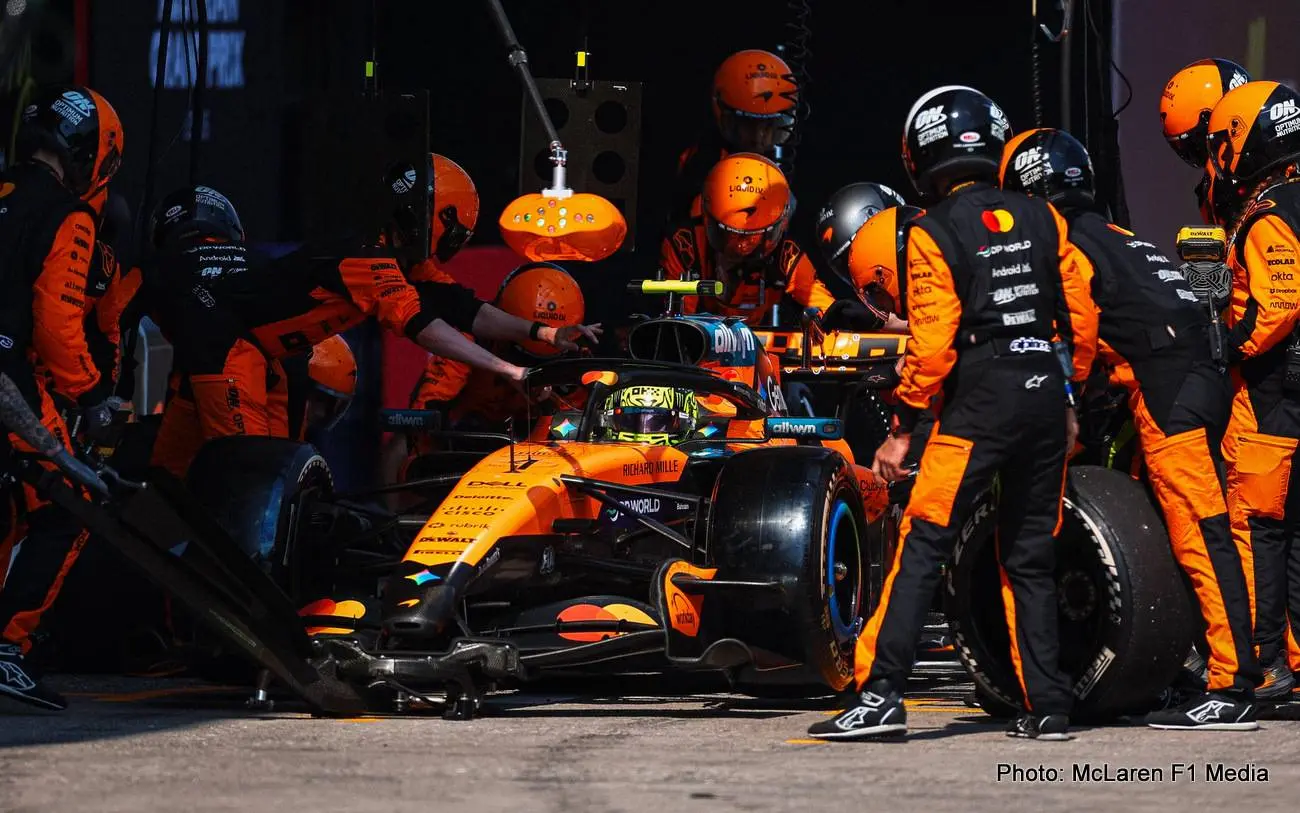
Formula 1 is often associated with breathtaking speed, daring overtakes, and advanced engineering. However, some of the most decisive moments of any Grand Prix take place away from the racing line.
The Hidden Science of Formula 1 Pit Stops: Every Millisecond Counts
highlights how a carefully coordinated sequence lasting only a few seconds can
influence the final race result. Every movement inside the pit lane is based on
extensive preparation, technological analysis, and strategic decisions rather
than pure chance.
This same focus on data, probability, and
performance analysis attracts many fans beyond the track itself. For some,
studying driver form, team strategies, and race statistics becomes an
additional way to engage with Formula 1, including through sports predictions
and responsible betting activities. Platforms such as Parimatch reflect how modern sports
enthusiasts combine their passion for competition with analytical approaches
when evaluating possible race outcomes.
Modern Formula 1 pit stops have evolved
into highly optimized operations supported by digital systems, precision
equipment, and continuous performance evaluation. Teams invest significant
resources in improving efficiency because even a fraction of a second can
determine whether a driver rejoins the track ahead of a rival or loses valuable
positions.
Why Every Millisecond Matters

The Hidden Science of Formula 1 Pit
Stops: Every Millisecond Counts demonstrates that pit stops are no longer
viewed simply as tire changes. They have become strategic events that combine
engineering, human performance, and predictive analytics into a single
synchronized process.
Several factors explain why every
millisecond is valuable:
●
Track position is often difficult
to recover through overtaking alone.
●
Tire performance changes
significantly throughout a race.
●
Safety Car periods create unique
strategic opportunities.
●
Traffic management can completely
reshape race strategy.
A pit stop lasting 2.3 seconds instead of
2.8 seconds may appear insignificant in isolation, yet over the course of a
championship, these small differences regularly influence podium finishes and
championship standings.
The Evolution of Formula 1 Pit Stops

Formula 1 pit stops looked dramatically
different several decades ago. During the 1950s and 1960s, refueling,
mechanical repairs, and tire changes frequently lasted more than thirty
seconds. Crew members relied almost entirely on manual coordination with
limited communication tools.
Today's pit stops are built upon decades
of technological development. Refueling has disappeared from modern race
regulations, allowing teams to concentrate exclusively on tire replacement and
minor front wing adjustments.
The transformation has been driven by
several innovations:
- Lightweight wheel guns
- High-performance wheel nuts
- Carbon-fiber lifting equipment
- Electronic release systems
- Real-time telemetry integration
Each improvement has reduced unnecessary
motion while increasing operational consistency.
Inside a Modern Pit Stop

Although spectators only observe a brief
sequence, every pit stop consists of multiple precisely timed actions occurring
simultaneously.
| Stage | Primary Objective | Average Time |
| Driver positioning | Stop within marked area | 0.3–0.5 sec |
| Front and rear lifting | Stabilize the car | <0.5 sec |
| Wheel removal | Remove four tires | ~0.8 sec |
| Tire installation | Mount new tires | ~0.8 sec |
| Safety verification | Confirm wheel attachment | <0.4 sec |
| Car release | Safe departure | Immediate |
| Feature | Earlier Era | Modern Formula 1 |
| Average duration | 20–40+ seconds | Around 2–3 seconds |
| Refueling | Common | Not permitted during races |
| Data support | Minimal | Extensive telemetry |
| Communication | Manual | Digital radio systems |
| Performance analysis | Limited | High-speed video and analytics |
| Strategic simulations | Rare | Continuous predictive modeling |
Every crew member performs one
specialized task. Unlike many team sports, there is almost no redundancy during
a Formula 1 pit stop.
The Human Precision Behind the Process

Technology supports the operation, but
human coordination remains the deciding factor.
Each mechanic trains hundreds of times
before a race weekend. Practice sessions focus on consistency rather than speed
alone. Teams analyze every movement using high-speed cameras and performance
software.
Important performance factors include:
●
Reaction time
●
Muscle memory
●
Communication
●
Position accuracy
●
Fatigue management
Even elite pit crews continue refining
movements measured in hundredths of a second.
Expert Tip
Elite Formula 1 teams often spend more
time analyzing pit stop footage than the average viewer spends watching an
entire Grand Prix. Small improvements in body positioning or tool handling can
produce measurable competitive advantages.
The Technology Powering Every Pit Stop

Modern Formula 1 pit stops rely on an
ecosystem of advanced technologies working together in real time.
Some of the most important systems
include:
●
Digital telemetry
●
Laser positioning references
●
Pneumatic wheel guns
●
Pressure monitoring systems
●
High-speed data transmission
●
Automated release indicators
Telemetry allows engineers to anticipate
tire wear before the car even enters the pit lane. Strategic software
continuously recalculates the optimal lap for a pit stop by evaluating tire
degradation, traffic density, weather forecasts, and competitor strategies.
Instead of reacting to events, teams
increasingly predict them.
How Data Shapes Pit Stop Strategy

Every race weekend generates enormous
volumes of information.
Engineers monitor:
●
Tire degradation rates
●
Brake temperatures
●
Fuel consumption
●
Track evolution
●
Weather changes
●
Sector performance
●
Competitor pit windows
Artificial intelligence and predictive
algorithms help identify the ideal moment for a tire change. Rather than
relying solely on intuition, strategy groups compare thousands of possible race
scenarios within seconds.
This analytical approach reduces
uncertainty and supports more informed strategic decisions.
Common Pit Stop Risks

Even the fastest teams encounter
operational risks.
Some of the most common issues include:
●
Unsafe releases
●
Cross-threaded wheel nuts
●
Equipment malfunctions
●
Driver positioning errors
●
Communication delays
Because Formula 1 regulations prioritize
safety, any mistake can result in significant time penalties or mechanical
retirements.
For this reason, reliability often
receives as much attention as outright speed.
Important
A record-breaking pit stop provides
little competitive value if it creates an unsafe release or leads to a penalty.
Successful teams prioritize repeatable precision over unnecessary risk.
Comparing Modern and Historical Pit Stops

| Stage | Primary Objective | Average Time |
| Driver positioning | Stop within marked area | 0.3–0.5 sec |
| Front and rear lifting | Stabilize the car | <0.5 sec |
| Wheel removal | Remove four tires | ~0.8 sec |
| Tire installation | Mount new tires | ~0.8 sec |
| Safety verification | Confirm wheel attachment | <0.4 sec |
| Car release | Safe departure | Immediate |
| Feature | Earlier Era | Modern Formula 1 |
| Average duration | 20–40+ seconds | Around 2–3 seconds |
| Refueling | Common | Not permitted during races |
| Data support | Minimal | Extensive telemetry |
| Communication | Manual | Digital radio systems |
| Performance analysis | Limited | High-speed video and analytics |
| Strategic simulations | Rare | Continuous predictive modeling |
The comparison illustrates how Formula 1
has transformed pit stops into one of motorsport's most technically
sophisticated operations.
Frequently Asked Questions

Why are Formula 1 pit stops so fast?
Specialized crew roles, advanced
equipment, extensive practice, and carefully optimized procedures enable teams
to complete tire changes in only a few seconds.
Do computers control Formula 1 pit stops?
No. Digital systems provide guidance and
monitoring, but trained mechanics remain responsible for executing every
physical action.
How often do teams practice pit stops?
Teams perform hundreds of repetitions
throughout the season to improve coordination, consistency, and reaction times.
What is the biggest challenge during a pit stop?
Maintaining perfect synchronization under
intense pressure while avoiding safety violations represents the greatest
challenge.
Can one slow pit stop decide a race?
Yes. Losing even two or three seconds may
place a driver behind competitors, significantly affecting race strategy and
final results.
Why is telemetry important during pit stops?
Telemetry provides engineers with
real-time information about tire performance, vehicle condition, and race pace,
allowing more accurate strategic decisions.
The Future of Formula 1 Pit Stop Technology

Future developments are expected to focus
on even greater precision rather than dramatically shorter stop times. As
regulations continue evolving, teams will likely invest more heavily in
artificial intelligence, predictive modeling, digital twins, and advanced
simulation platforms.
Machine learning may eventually identify
subtle performance patterns that remain invisible to human analysts. Enhanced
sensor technology could also improve equipment monitoring and operational
reliability without reducing the essential role of skilled mechanics.
The balance between technology and human
expertise will remain one of Formula 1's defining characteristics.
The Hidden Science of Formula 1 Pit
Stops: Every Millisecond Counts demonstrates that modern pit stops represent
far more than rapid tire changes. They combine engineering excellence,
sophisticated analytics, digital innovation, and exceptional teamwork into one
of the most demanding operations in professional sport.
Every movement inside the pit lane
reflects years of technological progress and continuous refinement. While
drivers remain the visible stars of Formula 1, the hidden science behind each
pit stop reveals that championship success often depends on a perfectly
executed sequence lasting only a few remarkable seconds.


Latest News

Loading