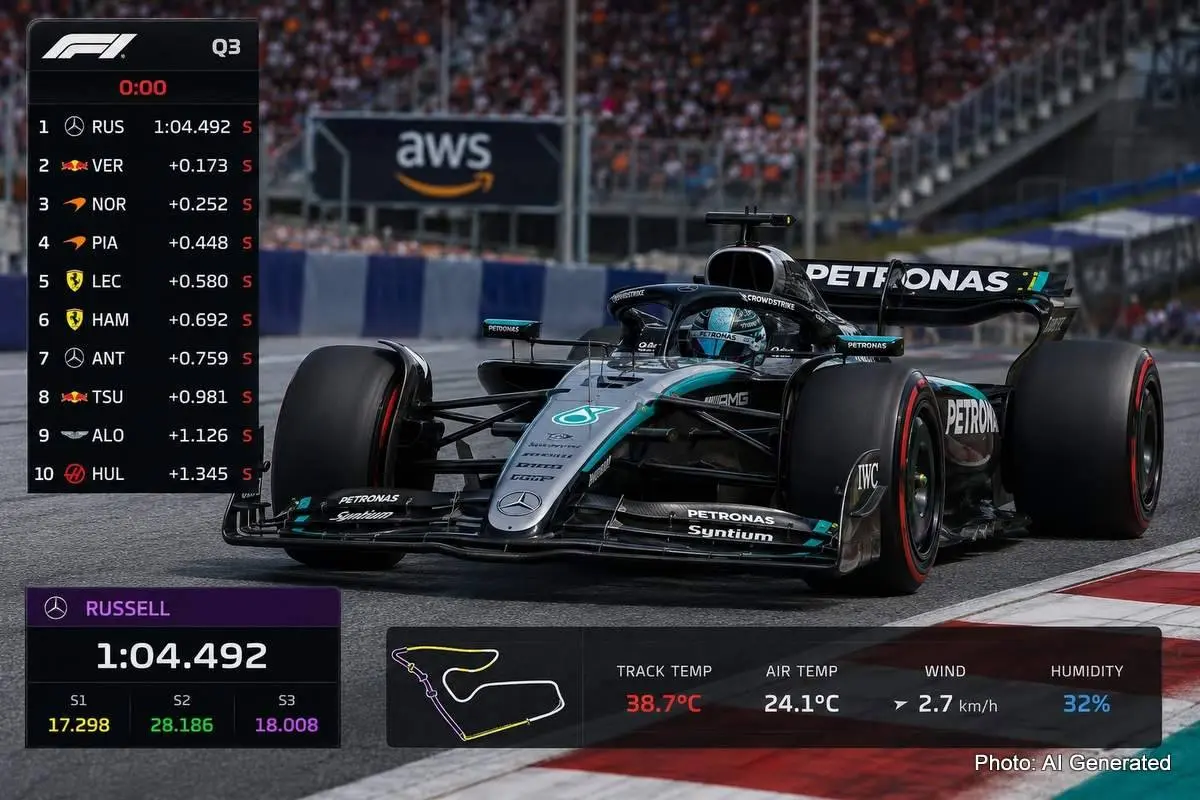
The difference between pole and anti-pole in Formula 1 used to be tenths. That measurement, more often than not, covers the four rows for some circuits.
Formula 1 performance has already started to converge at the front end of the grid, with the other teams only getting closer as the season progresses. Since the cost cap limits engine and chassis development, there’s only one other place to turn to: the data.
Being a second off the pace is huge in F1, but if you divide that second over say sixteen turns, that brings the shortfall for each one down to approximately six one-hundredths of a second.
In truth, it’s not possible to comprehend such a fraction of a moment in time, even for the drivers. The reality is, of course, that one second is not evenly divided across the corners; it’s a combination of slower entry, apex and exits that impact the terminal speed reached before the next braking point.
However, we are now having to look at lap times separated by tenths and even thousands.
Where’s my time, really?

When a driver is looking to close these micro gaps of performance, the race engineer is the go-to person. He or she has the data, and it is absolute…or is it?
For all these ones and zeros to mean anything, it requires a reference to measure any delta. What happens if that “base” is actually not the optimal output?
Essentially, there are three data points the engineer can use to compare performance: historical, teammate, and the V-max mathematical model. None of these is immune to being erroneous though.
The Devil is in the data

For starters, it’s very easy to get into a mess with historical data. Track surfaces change, together with downforce levels, equipment and of course weather.
Teammate data is potentially worse due to large variations in skill, driving style and setup. Finally, we have the V-Max model, although its efficacy has recently been called into question, with Lewis Hamilton finding significant gains when ignoring it.
This is hardly surprising since the simulator is a big contributor to the model and while these have become increasingly sophisticated, they still lack the real “feel” of the tyre’s interaction with the track surface.
Hamilton has often sparked big debates with his engineers in set-up when his performance significantly outpaces the simulation prediction. The recent British Grand Prix was just one example where he went in a different direction.
The fact that Charles Leclerc followed Hamilton’s instinct was considered a contributory factor to the Monegasque’s eventual victory!
Poisoned chalice

Data plays a crucial role in F1 both in the design of upgrades and the car’s performance, but if the software is faulty, then the resulting output is going to be the same.
Take this year’s Aston Martin AMR26. Much of the chassis and aero performance blame here fell on outdated simulation tools that sent them over a cliff and into a design cul-de-sac. We also see repeated pitstop strategy fails where the computer said “yes”, but reality said “no”.
In this day and age of data model solutions, it’s good to know that a driver still has some skin in the game and someone in the pits who still goes with their gut feel on when to box or not to box.
However, with the increasing requirement of effective algorithms to race the car and the rapid advances in AI, that might all be short-lived.
Latest News



Loading