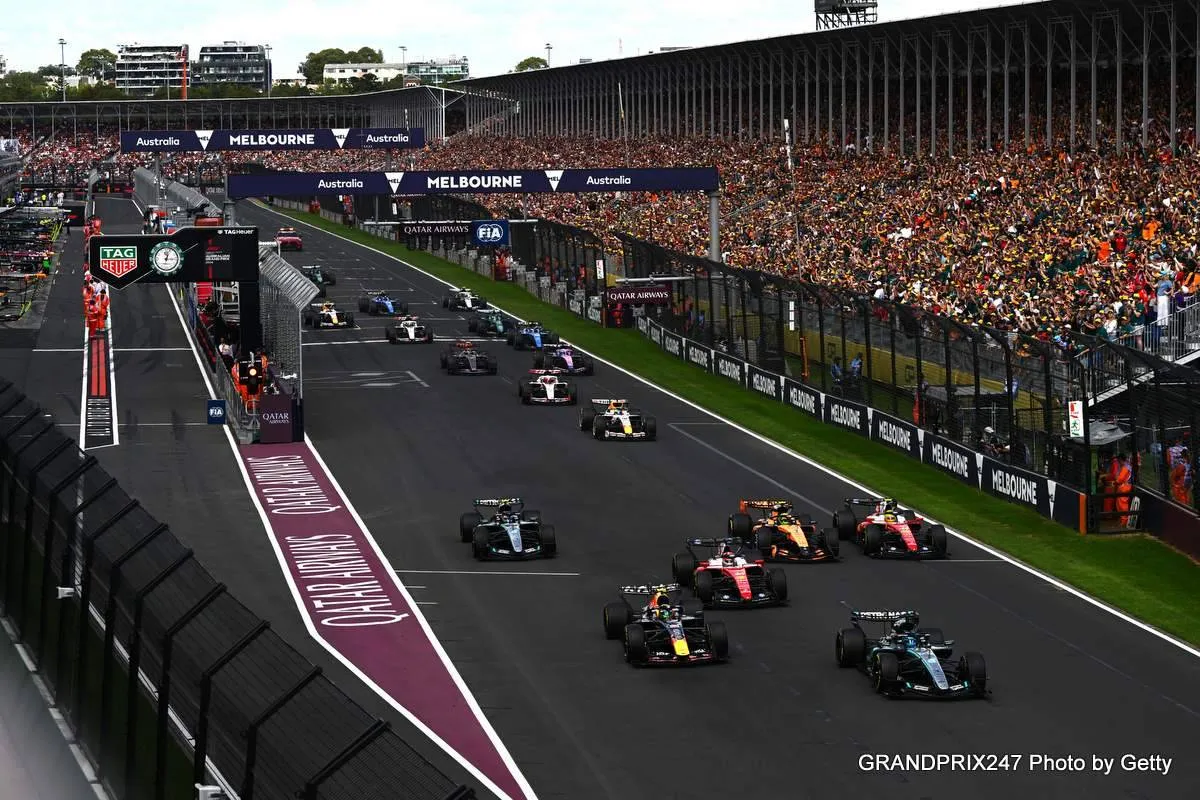
You settle in on a Sunday, the engines roar, and the lights go out. But how long will you actually be glued to your screen? Formula 1 is thrilling, but its rules on race length often confuse new fans.
Most Formula 1 races last between 90 and 100 minutes. However, unlike a soccer match with a strict countdown clock, F1 uses a unique blend of distance and time to determine the winner.
Formula 1 cars are engineering marvels pushing the limits of physics. Understanding how modern vehicle systems work helps explain why teams must carefully manage fuel, aerodynamics, and tire degradation over these long stretches.
Because teams cannot refuel during a race, crossing the finish line efficiently within the allowed time is everything.
Distance vs. Time: How F1 Race Length is Set
To understand F1 race duration, you first need to look at the track distance. The sport rarely relies on a simple timer to end the event.
The 305-Kilometer Standard Rule
The FIA (Fédération Internationale de l'Automobile) dictates that almost every Grand Prix must cover a minimum race distance of 305 kilometers (about 190 miles). Drivers compete to complete this exact distance first. This rule ensures that every race puts roughly the same physical and mechanical stress on the drivers and their cars, no matter where they race in the world.
The Monaco Grand Prix Exception
There is one famous exception to the standard rule. The Monaco Grand Prix targets a shorter distance of 257 kilometers (about 160 miles). Monaco is a very tight, highly technical street circuit with a slow average speed. If drivers had to cover the full 305 kilometers through those narrow streets, the race would simply drag on for too long.
The Two-Hour and Three-Hour Time Caps
While distance is the primary goal, F1 enforces strict time limits as a safety backup. A Grand Prix cannot exceed two hours of active racing. If a race is particularly slow and hits the two-hour limit before the drivers complete all the laps, the checkered flag waves at the end of the next lap.
Additionally, there is a hard three-hour overall window. This clock starts the moment the race begins and includes all stoppages, like red flags for crashes or heavy rain. Once three hours pass, the event ends immediately.
The Anatomy of an F1 Lap
So, how does that 305-kilometer distance turn into the lap counter you see on your TV?
How Track Length Dictates Lap Counts
Organizers calculate the lap count by dividing the 305-kilometer target by the length of a single lap at that specific circuit. They then round up to the nearest whole lap. Because every track is different, shorter tracks require more laps to reach the target, while longer tracks require fewer laps.
Circuit Extremes: Most vs. Fewest Laps
Because track lengths vary wildly, the total lap counts look very different depending on the weekend. The Monaco Grand Prix packs in the most laps of the season at a dizzying 78 laps. On the flip side, the sweeping, massive layout of Belgium's Spa-Francorchamps requires only 44 laps to hit the required distance.
What About F1 Sprint Races?
Formula 1 recently introduced sprint races to inject more excitement into the weekend. These are effectively mini-races run on Saturdays. A sprint covers just 100 kilometers (about 62 miles) and generally lasts around 30 minutes. To keep things moving, the FIA enforces a strict 60-minute maximum time limit for these shorter events, ensuring high-paced, aggressive racing without pit-stop strategies getting in the way.
What Can Change How Long a Race Takes?
If you tune in expecting exactly 90 minutes of action every time, the sport will quickly surprise you. Several unpredictable factors can stretch the broadcast.
Weather Conditions and Red Flags
Heavy rain completely changes the pace of a Grand Prix. Cars slow down to avoid sliding off the track, which naturally increases lap times. If conditions become too dangerous, race control will throw a red flag. This brings all cars back to the pit lane and pauses the race, though the overall three-hour event clock keeps ticking.
Safety Cars and Virtual Safety Cars (VSC)
When a crash leaves dangerous debris on the asphalt, a Safety Car comes out to bunch up the pack and slow everyone down so marshals can clean up. These slower laps still count toward the total race distance, but they take much longer to complete, eating directly into the two-hour racing limit.
F1 Strategy: Why Duration and Distance Matter
Every single second counts in Formula 1. Teams build complex race strategies around the expected duration of the Grand Prix. They calculate exact tyre wear rates and fuel loads down to the gram. Managing these high-performance machines under extreme stress requires constant monitoring.
Much like how everyday drivers rely on trusted professionals, you can find a good automotive resource to keeping your car in top condition so it stays safe and reliable. F1 teams just do this at 200 miles per hour, adjusting their engine modes on the fly to ensure they make it to the finish line.
What Happens if a Race Cannot Finish?
Sometimes the three-hour timer runs out before the drivers finish their required laps. When this happens, the FIA uses a tiered percentage system to award points fairly. If the grid completes less than 25% of the scheduled race distance, the winner gets minimal points. The points scale up depending on the distance covered. Once the leader crosses the 75% mark, full points are awarded even if the race ends early.
Extreme F1 Race Durations: The Record Breakers
Formula 1 history is full of wild extremes. The longest F1 race ever was the 2011 Canadian Grand Prix. Torrential rain and multiple crashes pushed the total event time to a grueling 4 hours and 4 minutes.
In stark contrast, the shortest F1 race ever took place at the 2021 Belgian Grand Prix. Heavy rain prevented any actual green-flag racing, and the event ended after just over three minutes of cars crawling behind the safety car.
Tips for Watching an F1 Race
If you want to get the most out of your Sunday viewing, start watching 10 minutes early. This lets you catch the formation lap and hear the final tire strategy calls. Keep a close eye on the pit stops, too—a single slow tire change can easily cost a driver the win.
Latest News

Loading