How Buyers Compare Cars More Effectively in the Digital Age
Special FeatureMonday, 16 March 2026 at 01:52
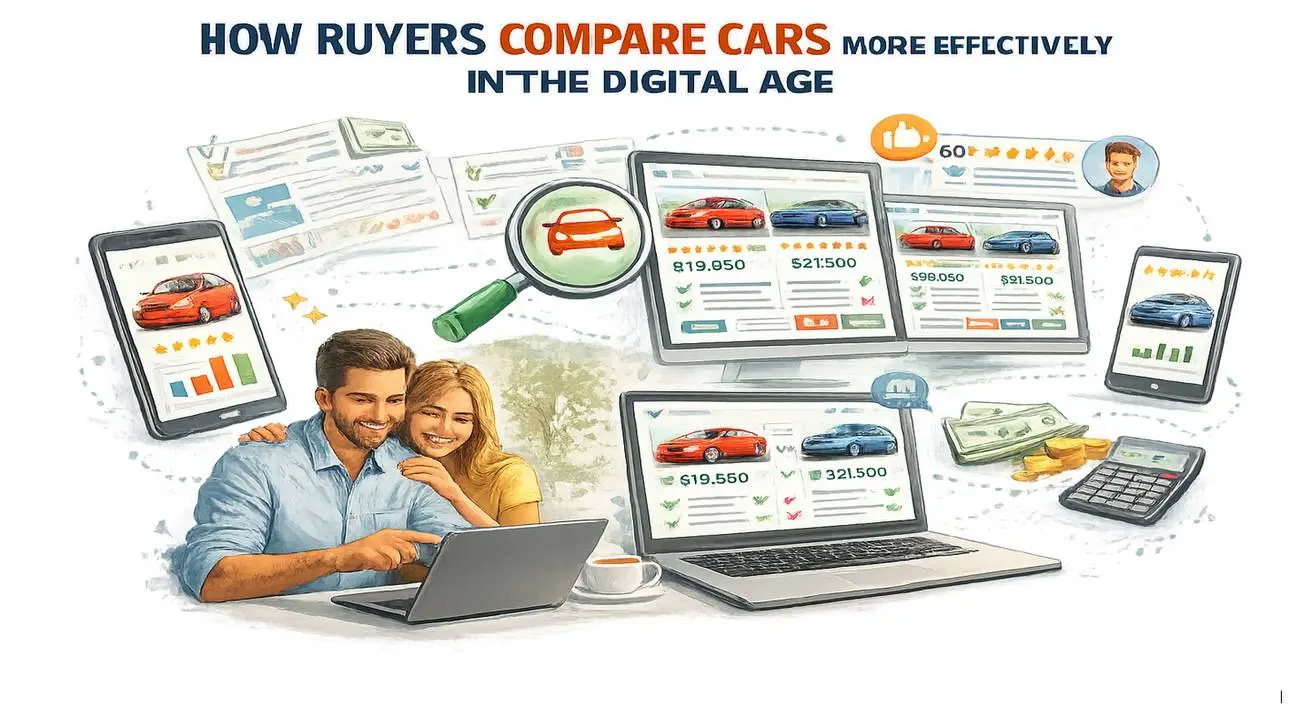
Car buying has evolved from a largely dealership-driven experience to a research-intensive digital process. Buyers today rarely rely on a single showroom visit or a brochure before making a decision.
Instead, they
use structured online tools to compare specifications, safety ratings,
technology features, and long-term ownership considerations. The digital age
has not only expanded access to informatio, it has improved the way buyers
evaluate and compare vehicles.
The result is a more analytical and transparent
purchasing journey. This is a special report for our Formula 1 readers and F1 fans interested in new cars.
From Limited Information to Data-Rich Decisions
In the past, buyers often depended on sales
representatives to explain differences between models. Access to detailed
technical data was limited, and variant-level distinctions were not always easy
to understand.
Today, online platforms allow users to compare vehicles
side by side. Buyers can review:
●
Engine output and torque figures
●
Fuel efficiency ratings
●
Boot capacity and cabin dimensions
●
Safety features and airbag count
●
Infotainment system size and connectivity
This structured presentation reduces guesswork. Rather
than switching between brochures or relying on memory, buyers can clearly and
objectively evaluate differences.
Digital comparison has turned what was once an
intuitive decision into a data-driven process.
Variant-Level Transparency
One of the most confusing aspects of car buying has
traditionally been variant selection. Minor differences between trims—such as
the presence of a sunroof, larger touchscreen, or additional airbags—could
significantly impact pricing.
Online platforms now provide detailed variant
breakdowns. Instead of navigating complex dealership explanations, buyers can
see which features are included in each trim level.
Platforms such as AckoDrive offer structured comparison tables
that highlight these distinctions, helping buyers decide whether the
higher-priced variants justify their additional features before making an
online booking.
This clarity allows buyers to avoid overpaying for
features they may not need.
The Role of Safety and Regulatory Awareness
Safety awareness has grown significantly in recent
years. Buyers increasingly examine crash-test ratings and advanced driver
assistance systems before making a purchase.
Digital platforms present safety information in
accessible formats, enabling comparisons across models and segments. Instead of
assuming that larger vehicles are inherently safer, buyers can evaluate airbag
counts, structural ratings, and electronic stability systems directly.
This transparency supports more informed safety
decisions and reduces reliance on assumptions.
Financial Planning and Ownership Costs
Car comparisons now extend beyond purchase price.
Buyers increasingly evaluate long-term ownership costs such as fuel efficiency,
service intervals, and insurance estimates.
By reviewing fuel economy figures and engine
specifications side by side, buyers can estimate running costs more accurately.
Online tools also provide on-road pricing breakdowns that include registration,
insurance, and taxes, reducing financial uncertainty.
Structured financial clarity makes comparison more
practical rather than aspirational.
Reviews and Real-World Context
In addition to specifications, buyers rely heavily on
expert reviews and user feedback. Digital platforms centralise these insights,
offering context beyond brochure claims.
Professional reviews explain driving dynamics, cabin
comfort, and real-world performance in ways that technical data alone cannot
capture. When combined with structured comparisons, these insights help buyers
balance numerical data with experiential evaluation.
ACKO Drive integrates expert analysis alongside
specification comparisons, enabling users to assess vehicles holistically
rather than relying solely on marketing language.
Filtering by Personal Priorities
The digital age allows buyers to personalise their
search criteria. Instead of comparing all available models indiscriminately,
they can filter by:
●
Budget
●
Fuel type
●
Body style
●
Transmission
●
Safety features
This targeted filtering ensures that only relevant
options appear in the shortlist. Buyers no longer need to manually eliminate
unsuitable models; digital tools streamline the process.
Such personalisation improves decision efficiency and
reduces information overload.
Reduced Emotional Bias
While car purchases often involve emotional elements,
digital comparison tools help balance subjective impressions with measurable
data.
When buyers can clearly see differences in fuel
efficiency, boot space, or safety features, the decision becomes grounded in
objective evaluation. This does not eliminate emotional preference, but it
ensures that it is informed by practical considerations.
The shift toward data transparency has made car
comparison more rational and less dependent on persuasion.
A More Empowered Consumer
Perhaps the most significant outcome of digital
comparison is increased consumer empowerment. Buyers now approach dealerships
with clear expectations and well-defined shortlists.
Instead of asking broad questions, they can focus on
test drives and final verification. This reduces negotiation uncertainty and
improves overall satisfaction.
The digital age has shifted the balance of information
in favour of the buyer.
Car comparison in the digital age is more structured,
transparent, and personalised than ever before. With access to detailed
specifications, safety data, financial breakdowns, and expert reviews, buyers
can evaluate vehicles with greater confidence.
Platforms like ACKO Drive illustrate how integrated
comparison tools support informed decision-making, transforming the buying
journey into a research-led process. In an increasingly competitive automotive
market, effective comparison has become not just helpful—but essential.

Latest News











Loading