FIA approves Formula 1 rule updates as President Ben Sulayem outlines future plans
F1 NewsTuesday, 23 June 2026 at 16:11
The FIA has approved a series of updates to Formula 1's Sporting, Technical and Financial Regulations, including changes to wet-weather power deployment, expanded pre-season testing from 2027 and further refinements to the sport's future power unit roadmap.
The decisions were ratified at the World Motor Sport Council meeting held in Macau on Monday during the FIA Conference, where delegates from across the governing body's global network gathered to discuss governance, competition and regulatory matters.
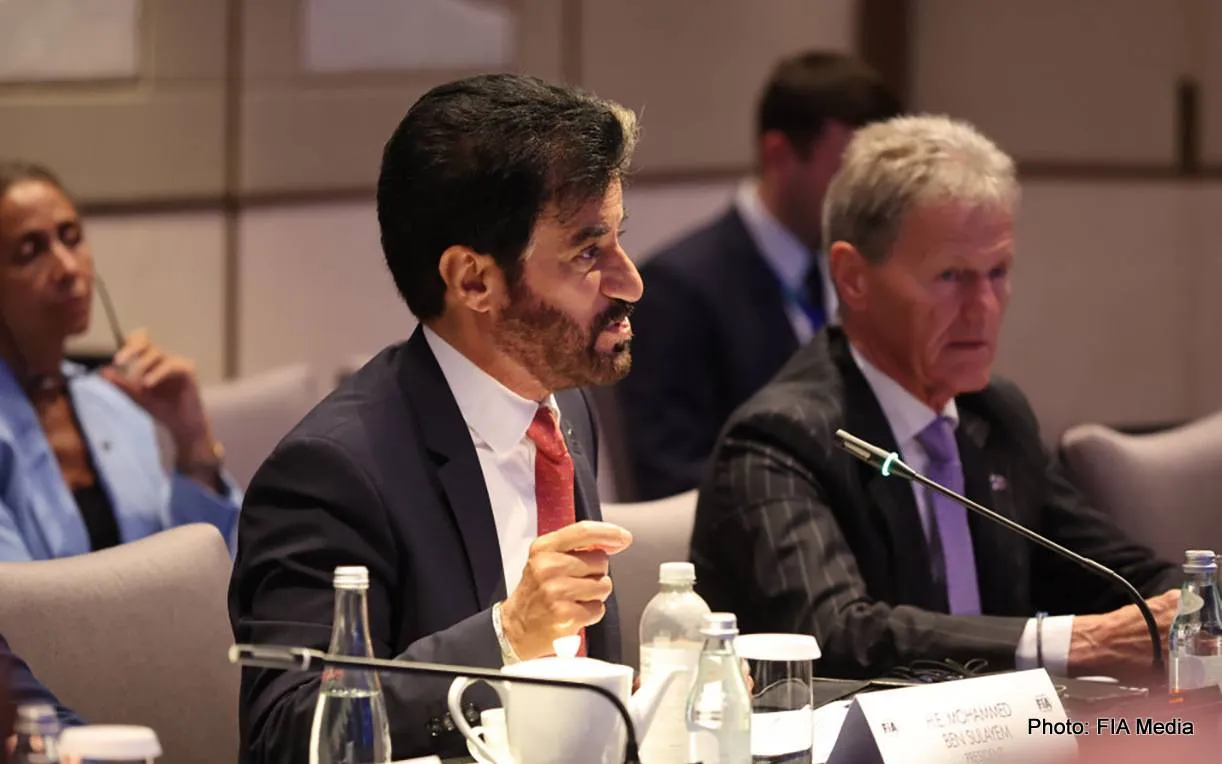
FIA President Mohammed Ben Sulayem used the meeting to highlight what he described as a positive first half of the 2026 season and reiterated the organisation's commitment to long-term development across motorsport.
"The first half of 2026 has been characterised by progress. We have witnessed new race winners and emerging talent across our championships and celebrated iconic events including the Monaco Grand Prix and the 24 Hours of Le Mans, showcasing the very best of our sport to millions of fans globally," Ben Sulayem said.
"We continue to deliver on our commitment to create motorsport that is safe, exciting, sustainable and accessible. These achievements are only possible because of the efforts of this World Motor Sport Council, our Members, and our entire FIA community."
FIA confirms regulatory refinements for Formula 1

The World Motor Sport Council approved a range of amendments to the highly unpopular 2026 Formula 1 regulations, largely focused on clarification and operational improvements following the introduction of the sport's new technical era.
Among the changes, Heat Hazard declarations can now be applied separately to Sprint and Grand Prix sessions. The FIA will continue to announce any Heat Hazard designation 24 hours before the start of the competition.
The governing body has also reintroduced boost mode in wet and low-grip conditions where visibility is poor. However, the system will be restricted to preventing power reduction rather than increasing output, while the overtake function will remain disabled. The FIA said the changes were made for safety reasons.
Looking ahead, pre-season testing will increase from three days to four from 2027, reflecting the complexity of the current generation of Formula 1 machinery.
The first version of Formula 1's 2027 Technical Regulations was also approved, incorporating structural revisions, wording updates and technical changes based on lessons learned during the 2026 campaign.
Future power unit discussions continue

Ben Sulayem said Formula 1's stakeholders remained engaged in discussions over the long-term direction of the championship, including future engine concepts beyond the current regulations: "The FIA continues to oversee the evolution of the 2026 Regulations and work closely with all key stakeholders across the motorsport community.
"As with every major regulatory change, the process does not end when the cars first take to the track. Continuous dialogue and collaboration are essential to ensuring that the regulations meet the needs of the sport, its drivers, and its fans.
"Together we are exploring the future direction of the championship and considering how the sport can balance innovation, sustainability, performance and fan appeal in the years ahead. The discussions around future power unit concepts, including V8 engines powered by sustainable fuels, demonstrate the willingness of all parties to engage in shaping the next chapter of the sport."
The council also approved measures covering power unit supply arrangements, reconnaissance lap procedures, race distance management at selected circuits and financial regulation updates linked to the 2027 and 2028 technical and sporting framework.
In addition, members formally ratified previously proposed changes designed to rebalance the contribution of internal combustion engines and energy recovery systems from 2027 onwards.
The revisions include adjustments to engine output, fuel energy flow, ERS deployment and greater flexibility in energy management as Formula 1 continues to refine its next generation regulations.

Latest News

Loading