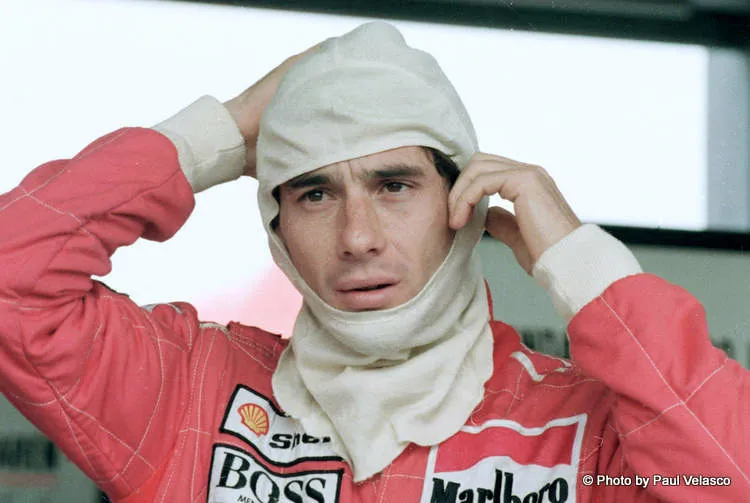
Ayrton Senna da Silva died at 14:17 pm on 1 May 1994. For me he still lives on every day in my life, I often wonder where he would be today had he walked away from Tamburello all those years ago.
I am reminded of him, and the older I get, the more nostalgic I feel about the fact that I actually worked around his presence, spoke to him rarely but listened a lot. I often wonder what would have happened had he not perished on that horrible day at Imola.
Before we go there, I recall what a good friend of mine, Robbie Peterson, a South African motorcycle racing legend who lost his older brother Keith Peterson racing at Kyalami, once told me. He said something I will never forget: “Paulus, people say time heals, but it does not.”
Robbie told me that 40 years ago or so, and he was right. It never heals.
You can compartmentalise it and freeze it and hide it away. But whenever you choose to defrost it, you put yourself back in that day and your heart breaks every time. That is the burden we carry as we march towards our own demise, becoming more intense as it approaches.
Today is the day when the whole Formula 1 world and beyond thinks of Senna, pays homage, recalls his brilliance, remembers him for what he was: a racer’s racer.
But now, after 32 years of tributes, what is there left to delve into? What is there to talk about? What is there to say?
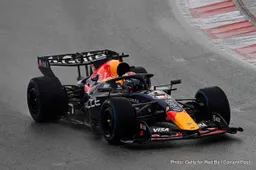
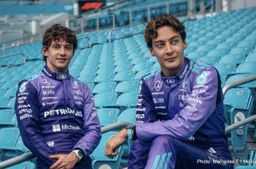
Let’s start with this: What would Ayrton think of Formula 1 in 2026? He hated traction control. He hated gizmos that further neutralised a driver’s genius. In short, he would be disgusted.
After all, he is the driver who immortalised the benchmark words of every racing driver to don a race suit and helmet ever since: “Being a racing driver means you are racing with other people, and if you no longer go for a gap that exists, you are no longer a racing driver because we are competing.”
Senna meme that sums up Formula 1 today

So we can presume we know his thoughts on that!
A question I often ask myself of those close to me and my world who passed prematurely is this: What would have happened if they had not died? Where would they be today? Be warned, it is a bittersweet thought pattern. The sweetness is the mental resurrection, the bitterness is the reality when it fades.
So with that in mind, I did a deep dive into what I think would have transpired had Ayrton not perished that day at Imola.
There is no neat way to rewrite history around Ayrton Senna. But if you remove that moment at Tamburello, the trajectory of his career and life becomes one of the most compelling “what ifs” the mind can tackle.
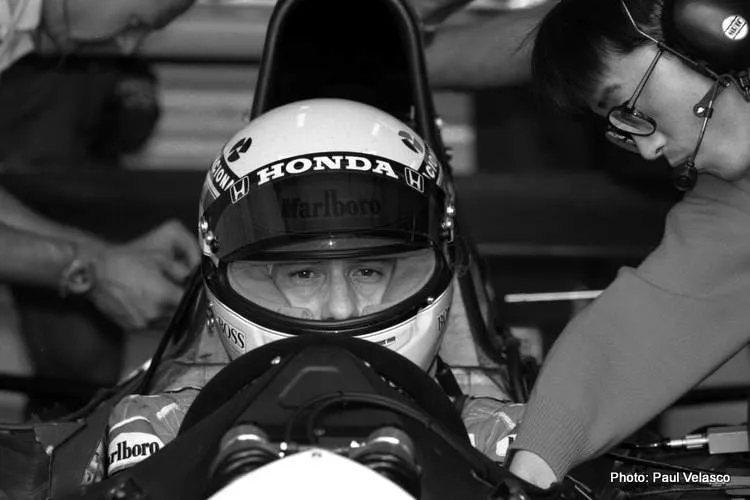
Let's rewind. By Imola 1994, Senna was 34, entering what should have been a second peak. His move to Williams F1 Team was not opportunistic, it was calculated. He had dominated the turbo era, mastered the high downforce era, and was now stepping into the most technologically advanced car on the grid.
The Williams Years: Unfinished business

Devoid of active suspension, the rules changed that year to ban such aids, driven in part by Senna and like minded drivers who backed his cause at the time.
Despite the FW16’s early instability, his underlying metrics still pointed to elite performance. Three poles in three races. Raw pace untouched.
Had he survived 1994, the most likely scenario is that Senna would have stabilised the FW16 as the season evolved. Damon Hill nearly won the title that year. It is difficult to argue that Senna, with superior qualifying speed and racecraft, would not have converted that into at least one more championship.
From 1994 to 1997, Williams remained the benchmark. Titles were won by Hill and Jacques Villeneuve. Insert Senna into that machinery and a realistic projection places him at six or even seven world titles by the late 1990s, surpassing Juan Manuel Fangio and potentially matching or exceeding the records that Michael Schumacher would later set.
Media at the time often framed Senna as the only driver capable of bending a team around him. Journalists like Giorgio Terruzzi described him as “a man who did not join teams, he transformed them.” That trait becomes central to the next phase.
Ferrari: The inevitable chapter

Senna to Scuderia Ferrari was not speculation even then. It was expectation. He had spoken openly about the allure of Maranello, telling Brazilian media that “every driver feels something for Ferrari.”
A move around 1998 aligns with both his career arc and Ferrari’s rebuild under Jean Todt. In reality, Ferrari’s resurgence came with Schumacher. In this alternate timeline, Senna becomes that catalyst.
Pundits often highlighted Schumacher’s relentless development feedback as key to Ferrari’s rise. Senna possessed a similar, arguably deeper, technical obsession.
Teammate and friend, Gerhard Berger once said: “Ayrton could feel things in the car no one else could explain.” That ability, combined with Ferrari’s resources, suggests at least one title in red, possibly more, before his retirement around age 40.
Projecting numbers is speculative, but grounded analysis based on Senna's win rate and pole conversion suggests:
- 5 to 7 Formula 1 World Championships
- 60 to 75 Grand Prix wins
- 80 plus pole positions
These figures would place him statistically alongside or above Schumacher, while maintaining the mystique that defined his real career, only bettered statistically by Lewis Hamilton's remarkable two decade run in Formula 1.
The man beyond racing

Senna’s post Formula 1 life is where the most profound impact may have unfolded. Even during his career, his humanitarian focus was clear. The foundations of what became the Instituto Ayrton Senna were already forming. His sister, Viviane Senna, later said: “He always spoke about using his success to change Brazil.”
Living into his 40s and 50s, Senna would have likely expanded this into a structured ecosystem. Not just charity, but development. A natural evolution is the creation of a vertically integrated racing programme. A Senna backed ladder spanning karting, Formula 3, Formula 2, and eventually Formula 1.
Brazilian media often lamented the decline of national talent after Senna’s death. Drivers like Rubens Barrichello and Felipe Massa carried the torch, but without a structured pipeline. Senna would have built one.
Those close to him, journalists included, frequently highlighted his mentorship instincts. Fellow countryman and F1 legend, Emerson Fittipaldi once noted: “Ayrton understood responsibility. He knew Brazil needed heroes, but also systems.”
Billionaire Formula 1 elder statesman

By the 2010s, it is plausible that a Senna backed Formula 1 team emerges. Not a vanity project, but a competitive entity. With Brazilian corporate backing, technical partnerships, and a clear identity, this team becomes a championship contender.
He was already building the kind of automotive and business ecosystem with Audi that, had he lived, could easily have expanded into manufacturer partnerships at the highest level of motorsport.
Senna was already one of the highest earning athletes of his era. His deals with brands like Honda and TAG Heuer were structured around long term value, not short term exposure.
Reports and interviews with him often emphasised his financial discipline. He invested early, diversified, and maintained control of his image.
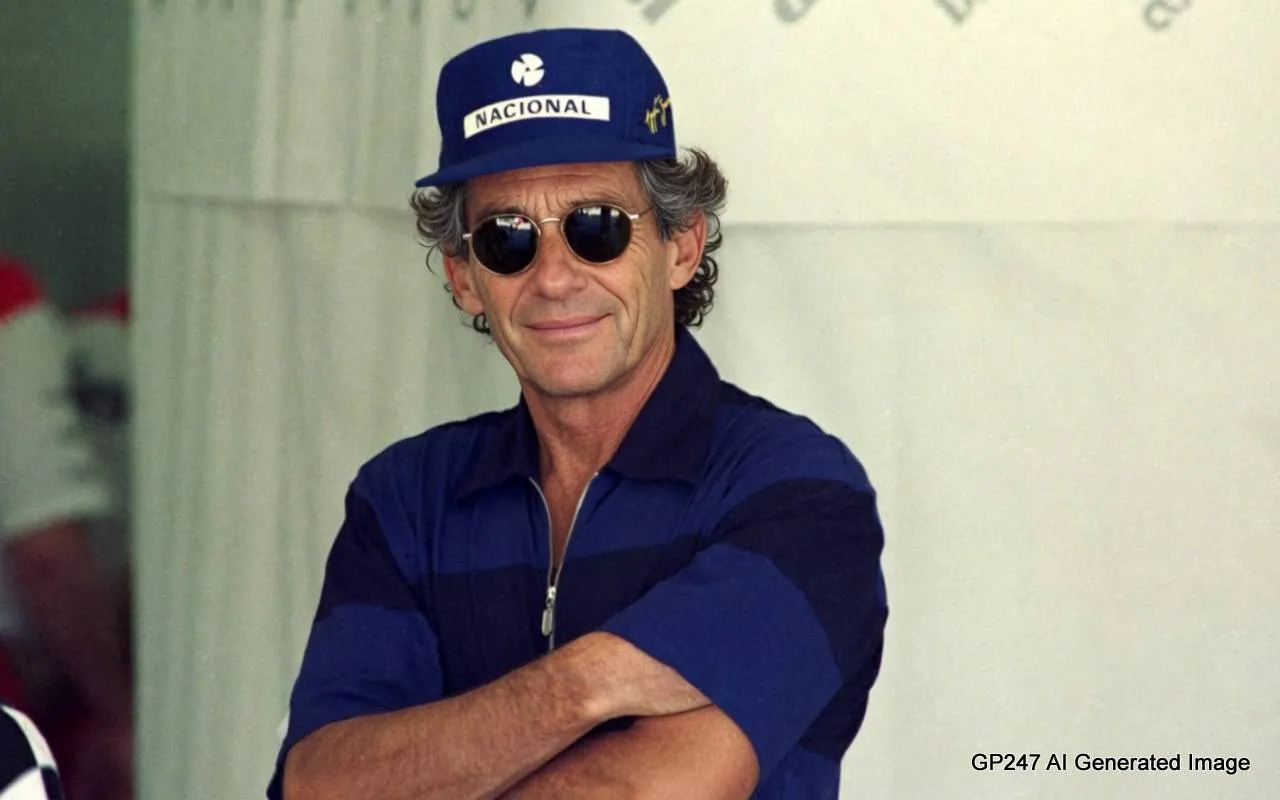
By 2026, at age 66, Senna would likely be:
- A billionaire through diversified investments
- Owner of a motorsport and technology group
- An influential figure in global motorsport governance
In today’s Formula 1, Senna’s voice would carry enormous weight. Journalists often compared his moral authority to that of a statesman. He spoke on safety, fairness, and the direction of the sport with conviction. His clashes with Alain Prost were intense, but rooted in a deep understanding of competition.
The enduring Senna legacy

Modern drivers have echoed this influence. Lewis Hamilton has repeatedly cited Senna as a benchmark, saying: “He stood for something bigger than racing.” Sebastian Vettel similarly reflected on Senna’s legacy in pushing for driver responsibility beyond the cockpit.
At 66, Senna would likely be involved in regulatory debates, safety initiatives, and the broader philosophical direction of the sport. A counterbalance to commercial interests.
Instead of a legacy frozen in 1994, Senna as a living figure would've been a bridge between eras. From turbo monsters to hybrid complexity. From raw instinct to data driven precision. A pipeline to racing greatness.
Most retrospectives often describe Senna as “unfinished.” Not in talent, but in trajectory. Had he lived, there is little doubt that his influence would extend far beyond Formula 1. Into education. Into national identity. Into the very structure of motorsport.
And perhaps that is the most compelling conclusion. The driver who defined outlandish intensity and remains as today's revered benchmark on track, would in all probability have spent the rest of his life building something far larger off it.
No matter what, his absence left a permananet gash in life which never heals, leaving us to say we wish he was here. Not only him, but all our loved ones that sailed through our lives far too fast, gone way too early.
Latest News
Loading