Ayao Komatsu on Suzuka crash: Ollie Bearman misjudged it, Franco Colapinto not to blame in new Formula 1 reality
F1 Drivers NewsSunday, 29 March 2026 at 18:49
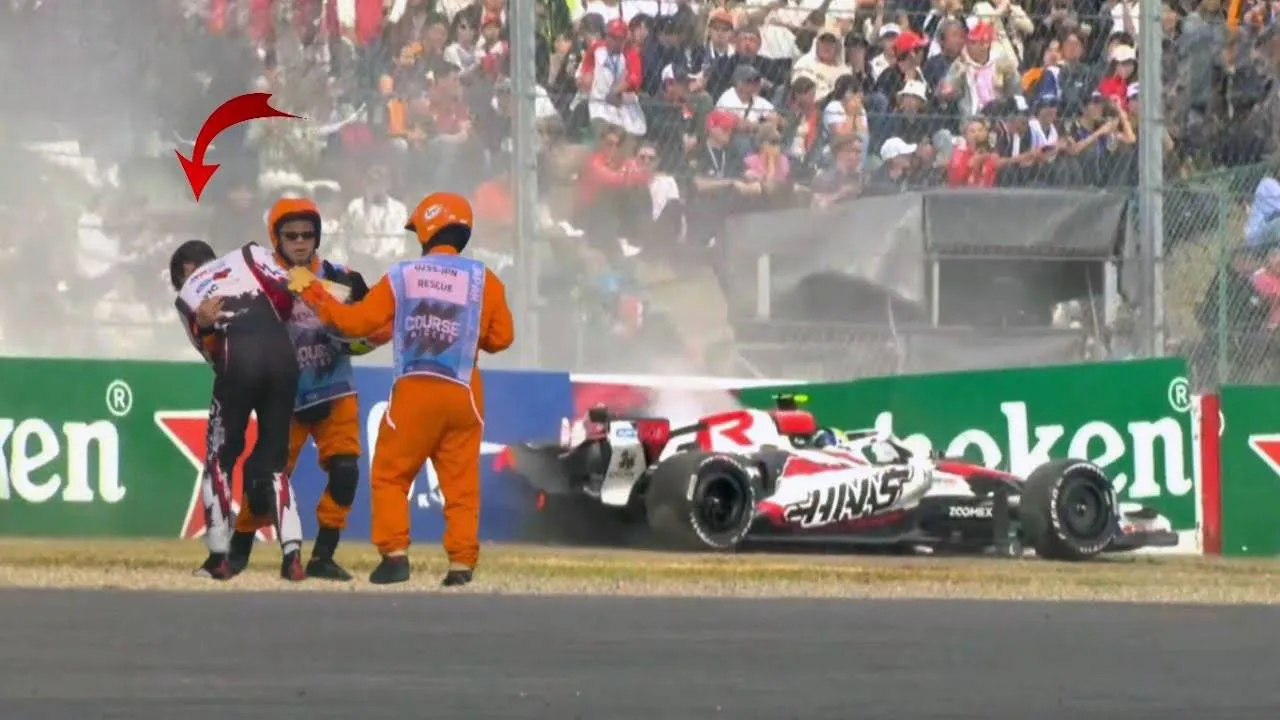
Haas F1 Team Principal Ayao Komatsu has revealed that a dangerous 50kph speed differential lay at the heart of Ollie Bearman’s frightening crash during the Japanese Grand Prix at Suzuka, as the fallout from Formula 1’s 2026 regulations continues to intensify.
The incident, which followed earlier warnings from drivers and teams, has already triggered a formal FIA review set for April. Komatsu’s account now provides the clearest technical explanation yet of what went wrong.
Talking to reporters, including GRANDPRIX247 correspondent Agnes Carlier, after the race, Komatsu pointed to the extreme energy deployment differences between cars: “We were deploying more energy through there, so even on a normal lap we had a 20kph advantage. That’s why Ollie wanted to go for it.
“He used the boost button, but then the speed delta became 50kph. I’m sure you saw on the onboard that the closing speed was massive. He just misjudged it.
“It’s one of those things. We talked about it with these regulations, that closing speed could become an issue. Unfortunately, this was one of those incidents," ventured the Haas boss.
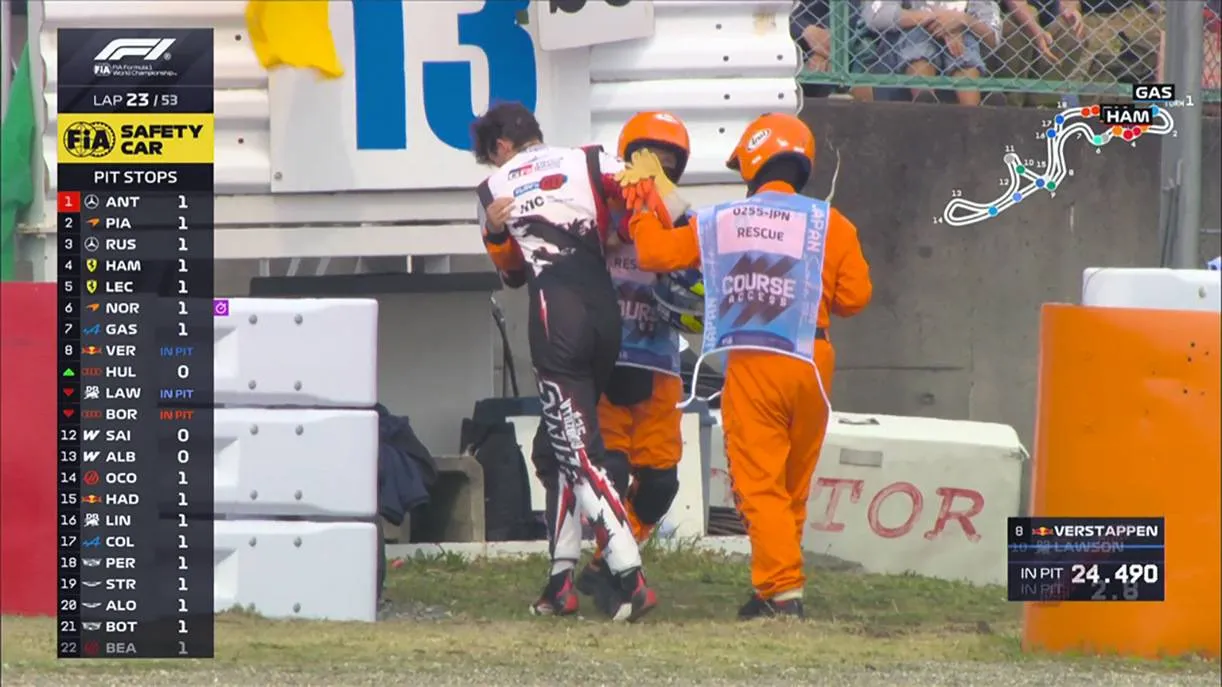
The crash, which saw Bearman hit the barriers at high speed - then emerging from the wreck limping and needing assistance from marshals as he wobbled to safety - has become a defining example of the concerns raised around the new hybrid era, where energy harvesting and deployment create unpredictable performance gaps.
Not driver error, but a new reality
Here’s the moment Bearman went into the barriers at Spoon #F1 #JapaneseGP pic.twitter.com/XmurXApWkp
— Formula 1 (@F1) March 29, 2026
Komatsu was careful to reject the suggestion that Bearman’s accident should be labelled a clear driver error, instead framing it as a consequence of an unfamiliar and evolving technical landscape.
“That’s strong wording,” Komatsu said when asked if it was driver error. “You could say it was a small misjudgement. But it is scary, that closing speed. When I look at the GPS data, it’s actually understandable why he went for it.
"It was the correct decision in that moment, but the speed difference is huge. This is only the third race under these regulations. It’s something he’s never experienced before. I wouldn’t even call it an error, to be honest," insisted Komatsu.
That view aligns with broader concerns voiced across the paddock, including Jacques Villeneuve’s warning that the new rules could create dangerous speed differentials, and Bearman’s own admission that drivers had already raised the issue with the FIA.
Komatsu added: “It’s something we as a Formula 1 community need to be aware of and improve. It could have been worse, so I’m really glad he didn’t break anything. His knee is bruised, but nothing serious.”
FIA review looms as teams seek solutions

With the FIA now committed to reviewing the 2026 regulations, Komatsu confirmed that discussions are already underway at multiple levels within the sport.
“I need to think about it more. I don’t want to give a knee-jerk answer,” he said. “With different power units, deployment strategies vary a lot. Some cars have much higher speed into certain corners.
“When you use the boost button, the difference becomes huge. We need to analyse it properly and not jump to conclusions without a full review.”
He pushed back against criticism that the sport had failed to act sooner despite early warnings: “I think that’s a bit too strong. We’ve always said we need to see different conditions.
“We’ve had three events and one incident. We need to stay calm and discuss it together as a Formula 1 community.”
The Haas boss stressed that cooperation, rather than competition, is driving the current response: “What’s encouraging is that no one is pushing for a selfish advantage. Everyone is working together.”
Bearman “beating himself up” after crash
ollie on his crash:
— nat ✧ (@forzasempres) March 29, 2026
"This is something we spoke about on Friday with the drivers & stewards, that we need to be more prepared for these huge speed deltas. As a group, we warned the FIA what can happen, & this is an unfortunate result [of the regulations]."pic.twitter.com/g7zos3o9tf
Komatsu also offered insight into Bearman’s state of mind following the accident, revealing a driver deeply frustrated despite escaping serious injury.
“He’s very disappointed in himself," he said. "That’s the good thing about Ollie, he doesn’t make excuses. He was really hard on himself.
“I told him, ‘You’ve done some amazing races. You scored 17 points in two race weekends. Yes, this accident cost us today, but we win and lose together.’
“He knows there’s no excuse. He mentioned the speed delta himself. He’s tough on himself, which is good, but sometimes you can be too hard.”
Komatsu is confident the young Brit will recover quickly: “I’m sure he will bounce back, and we will bounce back together.”
Safety now front and centre

As pressure builds on the FIA and Formula 1 to respond, Komatsu made clear that the issue can no longer be ignored, even as he cautioned against overreaction.
“Safety should always be the top priority," he insisted. "We’ve been talking about closing speeds, and now we’ve seen an incident. We cannot ignore it. We now have a real example, and we will work out the best way forward. Nobody will ignore this.”
At the same time, he warned against rushed regulatory changes based on limited data: “The last thing we want is to introduce changes that create new problems.
“We’ve had very different races already this season. Melbourne was too easy to overtake. Shanghai was very good. Suzuka was difficult. We need a broader data set. By mid-season, the picture should be clearer.”
Komatsu insists the sport must remain measured in its response, even amid growing scrutiny: “The championship is far from broken. Shanghai was a very good race. We need to stay calm and avoid knee-jerk reactions. The positive is that everyone is working together to improve the sport.”

Latest News
Loading