Jacques Villeneuve on Ollie Bearman crash at Suzuka “Now we've seen the danger of these new regulations"
F1 NewsSunday, 29 March 2026 at 12:47
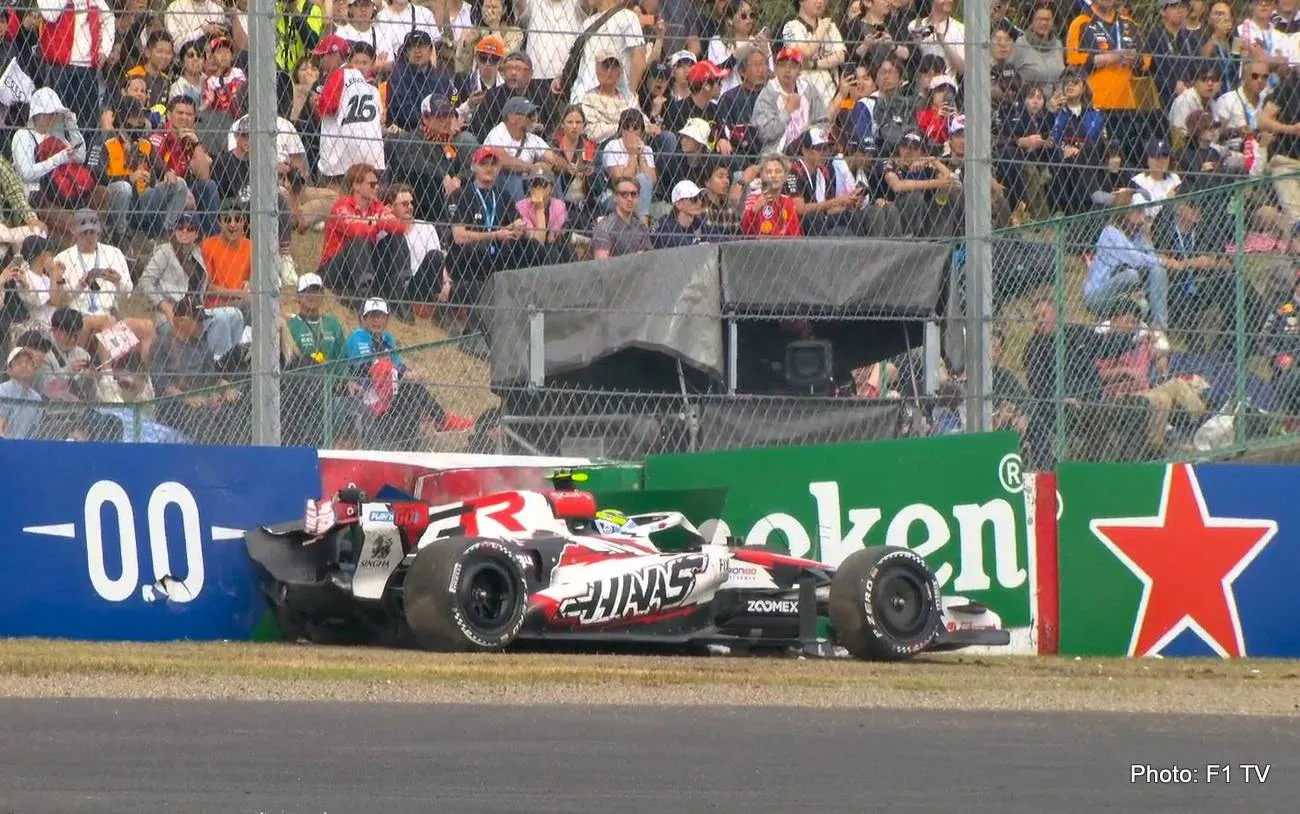
The fallout from the 2026 Japanese Grand Prix has reignited serious concerns about Formula 1’s new regulations after Haas driver Ollie Bearman’s heavy crash at Suzuka exposed what many feared from the outset.
Speaking on F1 TV, normally ultra-confident but on Sunday looking decidedly uncomfortable throughout his time on air, Jacques Villeneuve did not hold back: “I guess now we've seen the danger of these new regulations. The speed differential with some movements can be so dangerous, and there's nothing Ollie could do.”
The incident occurred on lap 22 at Spoon Curve, one of Suzuka’s fastest and most unforgiving corners. Bearman, running behind Franco Colapinto, approached at a dramatically higher speed, much quicker, as the Alpine appeared to be harvesting energy while the Haas was deploying.
Caught out by the closing rate, Bearman moved left to avoid contact, ran onto the grass, lost control and slammed into the barriers with a 50G impact. The crash destroyed the car and triggered a Safety Car, but remarkably, he escaped with only a knee bruise.
Bearman later explained the scale of the problem: “First of all, everything is fine and I’m good. It was a scary moment out there, but everything is okay, which is the main thing. The adrenaline is wearing off a bit, so it’s going to be a long trip home, but I’m absolutely fine. The car is a bit worse for wear, but we now have a month to reset, and I can only apologise to the team because it’s a lot of work.
“There was a massive overspeed around 50kph, which is a part of these new regulations, and we have to get used to it, but also I felt like I wasn’t given much space, given the huge excess speed I was carrying. We need to be a bit more lenient and a bit more prepared, as unfortunately, this was the result of a massive delta speed which we’ve not seen in Formula 1 before.”
Was Colapinto to blame for Bearman incident?
ollie on his crash:
— nat ✧ (@forzasempres) March 29, 2026
"This is something we spoke about on Friday with the drivers & stewards, that we need to be more prepared for these huge speed deltas. As a group, we warned the FIA what can happen, & this is an unfortunate result [of the regulations]."pic.twitter.com/g7zos3o9tf
Villeneuve went further, suggesting the Alpine driver was the culprit in the incident: “I was surprised that nothing was done about Colapinto, because this is what you don't want to see. A little move just as you approach the corner in such a dangerous corner where he's actually regenerating energy. I don't understand what Colapinto was thinking, moving at such a slow speed in such a dangerous place.”
Villeneuve's comments echo a growing frustration in the paddock, as well as among Formula 1 fans and pundits, about the unintended consequences of the 2026 hybrid systems, where extreme harvesting and deployment phases are creating unpredictable and dangerous speed differentials between cars on the same piece of track.
F1 TV analyst Alex Brundle, alongside Villeneuve, added: “There were no recharge lights going on. I was led to believe that it would fall into where we would expect to see harvest lights on the rear of the car as well, flashing at different rates to let the drivers know that's occurring. So either it's not falling into those parameters, and I would dare to suggest it should, or they've had some sort of issue at Alpine earlier on this season.”
Colapinto, for his part, expressed relief but offered little explanation: “I'm glad he's fine. To be honest, it's the first thing I thought of, because it was a really big one. I saw him spinning on the grass and then I knew it was a very hard hit. So I'm glad he's fine.”
The crash has become a flashpoint in an already heated debate around Formula 1’s new era, where drivers have repeatedly warned that energy management and “superclipping” behaviour are turning racing into a high-speed guessing game. Suzuka provided the clearest example yet of the risks involved.
What was once theoretical is now real. And after Japan, the question is no longer whether these cars are dangerous in certain scenarios, but how quickly Formula 1 can react before the consequences become far worse.

Latest News
Loading