V8s Are Back in 2030: Formula 1 Lost Its Way With 2026 Regulations and What Fans Can Do about it
F1 NewsMonday, 18 May 2026 at 06:32
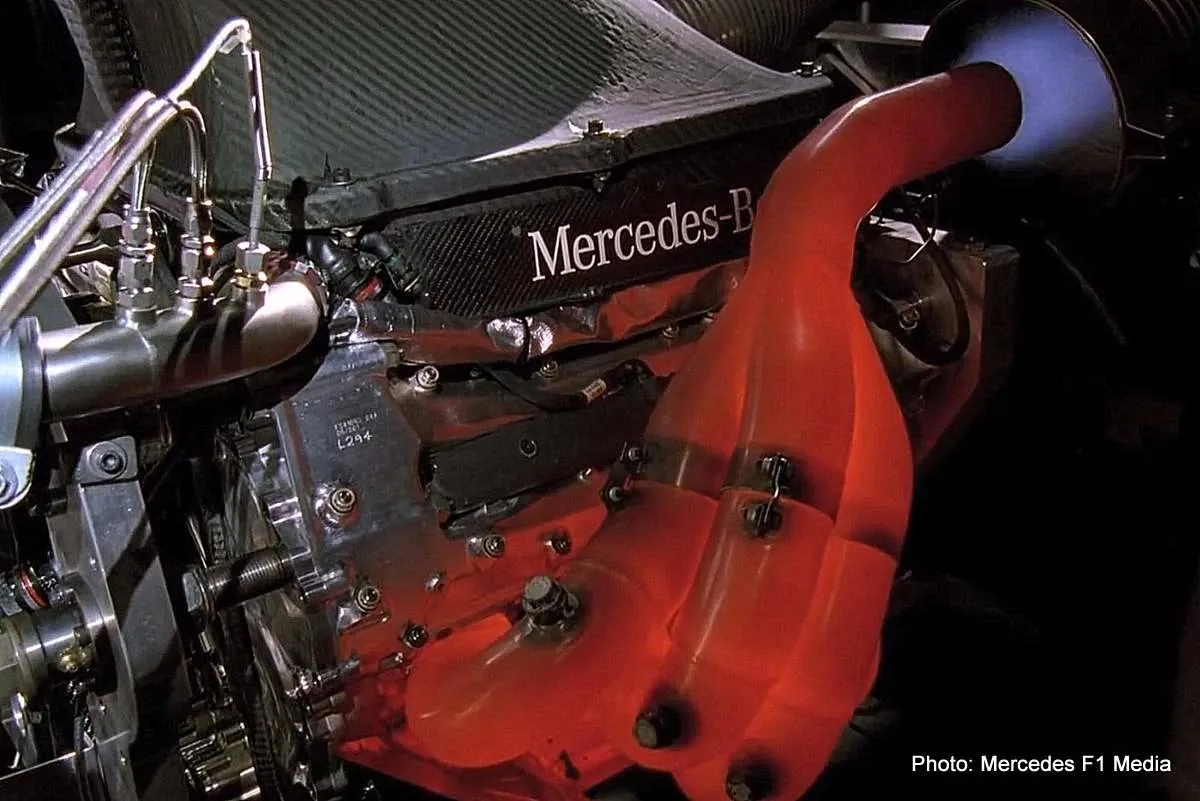
The announcement landed in March 2026 with the quiet authority of a fait accompli: Formula 1 and the FIA confirmed that the 2030 power unit regulations would bring back naturally aspirated V8 engines.
Louder, simpler, cheaper. The decision was framed as a response to fan feedback but anyone who watched the 2026 season opener in Bahrain understood the real context.
The new hybrid power units, introduced under the 2026 technical regulations, produced cars so sensitive to aerodynamic turbulence that three drivers retired from mechanical failures in the first 18 laps.
The crowd was quiet in the wrong way. For Croatian fans hunting Neteller casinos in Croatia between race weekends, the wait until 2030 is not a minor inconvenience, it's four full seasons of a formula that hasn't found its footing yet. Four years is a long time in motorsport.
Four seasons is four seasons. The fans who followed F1 through the Schumacher dominance years, through the Vettel era, through the turbo-hybrid transition — they know how to wait. The question is what to do with the waiting.
While You Wait: Where F1 Fans Are Spending the Off-Season

The pattern that's emerged among European motorsport communities is predictable once you see it: racing games, fantasy leagues, and online platforms that replicate the decision-under-pressure dynamic that makes F1 compelling in the first place.
Platforms accepting Croatian casinos with Paysafecard have reported measurable spikes in traffic during F1 race weekends - not despite the racing, but alongside it. The demographic overlap between motorsport audiences and online gaming communities is well-documented; a 2025 Nielsen Sports report found that 44% of European F1 fans aged 25–44 engage with online gaming platforms at least monthly.
The connection isn't arbitrary. Both involve reading probabilities under time pressure, managing risk across sequential decisions, and accepting that outcomes aren't fully controllable. A race strategist deciding whether to pit under a virtual safety car and a player deciding when to cash out on a volatile slot are running versions of the same cognitive process.
The 2030 regulations will come. The V8s will return. Until then, the fan community is finding its own ways to keep the competitive instinct sharp between race weekends and the platforms have noticed. Monza 2030 cannot arrive fast enough.
The ambition behind the 2026 rules was genuine. The FIA wanted 50% of power from the electrical component, near-zero net carbon emissions from the fuel, and cars that were easier to follow through corners.
How the 2026 Formula 1 Regulations Went Wrong

On paper, the tradeoff looked manageable. In practice, three problems emerged simultaneously and nobody had clean answers to any of them.
First, the power delivery became unpredictable in a way that drivers publicly described as dangerous. The 2026 units produce a sharp torque spike when the electrical component engages at corner exit — Max Verstappen called it "like hitting a wall of acceleration that moves" in his post-race debrief in Jeddah.
Red Bull's telemetry from the Saudi Arabian Grand Prix showed rear wheel slip events occurring 340% more frequently than in equivalent 2024 conditions.
Second, the cost didn't come down. The budget cap covers chassis development but not power unit supply, and the new hybrid architecture sent engine bills spiraling. Haas and Williams both confirmed in February 2026 that their power unit costs for the season exceeded their entire operational budget in 2019. Small teams aren't disappearing yet, but the financial pressure is structural and visible.
Third - and this one stings - the racing got worse before it got better. The active aerodynamics system, designed to reduce drag on straights and increase downforce in corners, created cars that are extraordinarily sensitive to the aerodynamic wake of the car ahead.
The very problem the 2022 regulations solved, the 2026 regulations reintroduced through a different mechanism. Lewis Hamilton, in his first season at Ferrari, finished four of the first six races outside the points. Not because Ferrari is slow because the aero sensitivity makes overtaking a lottery. The V8 announcement is, in effect, a public acknowledgment that the 2026 experiment overreached.
What 2030 Actually Promises

The confirmed specifications aren't fully locked, the FIA has indicated a technical working group will finalize displacement and rev limits by late 2027, but the direction is clear. Naturally aspirated, high-revving, acoustically overwhelming.
The reference point being discussed internally, according to sources cited by Autosport in April 2026, is somewhere between the 2.4-litre V8 era of 2006–2013 and a modern interpretation with updated fuel technology.
That era produced some of the most visceral racing in the sport's history. The 2012 season had seven different winners in the first seven races. The 2010 title fight went to the final lap of the final race. The engines screamed at 18,000 RPM and you could hear them from the hotel three kilometers from the circuit.
Nostalgia is doing some of the work here but not all of it. The mechanical simplicity genuinely does produce more reliable, more competitive racing at the back of the grid, where the championship is often actually decided.
Manufacturers are already positioning. Volkswagen Group, which walked away from F1 entry negotiations in 2023 citing regulatory complexity, confirmed in January 2026 that it is "re-evaluating" involvement under the 2030 framework.
A simpler engine architecture removes the primary technical barrier that kept them out.

Latest News
Loading