USA-Israel-Iran War Update: Growing impact on Formula 1 in a time of grave uncertainty
F1 NewsWednesday, 08 April 2026 at 13:53
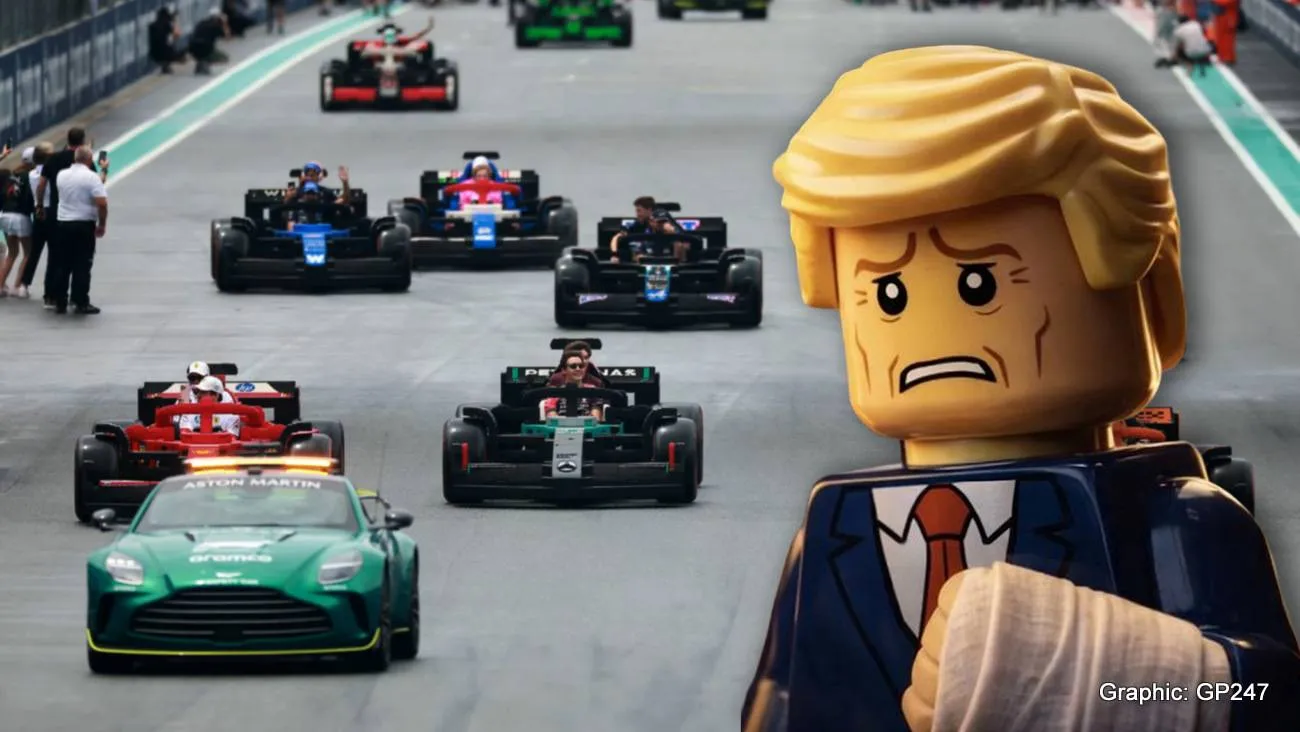
For years, Formula 1 has sold the illusion that it is untouchable. A global circus that bends continents, governments, and time zones to its will.
No scruples too, as history shows, Formula 1 was never shy to set up tent in dictatorships and let the show go on in nations with dubious human rights reputations.
Formula 1 is a high-profile sport that arrives, performs, and leaves, insulated from the real world. That illusion has just been shattered. The outbreak of the USA-Israel-Iran war on 28 February 2026 did not just disrupt sport in the region; it exposed the fragility brutally, publicly, and maybe irreversibly.
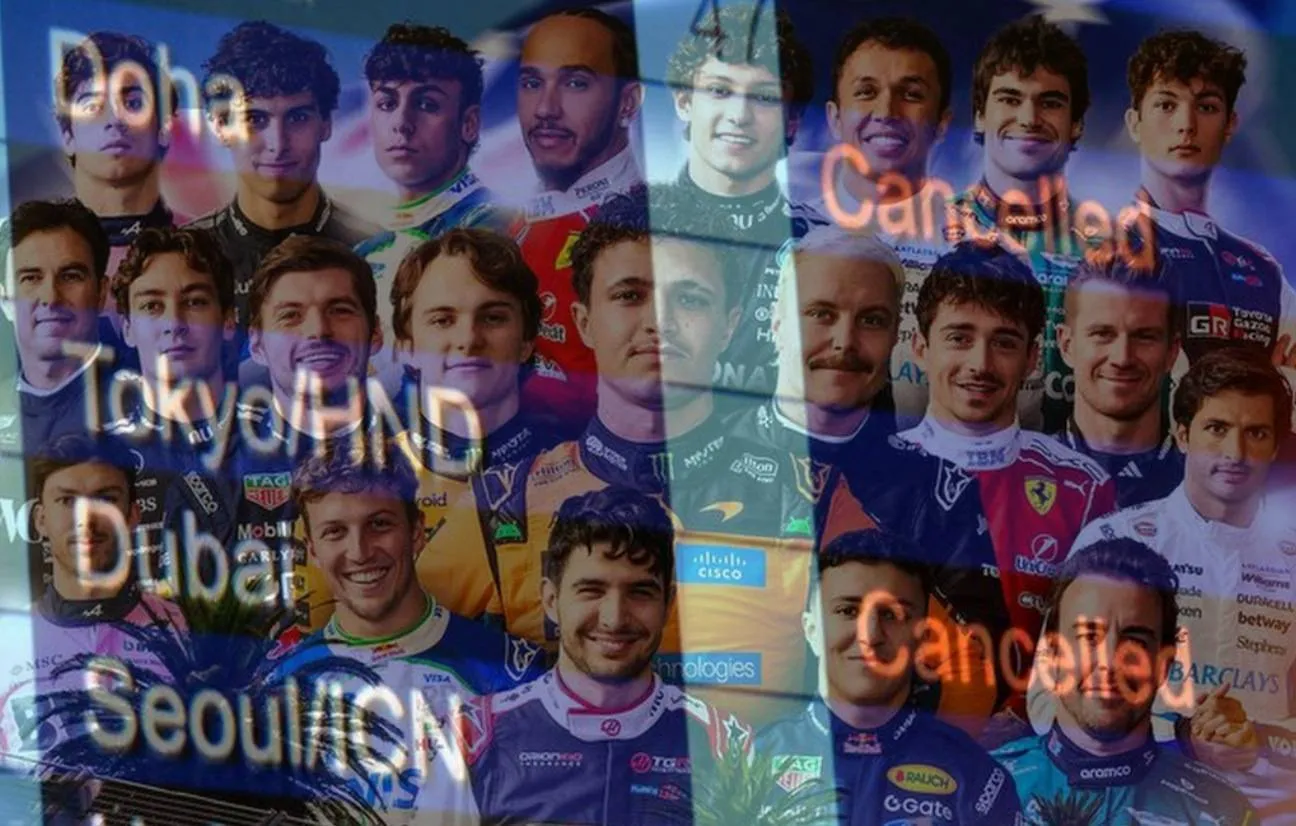
Two races gone. Bahrain and Saudi Arabia were erased from the 2026 Formula 1 World Championship calendar. And suddenly, the sport with few scruples, built on control is left scrambling, reacting, and hoping.
This is the raw truth. Formula 1 did not choose to cancel those races; it had no choice. Airspace closures, missile threats, logistics collapsing, and the Strait of Hormuz shutting down created a situation no promoter fee could override.
This was not a sporting decision; it was survival. And while Formula 1 teams were calculating freight routes and damage control, the rhetoric from global leadership made it clear how fragile everything had become, pushing an already volatile situation closer to the edge.
Since we last reported on the war, USA President Donald Trump poured fuel on an already raging fire with messages that sounded less like diplomacy and more like escalation.
He posted in his own Truth Social: “Tuesday will be Power Plant Day, and Bridge Day… Open the Fuckin’ Strait, you crazy bastards, or you’ll be living in Hell.”
Urged on by warmongers within his immediate circle, Trump followed with an even starker warning: “A whole civilisation will die tonight, never to be brought back again.”
The $200-million reality check

Strip away the PR gloss and the numbers tell you everything about the impact this has had on Formula 1. Around $200-million reportedly evaporated in a matter of weeks, wiped out through lost promoter fees, hospitality, sponsorship activations, and freight disruption.
Formula 1 responded the only way it could, retreating to factories, simulators, and development cycles, trying to maintain the illusion of business as usual. A much-needed break, because on track, the fallout from the failed new power unit package is another migraine for F1 CEO Sefano Domenicali to endure.
But beneath that surface, a far more uncomfortable truth has been exposed, one the sport has avoided confronting despite years of aggressive commercial expansion into the same volatile region.
That truth is simple. While Arab money filtered into the sport in the late seventies as Williams' sponsors at first, it really all began in earnest with the second wave of more substantial investment.
Since the Bahrain Grand Prix in the early 2000s, Formula 1 has become deeply entrenched in the Gulf. Saudi backing, Bahraini ownership, Qatari sponsorship, and UAE investment and infrastructure are not peripheral; they are central to the sport’s financial model.
Since then, Formula 1 has benefited over the past two decades or so from $10-billion in Arab money.
This is not diversification; it is concentration risk at the highest level. And when that region destabilises, Formula 1 does not just lose races, it loses control of its own calendar, its revenue streams, and its ability to deliver the product it sells to the world.
In comparison, USA entities have invested around $6-billion since 2000, excluding Liberty Media's acquisition of Formula 1 commercial rights for $8-billion in 2017.
Prior to the 'Netflix' boom, Formula 1 doubled down on the Gulf, chasing long-term deals, government-backed investment, and guaranteed financial growth. On paper, at the time, it made perfect sense. But today, in reality, it has become a high-stakes geopolitical time bomb on repeat.
November now hangs by a thread

We saw this past month, when instability hits that region, the consequences are immediate and unavoidable, and global. In these times, sport does not get to adapt on its own terms; it is forced into reaction mode, cancelling events and restructuring operations in response to forces completely outside its control.
That is the uncomfortable shift. Formula 1 is no longer dictating its global footprint; it is negotiating it in real time with war as a reality. The cancellations of Bahrain and Saudi Arabia are not isolated incidents; they are a warning.
Looking ahead to November, the Qatar Grand Prix and the Abu Dhabi season finale remain on the Formula 1 calendar, and for now, they may be viable. But it is not a long shot to imagine that the Las Vegas Grand Prix will be the season finale. A ceasefire has started, for how long amid a despot-ruled world?
Stability is conditional, fragile. It exists only as long as the current pause in hostilities holds. One escalation, one breakdown in negotiations, an assassination or bomb, and those races are immediately back under threat. Perhaps even beyond the Gulf. Will Mexico happen?
Behind the scenes, contingency planning is for sure underway. It has to be. Because the sport understands that it is no longer operating within a predictable framework. It is operating within a volatile global landscape where decisions made in war rooms and government offices can override years of planning in an instant.
The Formula 1 calendar is no longer fixed; it is provisional, dependent on forces far beyond the control of any governing body or commercial rights holder.
The illusion is gone

While no sport can control geopolitics, the scale of Formula 1’s exposure raises serious questions about the sustainability of its current model. Because when your business relies heavily on a single region, you inherit that region’s risks.
Formula 1 is now learning that lesson in real time. The aggressive push into the Gulf delivered growth, but it also created vulnerability. That vulnerability has now been exposed under the harshest possible conditions, leaving the sport scrambling to maintain stability while hoping the broader situation does not deteriorate further.
With Israel reportedly intent on escalating the situation and even prolonging the war, anything can happen anytime. If the cease-fire holds, and that's a big IF, considering whose fingers are on the nuke buttons, the two-week ceasefire offers breathing room, nothing more.
It is not peace, not resolution, and certainly not long-term security. It is a pause in a conflict that has already demonstrated how quickly conditions can change.
Formula 1 is using that pause to regroup and recalibrate, but the underlying reality has not changed. The sport is not insulated from the world, it is deeply embedded within it, and subject to the same instability that affects global systems.
The illusion of control is gone. Formula 1 is not above geopolitics, no sport is, it is part of it. Exposed to it, dependent on it, and ultimately constrained by it.
What happens next will not be decided in paddocks or boardrooms, but in diplomatic channels and conflict zones. Until that reality changes, the sport will continue to operate in a world of daily uncertainty.


Latest News
Loading