History lessons for Formula 1 ahead of uncertain new season amid USA-Israel-Iran war
F1 NewsTuesday, 03 March 2026 at 14:08
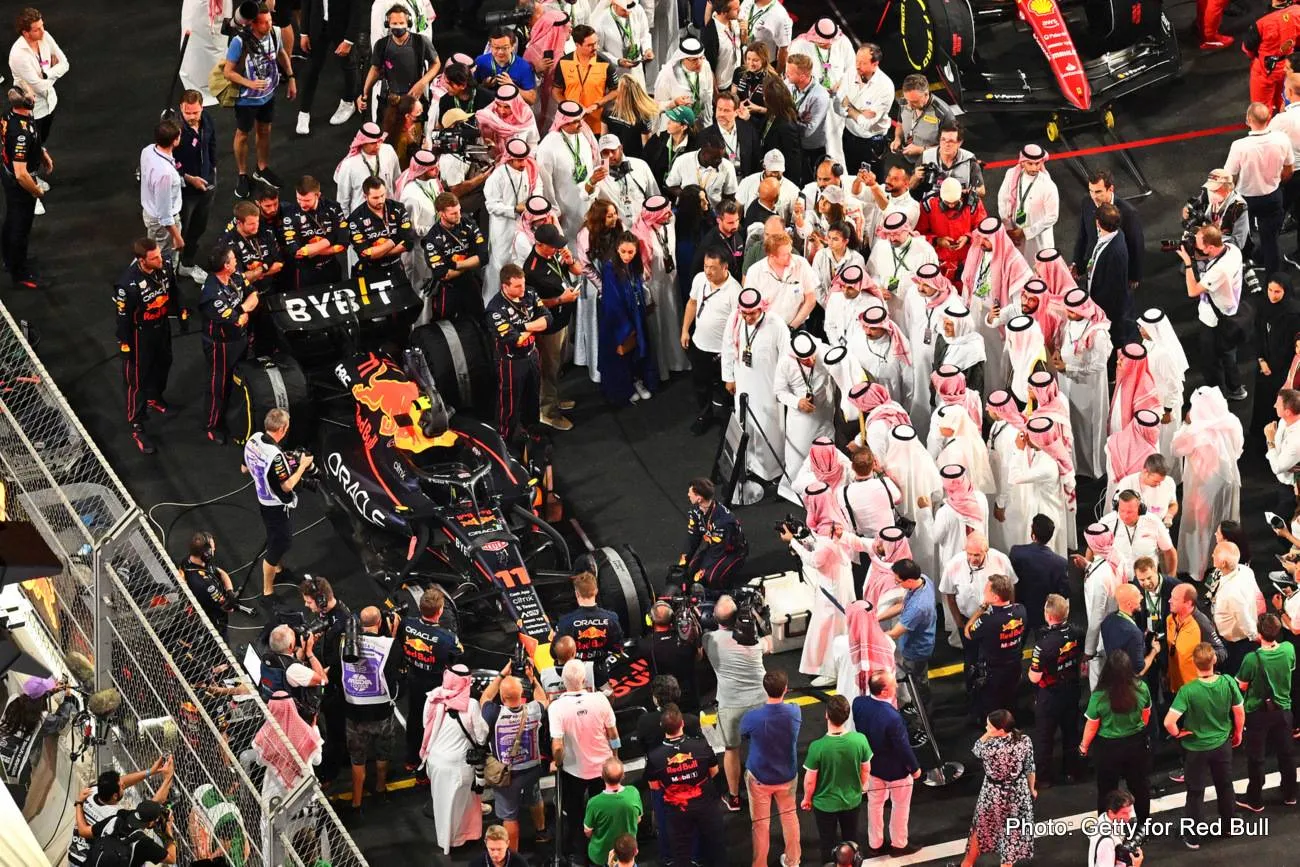
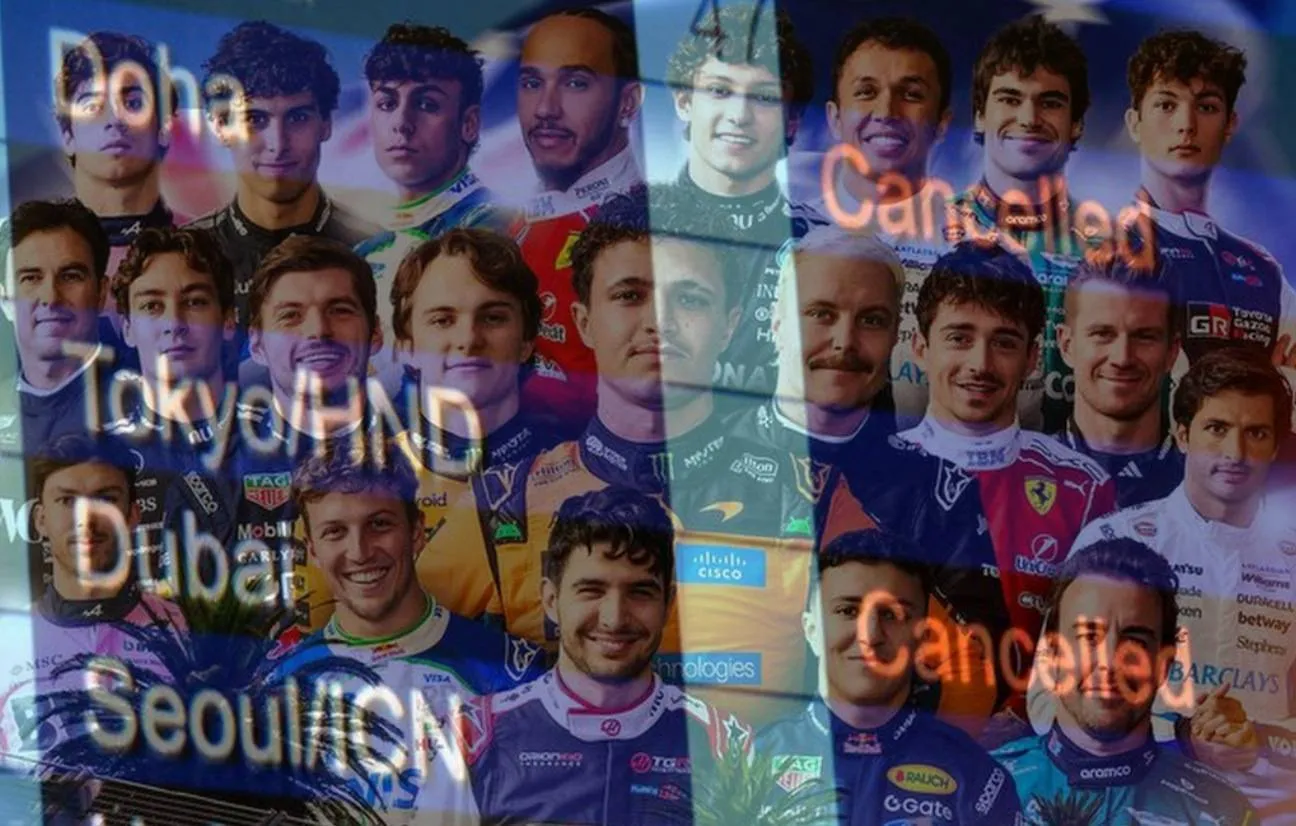
Globe-trotting Formula 1 begins its 2026 World Championship under a cloud of war, with the USA-Israel-Iran conflict placing the Bahrain and Saudi Arabian Grands Prix under heightened uncertainty, while playing havoc with the sport's complex logistics. What can history teach us?
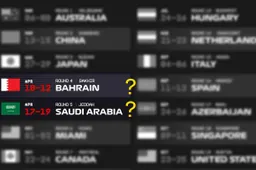
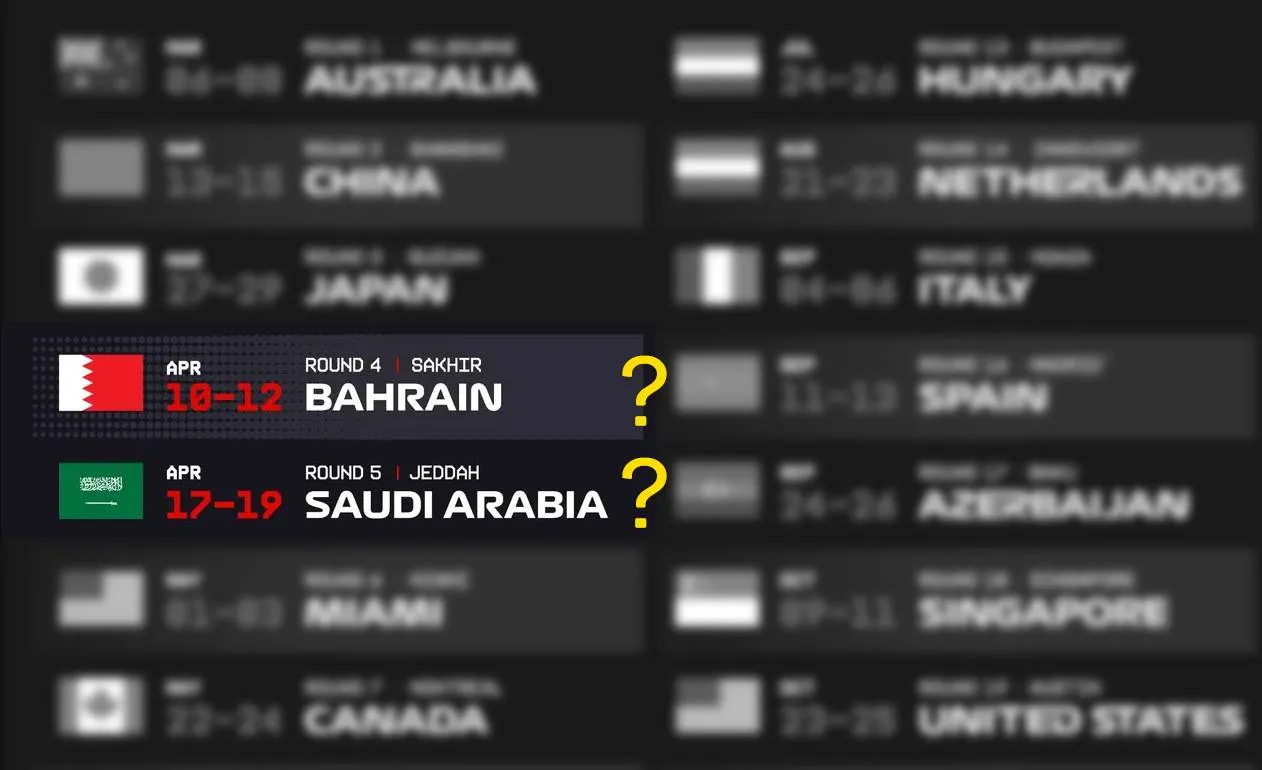
As of 3 March 2026, neither Formula 1 nor the Fédération Internationale de l'Automobile (FIA) has cancelled or postponed any races. Bahrain and Saudi Arabia remain on the calendar for 10 to 12 April and 17 to 19 April, respectively. But the situation is being actively monitored and could be cancelled if the war persists beyond this week.
FIA President Mohammed Ben Sulayem issued a formal statement addressing the crisis: “As president of the FIA, my thoughts are with all those affected by the recent events in the Middle East. We are deeply saddened by the loss of life and stand with the families and communities impacted. At this moment of uncertainty, we hope for calm, safety, and a swift return to stability. Dialogue and the protection of civilians must remain priorities.
"We are in close contact with our member clubs, championship promoters, teams and colleagues on the ground as we monitor developments carefully and responsibly. Safety and well-being will guide our decisions as we assess the forthcoming events scheduled there for the FIA World Endurance Championship and the FIA Formula One World Championship," concluded Ben Sulyaem, an Emirati who resides in Dubai.
The commercial rights holder has echoed that caution. A Formula 1 spokesperson confirmed the championship is “closely monitoring” developments in the region, adding that there will be no “knee-jerk reactions” while working with authorities and evaluating logistics and travel impacts.
COVID blueprint remains relevant

The uncertainty inevitably revives memories of 2020, when the COVID-19 pandemic forced Formula 1 into the most radical calendar rewrite in modern history.
That year began with the last minute cancellation of the Australian Grand Prix. What followed was a 4 month shutdown, a compressed 17 race championship, multiple double headers and the return of standby venues such as the Emilia Romagna Grand Prix and Eifel Grand Prix.
The sport proved it could rebuild a calendar at short notice.
That experience now forms the strategic backdrop to 2026.
If Bahrain and Saudi Arabia become unviable, options based on precedent include activating a European replacement such as Imola, expanding existing rounds into double headers, or reducing the total race count while maintaining championship legitimacy under the Concorde framework.
The impact of the current conflict is not theoretical. A planned Pirelli wet-weather tyre test at the Bahrain Grand Prix venue was cancelled following security concerns and reports of strikes near a United States base in Bahrain. Travel routes have already been rerouted to avoid affected airspace.
Formula 1 depends on the movement of more than 2,000 personnel and vast freight operations between continents. Airspace closures, insurance advisories and maritime disruption can destabilise an event even if circuits themselves remain secure.
What if Bahrain and Saudi fall off the calendar?

For now, the season opener in Melbourne should proceed unaffected. China and Japan are also not considered at immediate risk. But insiders describe the Gulf rounds as a live situation rather than routine planning.
If the Bahrain and Saudi Arabian Grands Prix are cancelled, Formula 1 has several realistic substitute options based on history.
The first is activating a European standby such as Imola, Portimao, Hockenheim, Nurburgring, which some of which returned successfully during the COVID-disrupted 2020 season and remain FIA Grade 1 ready circuits.
The second is expanding existing races into double headers, as seen in Austria and Silverstone in 2020. China, Japan or even Australia could host back to back rounds to stabilise freight movement and reduce logistical strain.
A third option is compressing the calendar and proceeding with fewer races. The 2020 Formula 1 championship demonstrated that a reduced schedule can retain sporting and commercial legitimacy.
Finally, Formula 1 could reshuffle dates later in the year if regional conditions stabilise, potentially swapping European and Gulf rounds.
For now, Bahrain and Saudi Arabia remain scheduled. The situation is so fluid, who knows what will happen when Qatar and Abu Dhabi are up? It is impossible to predict. But as the FIA has made clear, “Safety and well-being will guide our decisions.”
If 2020 proved anything, it is that Formula 1 can adapt under systemic disruption. The coming days will reveal whether that blueprint must be deployed once again and if enough to sustain the championship in times of war.
Latest News

Loading