"Risk vs Reward" Mechanics Mirror the Strategy Behind Modern Formula 1
F1 NewsThursday, 21 May 2026 at 05:43
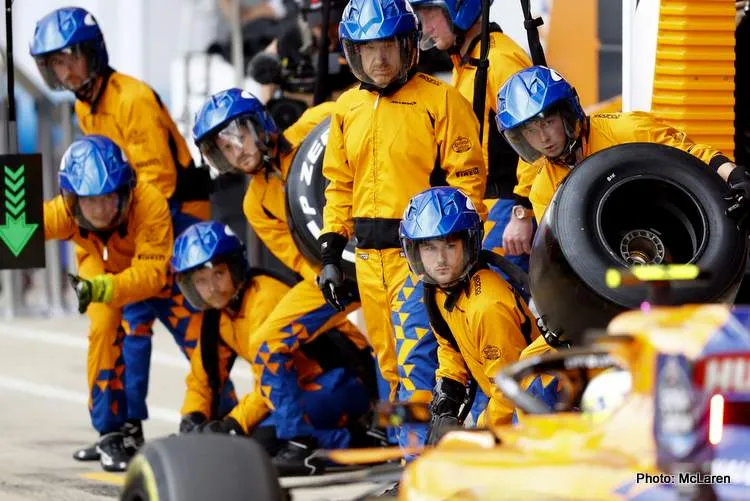
Formula 1 is at its core a sport of compounding decisions taken under pressure. Every tire compound choice, every pit stop window, every overtake attempt and every defensive line involves weighing potential gain against potential loss.
The drivers and teams that consistently perform at the highest level are the ones whose risk calculus runs sharper than their rivals. The same mental architecture, almost beat for beat, sits at the heart of a vast range of modern game design.
Risk versus reward has become a foundational mechanic in everything from racing simulators to slot-style entertainment, and the closer you look at how the best examples are constructed, the more familiar the framework becomes to anyone who follows top-tier motorsport seriously.
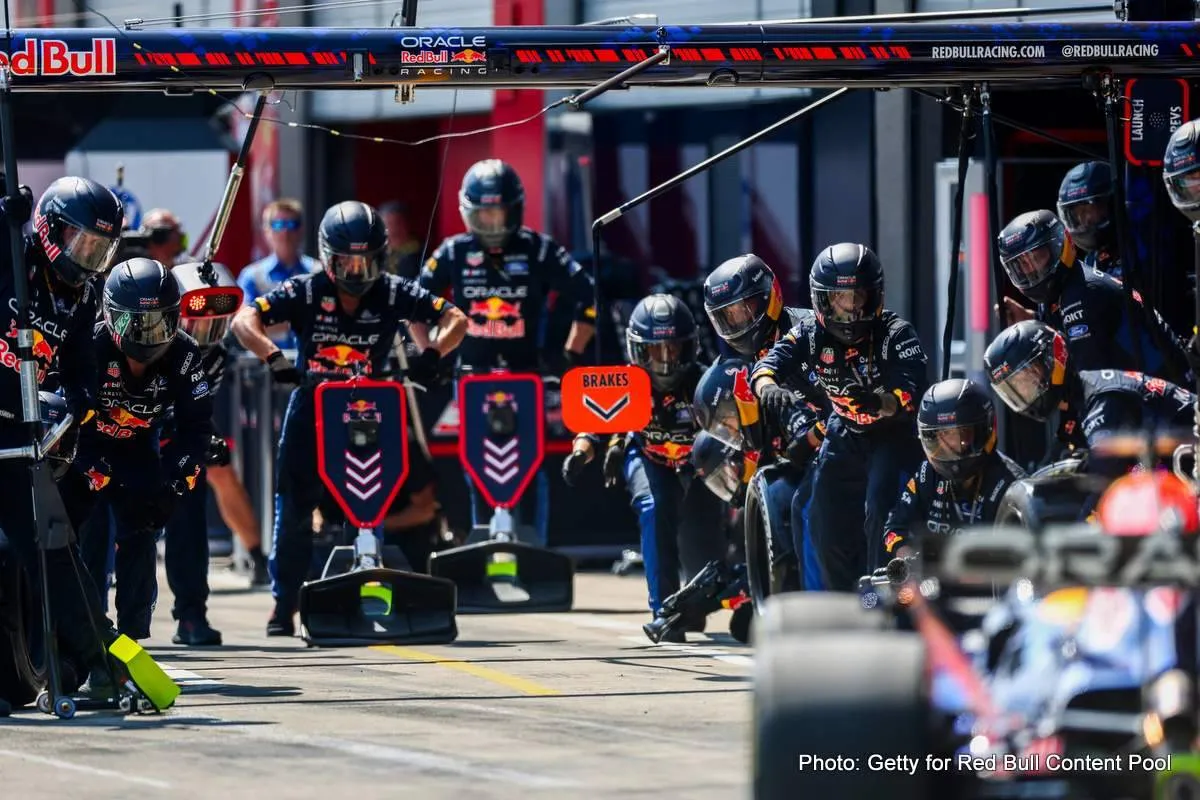
The fundamentals of risk-reward calibration in Formula 1 strategy involve probabilistic thinking applied in real time. A pit crew weighing a one-stop strategy against a two-stop is essentially building a decision tree in their heads, with weather forecasts, tire degradation curves, traffic patterns and the gaps to nearby cars all factored into the model.
The trade-offs between soft, medium and hard tire compounds are themselves the result of careful engineering choices, and getting the compound selection right is one of the most consequential decisions a strategist will make over a race weekend. Drivers face similar decisions on every lap. Push harder now to gain a position and risk a higher chance of error?
Hold position to protect the points and let an opportunity slip? These choices come at drivers constantly, and the cumulative effect of making them well or poorly is what separates podium finishers from the mid-pack.
How game designers borrow from this exact framework

Game designers have studied this kind of decision pressure carefully and built mechanics that replicate it inside their own formats. Modern racing titles, including Need for Speed similar games at the more arcade end of the spectrum, give players continuous risk-reward choices: when to use nitrous, when to take a risky shortcut, when to commit to an overtake versus settling for a clean line through the corner.
The format that this approach shows up in most directly, however, is not always a racing title. It can be a slot-style title where the underlying mathematical structure is built around volatility, multipliers, bonus rounds and decision points that ask the player to weigh patience against ambition in ways that map almost cleanly onto a Grand Prix weekend.
The connection becomes clear when you examine the architecture of a well-designed game of this type, such as a gorilla slot machine game where each session contains its own miniature strategic landscape. Different stake levels function like tire compound choices: softer compounds (higher risk) offer more upside but expose the player to a wider variance band.
Bonus features behave like pit stop opportunities: take them at the right moment and they compound your position significantly, take them at the wrong moment and they cost you.
The dopamine cycle of a well-calibrated game replicates, on a compressed timescale, the same risk-reward hits that drivers and strategists experience over the course of a 90-minute race.
How modern data analytics reinforces the parallel

The data side of Formula 1 has matured dramatically over the past two decades, with teams pouring enormous resources into real-time analytics, machine learning models and simulation environments that let them test strategic options before committing to them.
Drivers receive constant data feedback through their radio, with engineers updating them on tire performance, gap times and weather radar. The cognitive load is significant, and the drivers who handle it well treat the data as another input to their existing judgment rather than a replacement for it.
Modern game design has moved in a parallel direction. The best risk-reward games provide players with the right amount of information at the right moments, allowing decisions to be informed without becoming mechanical.
A player who can see relevant data without being overwhelmed by it tends to engage more deeply and more sustainably than one who is either flying blind or drowning in stats. The challenge for designers, in both racing simulation and slot-style formats, is calibrating the information layer to support good decisions rather than substitute for them.
What both worlds reveal about decision-making under pressure

The deeper lesson that emerges from studying both Formula 1 strategy and risk-reward game design is that good decision-making under pressure is a learnable skill. Drivers train it through years of competition.
Players develop it through repeated exposure to well-designed mechanics. The academic literature on the topic now includes formal models that treat F1 race strategy as a game-theoretic optimization problem, which captures the same competitive structure that game designers use as a starting point for their own mechanics.
In both cases, the cognitive skills involved are similar: pattern recognition, probability estimation, emotional regulation and the ability to commit to a chosen course without second-guessing it in the moment.
These skills transfer across contexts in ways that surprise people who think of motorsport and gaming as completely separate worlds. Race engineers who started in simulation environments often bring an intuitive sense of probabilistic decision-making to real strategy meetings.
Players who develop sharp risk-reward instincts in games often find that the underlying judgment applies to financial decisions, professional choices and other contexts where probability and patience matter. The mental architecture is the same; only the surface form changes.
Where the racing line and the game design line eventually converge

The relationship between Formula 1 strategy and risk-reward game design is not a superficial coincidence. Both have evolved over decades to optimize the same fundamental human challenge: making good probabilistic decisions when the stakes feel high and the time feels short.
Game designers borrow from motorsport because motorsport offers a deep, well-studied catalog of decision frameworks under pressure, with examples like the strategic war between undercut and overcut calls showing exactly the kind of risk calculus that game designers translate into their own mechanics.
Racing strategists borrow from gaming because games provide cheap, fast iteration cycles for testing decision patterns at scale. The result is a shared vocabulary and a shared toolkit that benefits both communities, and the players or fans who appreciate one of these worlds will find themselves unexpectedly fluent in the other once they look at it through the right lens.
As both motorsport and gaming continue to professionalize their data and design layers, the parallels between the two will likely become more obvious to a wider audience than the specialists who have already noticed them.
The pleasure of a well-executed overtake at Monaco and the satisfaction of a well-timed decision in a beautifully designed game come from the same neural mechanisms, and recognizing that connection only makes both experiences richer.
Latest News

Loading