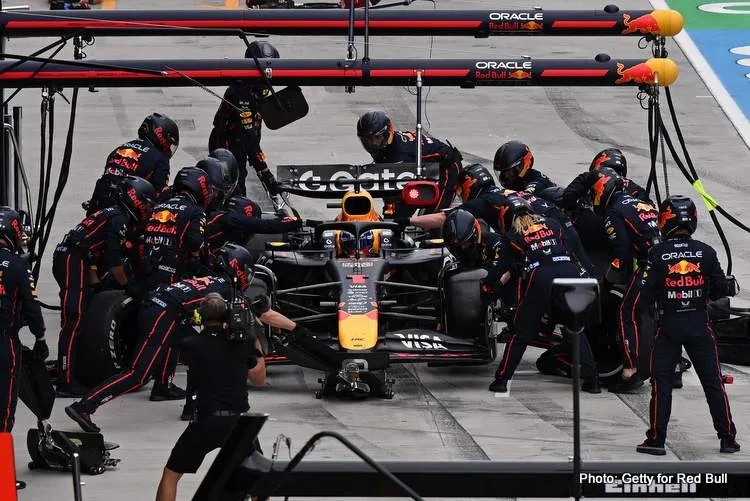
Every Grand Prix weekend, lap-time spreadsheets, splits and tyre traces hint at one truth: races are often won in the pit lane when the margins are as fine as they are in the current golden era of Formula 1.
Some fans pass the time between stints with aviatrix bet, but the sharp end of the Formula 1 field is obsessed with a different gamble: choosing exactly when to stop and whether to attack with an undercut or hold nerve for an overcut.
Understanding the forces behind those calls reveals why strategy still decides results in an aero-dominated era and why pit stop timing is everything.
Modern Formula 1 cars are brutally sensitive to track position, tyre temperature, and turbulent air. That means each stop risks dropping a car into traffic or cold-tyre purgatory. The goal is to spend as little time as possible off the pace—whether that’s out on worn rubber, crawling on out-lap tyres, or stuck behind a slower rival—and to emerge with a clear air window where the car’s true pace can breathe.
The undercut in one sentence: Pit first, bolt on fresher tyres, and use a hot out-lap (or two) to jump the rival when they stop next lap. It’s the classic “attack now” play.
The overcut in one sentence: Stay out longer, keep the pace high on cleaner track, and pit later—banking on rival out-lap struggles or traffic to hand you the position.
The physics behind the call

Tyre warm-up vs tyre degradation
If compounds warm quickly and deliver instant grip, the undercut is vicious: a properly prepped stop, clean release, and a purple middle sector can flip positions. When compounds are slow to heat, the overcut bites back—out-laps slide, surface temperatures lag, and a committed in-lap on older but stable tyres can be faster overall.
Track layout and pit delta
Short pit lanes shrink the risk; long ones punish the call. High-deg tracks magnify the undercut because fresh rubber is worth seconds per lap. Low-deg or safety-car-prone venues often reward staying out.
The human factor: drivers and execution

In-lap, stop, out-lap
Strategy models assume perfection, but races are lived at the margins. A driver who nails the in-lap—lifting early to regenerate energy, then smashing the final sector—can create the buffer the crew needs. Pit crews live on tenths: a wheel hang or slow release kills an undercut, while a slick 2.3s service can rescue a marginal overcut.
Traffic reading
The best strategists don’t just calculate— they forecast. If pitting drops you behind a DRS train, the undercut dies on arrival. If your rival will rejoin behind a car on the wrong tyre, the overcut sings. This is why engineers spend warm-up laps mapping the midfield’s pace and tyre state as carefully as their own.
Safety cars and virtual safety cars

The yellow curveball
Neutralisations compress the field and halve pit-time losses. If you’re within the pit window, an instant call can flip a race; if you’ve just stopped, tough. Great walls monitor sector gaps in real time so a car can dive the moment a VSC delta hits, banking “free time” without crossing delta limits.
Risk management
Teams assign probabilities to neutralisations by track and stint phase. A late VSC risk nudges plans towards longer first stints (protect the overcut); a low incident rate emboldens early stops (attack the undercut).
Fuel, batteries, and brake temps

Energy as strategy
Hybrid deployment changes the equation. An undercut needs full battery and brake temps ready for the out-lap attack; an overcut asks the driver to harvest cleverly while keeping tyre life. Tools like lift-and-coast before pitting cool brakes and protect the pit stop, then re-energise for the out-lap push.
When the undercut wins
The template
- High degradation track
- Short pit delta
- Quick-warming compound
- Clear air on rejoin
In this world, stopping first turns old rubber seconds into fresh-tyre tenths—more than enough to leapfrog a rival tethered to a cautious out-lap.
When the overcut rules
The template
- Low to medium degradation
- Painful warm-up window
- Traffic looming on the rival’s rejoin
- Driver confidence in clean laps
Staying out yields a pair of qualifying-style laps, while your rival tiptoes on cold tyres behind slower cars. You stop later, rejoin ahead, and defend while your tyres hit their sweet spot.
Undercut vs overcut in the real world: blended plays

Offset stints and tyre splits
Front-runners often stagger tyre choices across their two cars: one commits to the early stop to pressure rivals, the other extends to cover Safety Cars or traffic chaos. The “hare and hound” pairing forces other teams into suboptimal mirrors.
Fake-outs and pit-entry theatre
Pit-wall calls aren’t just maths; they’re psychology. Drivers may jink towards pit entry to bait a response, then stay out as rivals pit into traffic. Radios buzz with “box, box” that turns into “stay out, plan B” at the last cone.
What fans should watch during races

Three tells of an incoming move
- Lap time drift: leader’s pace falls by 0.3–0.5s/lap.
- Gap to traffic: strategist mentions a “window” by car number—clean air target for the rejoin.
- Tyre chatter: radio hints about fronts “graining” or rears “going”—a classic undercut trigger.
Strategy still wins Sundays
In an era of aero efficiency and data abundance, racecraft has moved from wheel-to-wheel to second-to-second. The undercut and overcut are not buzzwords; they’re the language of victory.
Read the tyres, respect the warm-up, time the call, and give your driver the one gift that matters most in modern Formula 1: clear air at the perfect moment.
Latest News


Loading

