Outside Line: Reasons why WEC could produce another Michael Schumacher for Formula 1 again
F1 HistoryMonday, 11 May 2026 at 07:30
With Formula 1 on hiatus, I had the opportunity, and the good fortune, to get more engrossed in the World Endurance Championship (WEC), once again I was well entertained and pleasantly surprised by the competitiveness and the wealth of drivers in action.
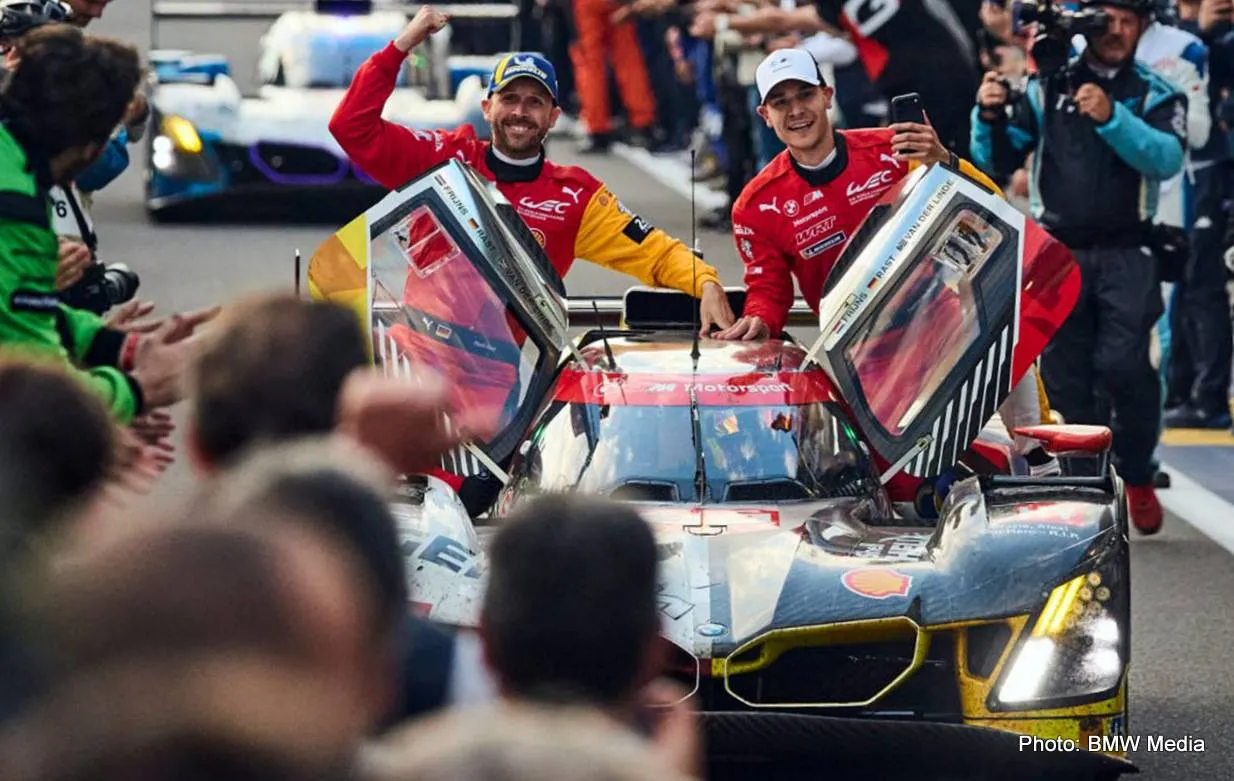
The 6 Hours of Spa was a riveting contest decided in a last half hour shootout and won by BMW after Peugeot claimed pole. Cadillac and Alpine also led for spells. Report here>>>
At the moment, WEC is already very impressive. The manufacturers include: Peugeot, Ferrari, Aston Martin, Alpine, Toyota and Cadillac, and now there's Genesis, the first major Korean foray at this level. Next year, Ford and McLaren arrive with works efforts. While a Honda/Acura project has been spoken about, as well as apparent interest from Chinese EV manufacturers BYD.
Even as it stands now, this is the golden era of endurance sportscar racing. It is no secret, I've always been a keen follower and photographer of sportscar racing from the early 1970s when the series was almost as popular as Formula 1 in the 1970s.
I vividly remember the Ferraris, the Gulf Mirages, the Matras howling down that never-ending Kyalami straight. And then, of course, came the era of the Porsche 956s and 962s, which I witnessed at many 9-hour and 1000 km races. With a posse of Martini Lancias, Silk Cut Jaguars, Peugeots and others chasing.
Although Formula 1 now sucks up all my energy and all my attention, it is great to be able to delve into sports car racing and the WEC as it is at the moment. Let's talk about the drivers.
For many years, endurance sportscars and Formula 1 were synergised. You drove for Ferrari in Formula 1, and the next weekend you drove sportscars for Ferrari. There were several such arrangements between drivers and constructors. That gradually faded away as Formula 1 started gobbling up the market share of top-notch motorsport at the time.
Bernie Ecclestone all but destroyed sportscar racing

Once Bernie Ecclestone got into power, with sidekick Max Mosley running the FIA, they made Formula 1 the be-all and end-all of motorsport. They went on a concerted scorched-earth campaign to nuke anything that could even mildly compete with Formula 1. Sportscars were top of the queue for the guillotine.
The marginalising of sportscar racing nearly killed its credibility. For a short spell it slid into amateur racing as works teams and manufacturers were not intersted. It took decades to revive. Only since Ecclestone's departure from the scene, perhaps coincidentally or not, has WEC thrived under FIA stewardship of the series.
In terms of the drivers, what's been interesting is that many who have finished their careers in Formula 1 gravitate to the WEC. You've have Kevin Magnussen in there, as well as Kamui Kobayashi, Nyck de Vries, Robert Kubica, Paul di Resta, Sébastien Buemi, Brendon Hartley and the like.
Of course, you have those drivers that I really believe Formula 1 is poorer for not at least having tested or given an opportunity to prve themselves.
You've got the winners on Saturday at Spa-Francorchamp: BMW Boys Robin Frijns, René Rast and Sheldon van der Linde. All three special and I believe with potential to surprise if given a proper Formula 1 test. They have the pedigree, the experience and the 'racer' in them.
If you just go down the WEC grid, I would argue the same case for Nicolas Nielsen, Antonio Fuoco, Mike Conway, Nick Cassidy, António Félix da Costa, James Calado, Andrea Piccini, you name them. These are drivers that I reckon that should've been given a crack.
WEC to Formula 1 is road less trodden

The ladder to Formula 1 for many years has been via Formula 3 and Formula 2. But because Formula 1 for many years had only 20 seats (now 22 seats) there were simply too many drivers for too few seats every year. Thus inevitably, too many good drivers have missed out because pay drivers or journeymen outstaying their welcome.
These drivers tend to hit the ceiling once they're knocking on the Formula 1 door to find it's locked. Wrong timing. So what options do they have? They have Formula E, which many of them pursue because they need to eat and pay rent. There's also IndyCar, and of course the WEC.
The good thing about the WEC is each team has two cars, with two to three active drivers per car, so that's a lot of employment, which is very good for the market in geenral. Most importantly, they get mileage and a lot of seat time.
Unlike previous generations of endurance sportscars, modern Hyperrcars have bulletproof reliability. Every race is a sprint from the minute the driver gets in the car to the minute he swaps over. They're attacking.
I would imagine that Ferrari's sportscar ace Antonio Giovinazzi, for instance, is a far better driver now than he was when thrown into the deep end of Formula 1. He's far more mature. An elite driver now. He is also a Le Mans winner and a WEC World Champion.
Michael Schumacher from sportscars to Formula 1

One could ask: How do we know any of these drivers are the real deal for Formula 1?' Until you test them on merit, we're never going to know. However, history shows that it might be a chance worth taking in the future.
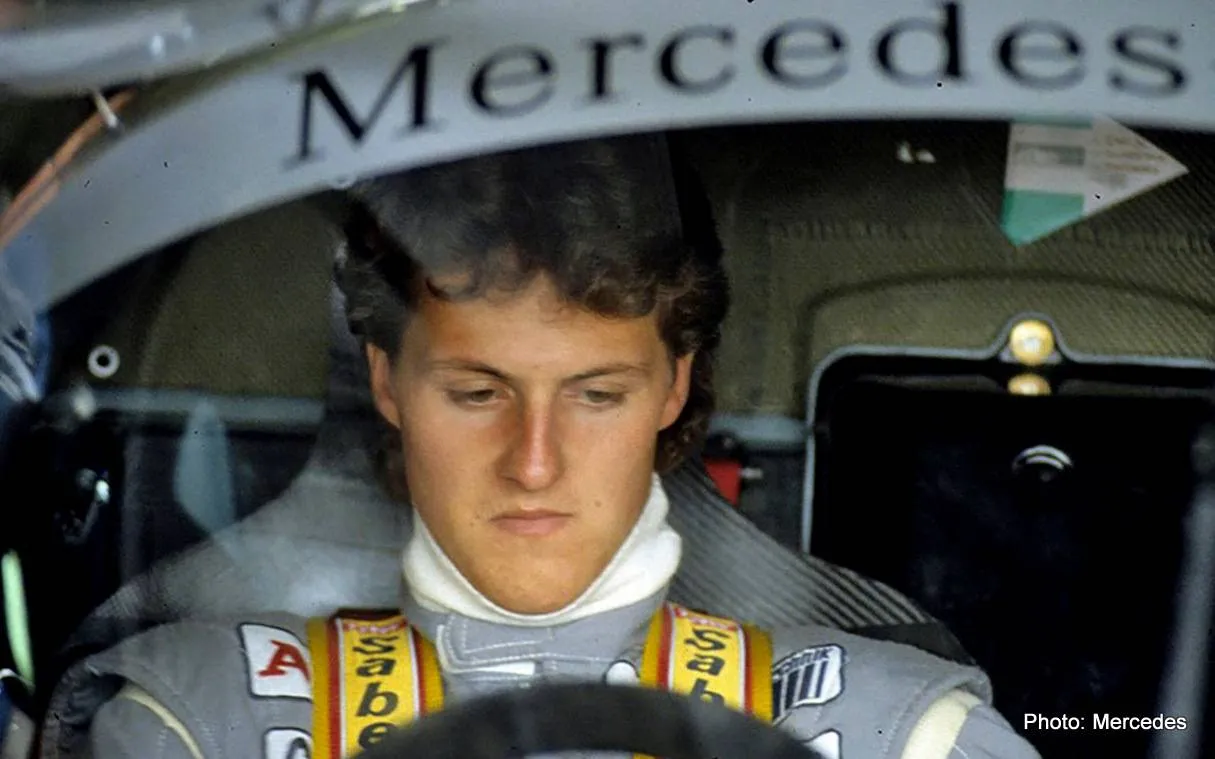
The most famous story of a driver that made the transition from a nobody (in terms of the Formula 1 landscape) when he popped on to the scene to become a legend of the sport. The unconventional route to the top taken by the great Michael Schumachershould be inspirational for modern WEC drivers.
Even at the time, the accepted path to Formula 1 was Formula 3 and Formula 3000, but the route from sports car driver to Formula 1 driver has been relatively rare.
In the early 1990s, Schumacher was not on many F1 people's radar before he made his Grand Prix debut in 1991 at Spa-Francorchamps. In fact, he was so far off the radar that when the need came for Team Jordan to replace jailed Bertrand Gachot, team principal Eddie Jordan did not know who Michael was.
Word is that when Jordan asked Schumacher if he had raced at the daunting Spa-Francorchamps before during his career, Michael crossed his fingers and fibbed, and said he had. Later we found out he had never done so!
History shows, in qualifying that weekend for the 1991 Belgian Grand Prix, he mesmerised the world. He stunned them with a P7 qualifying performance that had the piranhas in the Formula 1 paddock thrashing about madly for his services. A star was born that day.
By the time the dust had settled and the dollars had changed hands, Michael Schumacher was a Benetton driver a race later. At Monza, and the rest is legend.
Silver Arrows sets the blueprint

Schumacher's route was through the World Endurance Championship of the time, when the seires was in a good place. You had Porsche, Mercedes, Peugeot, and Mazda among the big boys. It was a formidable time. Schumacher was part of the Mercedes Silver Arrows team run by Peter Sauber with a trio of young up-and-coming Germans, which also included Heinz Harald Frentzen and Karl Wendlinger.
In the same team they had very experienced drivers like Bob Wollek, Jochen Mass and Jean Louis Schlesser there to guide the young guns. In retrospect, all three of the youngsters Mercedes backed at the time became Formula 1 drivers. One of them considered among the greatest.
Ironically, at the time Frentzen and Wendlinger, were considered better prospects than Schumacher. While there were flashes of brilliance from Schumi, no one predicted that he would seize that moment at Spa-Francorchamps on that day and thereafter rewrite Formula 1 history as he did.
He had shown flashes in of what he was capable of. He and his Silver Arrows teammates enjoyed a lot of track time, got disciplined, and when, thanks to his manager Willi Weber, Michael's break came he seized it and was more than ready.
That alone should be inspiration for the modern-day WEC drivers. And I sincerely hope that the synergy, which I believe is natural, will one day see drivers emerge from WEC with sports cars as their springboard to Formula 1.
WEC will be a refuge for Formula 1 World Champions

Lately, WEC has been a refuge for so many Formula 1 drivers. And it won't stop. When the likes of Fernando Alonso, who already won Le Mans and the WEC title, Lewis Hamilton (?), Max Verstappen or Lando Norris retire from the top flight, guaranteed they'll have spots with WEC teams if they choose to continue to race beyond F1.
If you go down the current grid, I could imagine the likes of Lance Stroll, Pierre Gasly, Esteban Ocon, Valtteri Bottas, Sergio Perez one day gravitating towards WEC when their time is up in Formula 1.
That would be a boost to an interesting synergy, where veteran elite drivers can be paired with less experienced drivers. Much how the Silver Arrows did it with their trio of youngsters running from the same pit garage as veteran drivers four decades ago to such good effect.
In closing, you have to mention Zak Brown's Triple Crown dream in his sights, with McLaren entering the WEC Hypercar class next year to complement their Formula 1 and IndyCar programmes.
For me, it is an amazing project. It's really what you expect of a racing team like McLaren to be doing. After all, their founder Bruce McLaren would race anything anywhere and build it if need be: Formula 2, Formula 1, IndyCar, Can-Am, and sports cars. If there was an important international series, there'd be an orange car on the grid.
The reason Brown ditched Formula E and embraced this Hypercar era is probably because he sees the huge potential here, not only for the marque to expand the brand's reach and possible glory but also, and most importantly for me from a racing perspective, it opens up a lot more valuable seats to develop drivers and a great life after Formula 1 for their drivers.
Hopefully one day we'll see the synergy where WEC becomes a true pipeline to Formula 1 for drivers, and, who knows, maybe another Michael Schumacher pops onto our radar.
Latest News
Loading