Honda F1: the Japanese manufacturer set to have a $19 million boost for their engine
F1 NewsFriday, 15 May 2026 at 08:40
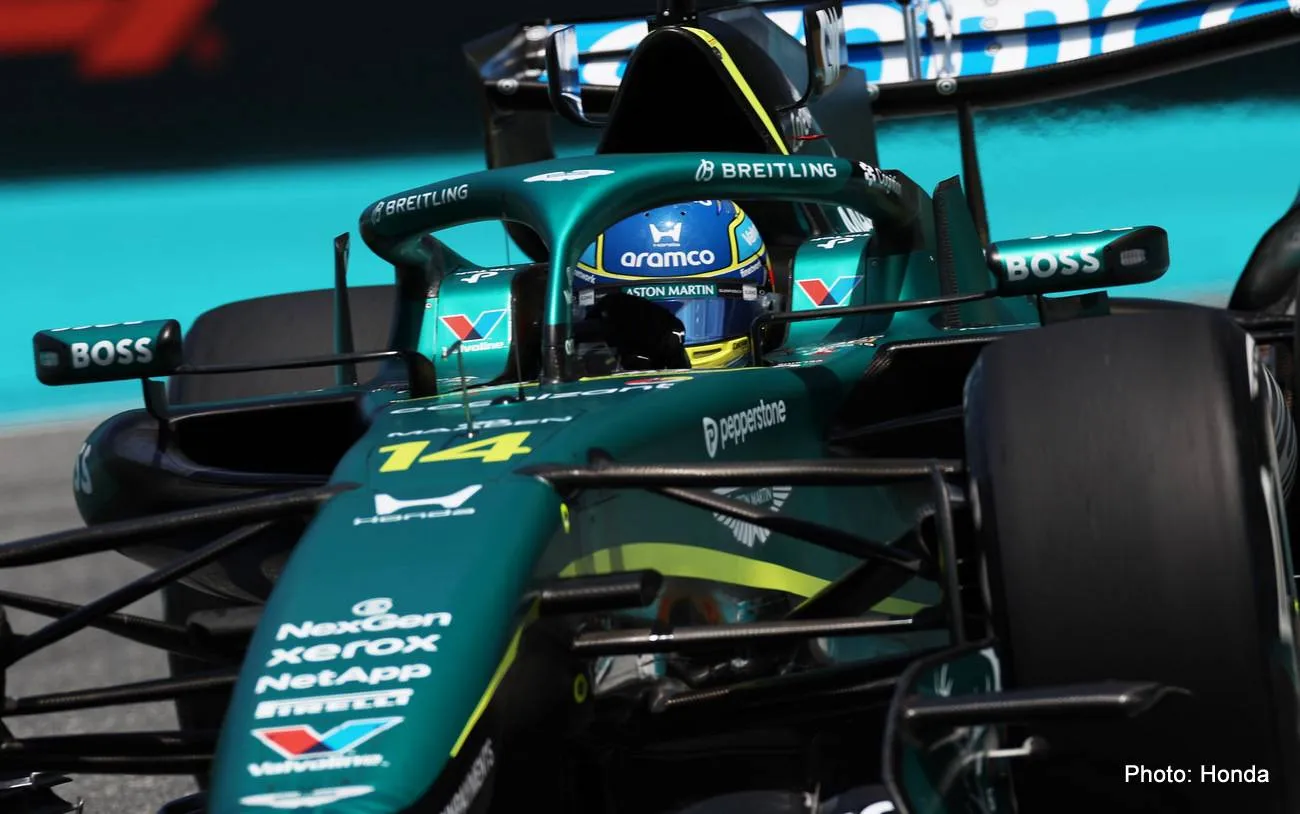
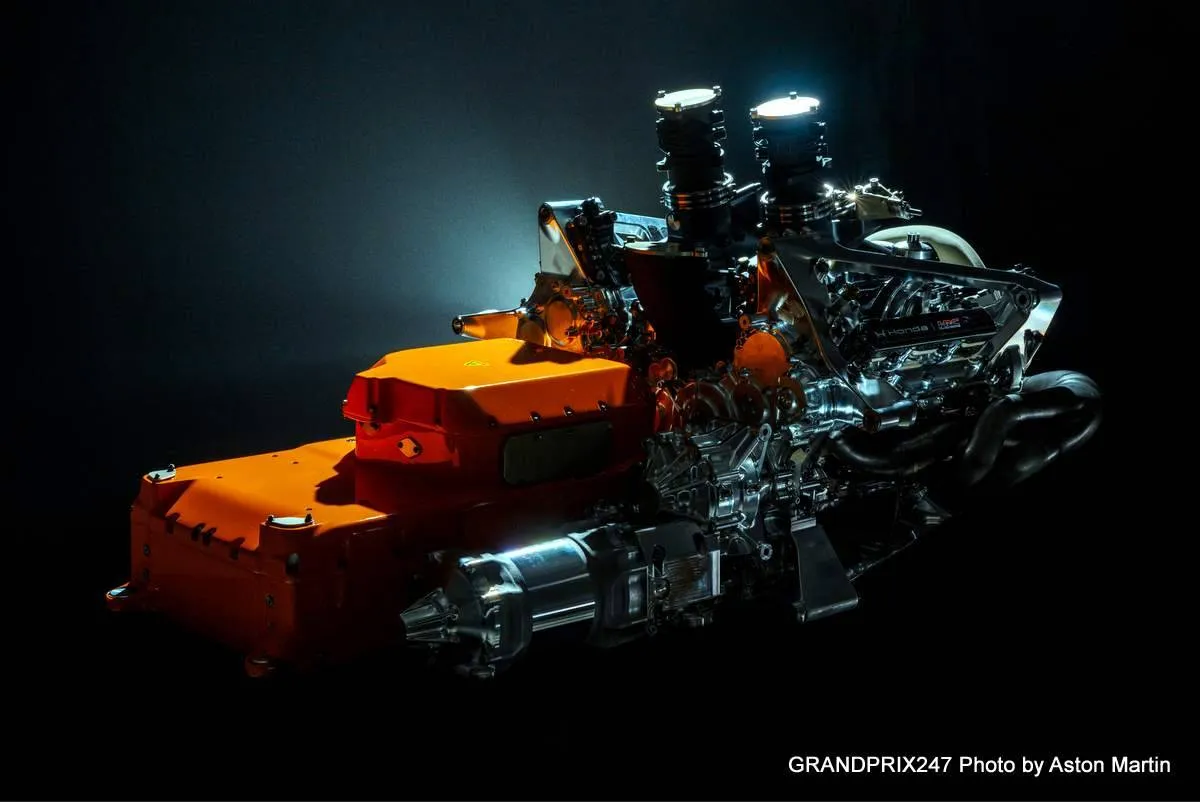
Honda’s difficult return as a full Formula 1 power-unit manufacturer could soon receive a regulatory lifeline. Under the FIA’s Additional Development and Upgrade Opportunities system (ADUO).
The
Japanese company may be allowed up to $19 million of extra development room
after the Canadian Grand Prix if its engine deficit is confirmed in the first
2026 review.
The boost won’t fix Aston Martin’s season by itself, but it could
give Honda the freedom it needs to improve its new hybrid package.
Struggling Honda F1 project is
going to have certain development concessions. The 2026 season was meant to mark a major step
forward for Aston Martin. Honda replaced Mercedes as the team’s power-unit
supplier in an exclusive works partnership. Instead, the opening races have
exposed how painful a bad starting point can be when development is
restricted.
Aston Martin’s issues have gone beyond
pure pace. The car has suffered from reliability concerns, excessive vibration
that was affecting drivers’ health, and poor race execution. The British team
had to wait until the fourth race of the season in Miami to see both cars
reach the finish line, with Fernando Alonso P15 and Lance Stroll P17 of 18
classified runners.
That is why ADUO is so relevant for
Honda. The FIA created the mechanism to stop manufacturers being trapped for
years by a weak homologated engine. If Honda is judged more than 10% behind the
benchmark, it can receive up to $11 million for the ADUO period and, in 2026
only, anticipate up to $8 million from future cost-cap periods.
FIA ADUO process is not a Balance of Performance scheme

The FIA is keen to stress that ADUO is not
Balance of Performance. In endurance racing, BoP can change weight, power, or
other parameters to equalise cars directly. Formula 1 is not doing that.
Nikolas Tombazis, the FIA’s single-seater director, has framed ADUO as
cost-cap relief, not a shortcut, saying manufacturers still have to build
the best engine within the technical rules.
That distinction matters because rivals
will not want a struggling manufacturer to leapfrog the field through
regulatory help. Honda would not receive more fuel flow, a special deployment
map or any trackside performance gift. It would receive more scope to spend and
upgrade. In practical terms, the system gives Honda a chance to work its way
back, not a guarantee that Aston Martin will suddenly become competitive.
The measurement is also narrower than
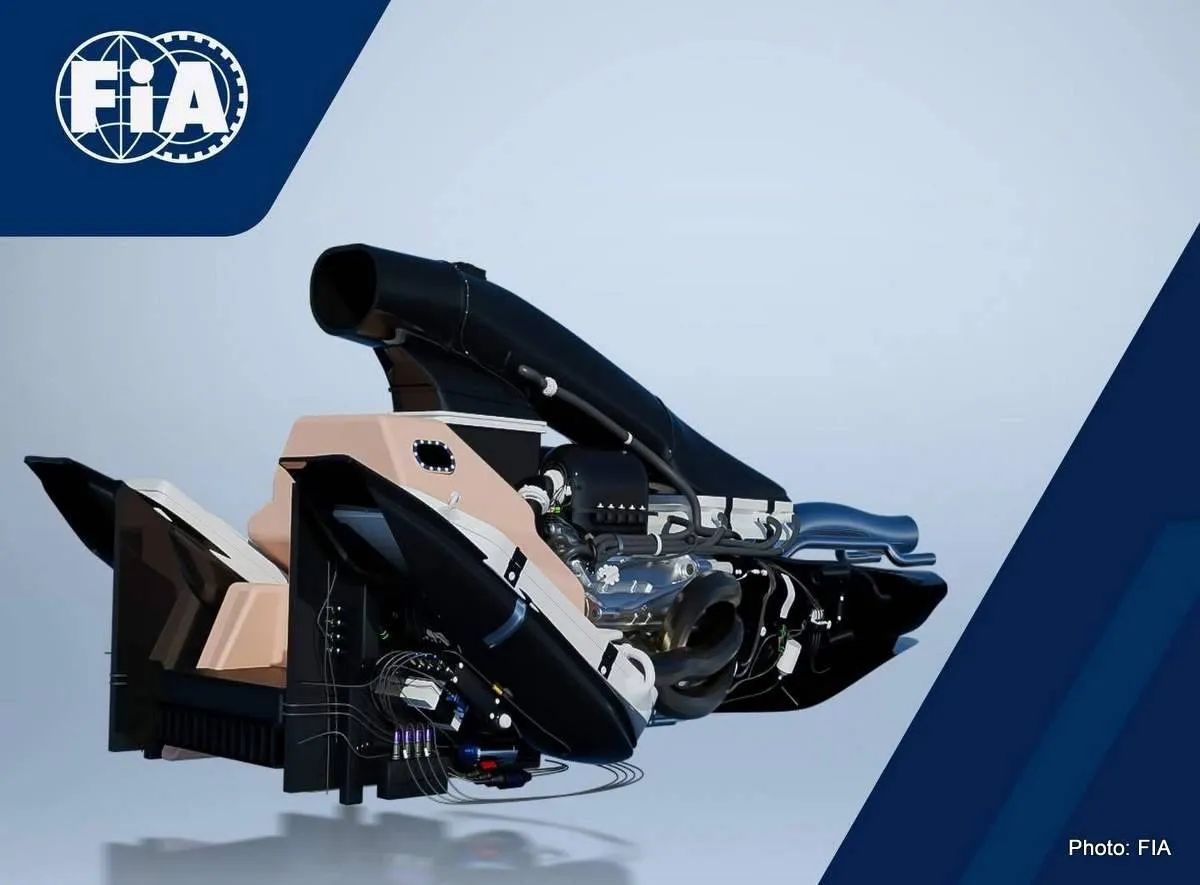
total power-unit performance. The FIA will calculate an ICE Performance Index
using factors such as torque, engine speed, MGU-K power and lap-time
sensitivity, with an algorithm, similar to those in use on online casino
platforms to recommend games to their users, extracting the results
and putting the ICEs of each manufacturer in its concessions tier. However, the
FIA has made clear that the assessment focuses on the internal combustion
engine and does not fully represent the whole power unit, where ERS performance
remains central.
The Canadian Grand Prix is now the decisive
checkpoint because the FIA’s first review period has changed. The original
race-one-to-race-six window was disrupted by the cancelled Bahrain and Saudi
Arabian Grand Prix. The first period now covers Australia, China, Japan,
Miami, and Canada, with results to be communicated no later than two weeks
after the Montreal race.
Audi F1 set to be given ADUO boost as well

Once the results are communicated,
eligible manufacturers will receive a separate notification detailing their
allowance, and upgrades can be introduced as early as the following race. For
Honda, Canada could decide how much extra freedom the company gets to reshape
its 2026 engine campaign.
The scale is progressive. A 2-4% deficit
is worth up to $3 million, 4-6% up to $4.65 million, 6-8% up to $6.35 million,
and 8-10% up to $8 million. Only a gap of 10% or more opens the door to the
maximum package of $19 million in 2026 development support.
Honda may be the clearest case, but Audi is
also expected to be in the ADUO conversation. The German manufacturer is in its
first season as a full works Formula 1 team and faces the same reality as every
newcomer to a major rules reset: simulations and dyno work only reveal so much
before the new car has to race. Reports around Audi’s start to 2026 have
pointed to drivability issues and slow launches, including turbo-related
compromises that cannot be cured instantly.
For Audi, ADUO would be less about
rescue. Extra development freedom could help Neuburg and Hinwil shorten the
learning curve if FIA data confirms that the power unit sits outside the
permitted performance window. Like Honda, though, Audi would still need to
convert regulatory permission into usable hardware.
That is the key point for the whole
debate. ADUO can create an opportunity, ease financial pressure and open extra
homologation routes. It cannot write the engineering solution. Canada should
reveal who gets help, but Honda and Audi will still have to prove that the
extra freedom can become lap time.
Latest News






Loading