FIA explains ADUO ahead of first review period that ends post Canadian Grand Prix
F1 NewsThursday, 14 May 2026 at 11:53
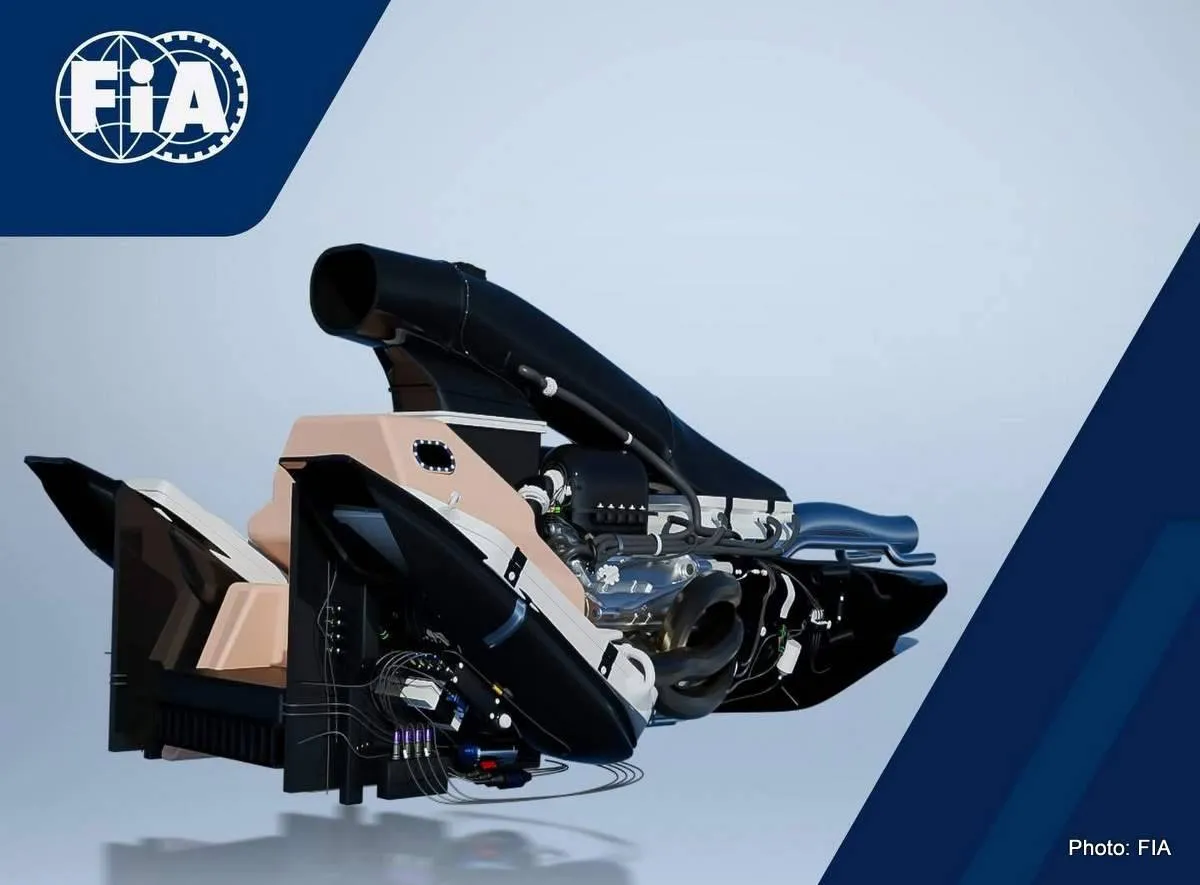
The FIA has detailed how Formula 1’s Additional Development and Upgrade Opportunities (ADUO) system will operate under the sport’s controversial new 2026 power unit regulations, confirming revised monitoring periods and the financial incentives available to struggling manufacturers.
ADUO has been introduced as part of the 2026 Formula 1 Technical Regulations to help power unit suppliers close performance deficits without breaching the sport’s strict financial limits. The mechanism focuses exclusively on the Internal Combustion Engine component of the hybrid power unit package.
Under the system, the FIA will monitor and calculate an ICE Performance Index during defined periods across each season from 2026 to 2030. The calculation will use factors including engine torque, engine speed, MGU-K power and the sensitivity of lap time to power output.
A manufacturer whose ICE is measured to be at least 2% behind the benchmark power unit will qualify for ADUO support.
FIA Single Seater Director Nikolas Tombazis stressed the mechanism is not intended as a performance equalisation tool: “It’s important to make clear that ADUO is not a kind of balance of performance mechanism.
A cost cap relief mechanism

“A team or manufacturer will not suddenly get greater fuel flow rate or more or less ballast. It is, in fact, a Cost Cap relief mechanism, where a PU manufacturer meeting ADUO criteria during a review period is given an opportunity to develop its engine through a downward adjustment.
“That’s not to underestimate it but a manufacturer will still need to make the best engine in order to win.
“It’s not a magic bullet, or like the FIA is handing out brownie points to somebody who’s behind, it simply provides them with leeway to develop their power unit within the framework laid out by the Technical Regulations.”
Manufacturers falling between 2% and 4% behind the leading ICE will receive financial allowances of up to $3 Million outside the cost cap. Those between 4% and 6% behind can receive up to $4.65 Million, while larger deficits trigger progressively bigger allowances up to $11 Million for manufacturers more than 10% adrift.
For 2026 only, manufacturers exceeding a 10% deficit may also bring forward up to $8 Million of future cost cap allowance to accelerate development work.
FIA revises first ADUO monitoring period

The FIA also confirmed changes to the first monitoring period following the cancellation of the Bahrain and Saudi Arabian Grands Prix due to unrest in the Middle East.
Originally, the first review period covered races 1 to 6 of the season. It has now been revised to include Australia, China, Japan, Miami and Canada.
Results from the opening evaluation period will be communicated no later than two weeks after the Canadian Grand Prix.
The second monitoring phase will run from Monaco to Hungary, while the final review period will span the Dutch Grand Prix through to Mexico City.
Eligible manufacturers may introduce upgrades from the following race after receiving FIA approval.
The FIA clarified that manufacturers between 2% and 4% behind the benchmark ICE will receive one additional homologation upgrade during the current season and another the following year.
Manufacturers more than 4% behind will receive two upgrades in the current campaign and two more for the next season.
However, ADUO opportunities are not cumulative within the same season and only apply the first time a manufacturer qualifies during that campaign.
Unused upgrades cannot be carried over beyond the season in which they are allocated.
Wide scope for power unit upgrades

Although ADUO eligibility is based solely on ICE performance, the FIA confirmed manufacturers may apply upgrades across a broad range of power unit systems.
Permitted areas include ICE components, turbochargers, wastegates, exhaust systems, MGU-K systems, ERS cooling systems, control electronics, hydraulic functions, fluids and ballast.
The FIA hopes the mechanism will prevent manufacturers from becoming trapped in long term competitive deficits under the all-new 2026 Formula 1 engine regulations, which place far greater emphasis on hybrid electrical power than previous generations.

Latest News



Loading