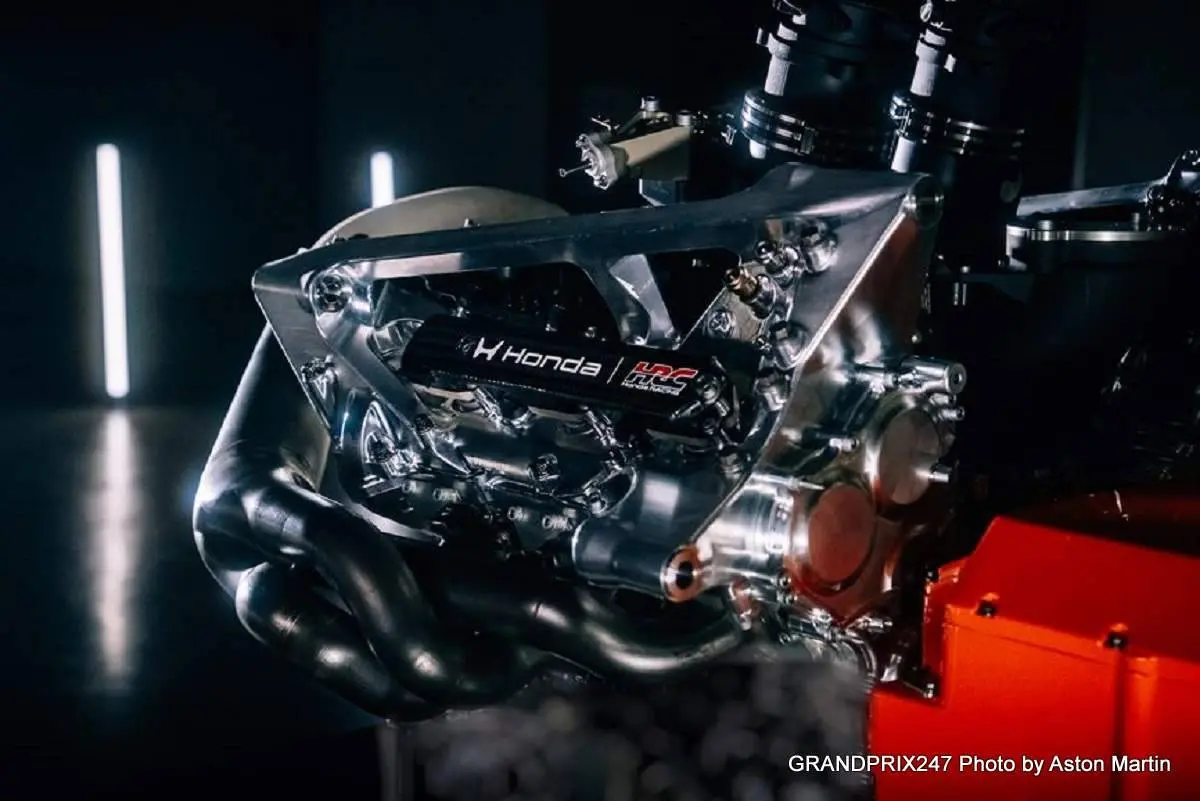
Variable compression ratios are the talk of the Formula 1 Paddock at the moment, and rightly so.
As the teams unveil their new charges and run them for the first time, the spectre of a two-field championship looms large.
Abracadabra
It seems that both Red Bull and Mercedes have allegedly performed some engine alchemy. Apparently, their ICUs can surpass the permitted 16:1 maximum compression ratio.
This is achieved by using advanced metal alloys in the construction of their pistons and cylinder heads.
This, in turn, allows them to expand at running temperature, achieving a reported 18:1 compression. Useful when the FIA’s testing is done at ambient (room) temperature, when they will, of course, contract and comply.
Clever stuff!
Secret public knowledge
You would be forgiven for thinking this all came to light through some kind of industrial espionage.
However, the F1 personnel merry-go-round eventually gave them wind of this big competitive advantage.
Poaching an engineer isn't just about leveraging their creative genius; it’s also a window into the direction their competitors are moving.
Too little thinking and too late in asking

Regardless, the revelation of this perceived ‘cheat’ recently led to a meeting between PU manufacturers and the FIA.
Those whose engineering trousers were around their ankles demanded that those with them fully secured around their waists must comply with the regulations at all times.
To the FIA’s credit, they stuck to their guns. Sort of. There will be no changes to the measuring methodology for 2026 – especially as the PUs have already been homologated.
Fudge – ish
Those who were asleep at the lathe, were unhappy about this and the prospect of watching the Championship unfold from the back of the grid.
However, the FIA reminded them of the F1 dullard award for the hard of thinking. Namely, the Additional Development and Upgrade Opportunities (ADUO) system.
This vague device is more of a band-aid on a trauma wound than a real solution, both for the teams with mortal ICEs.
Innovation, with a small ‘i’

The whole discussion runs counter to the F1 narrative that has saddled us with a potentially dysfunctional racing PU in the first place: innovation.
Both Red Bull and Mercedes have done this, yet their efforts are being deterred by entertaining complaints of those who think inside the box.
Next year, somehow, the FIA believes it will be able to measure compression ratios whilst the engine is hot.
What’s the point of investing in the development of new solutions if they will quickly be made redundant?
Twice as bright, half as long
Ironically, this issue may resolve itself. I’m sure there has been plenty of bench testing by the two manufacturers, but, as with CFD and ground effect, the reality of running in the real world may make these PUs prone to detonation and/or seizure.
A small imperfection in the alloy or casting could result in non-linear expansion and a boom, race over. Even if this doesn’t occur, since the two manufactures supply some 40% of the grid, we should still see some competition
It’s good to see the FIA standing by their regulations, whether they are good or bad. In F1, the competition takes place both on and off the track.
Standing firm is necessary to meet F1’s innovation claims and reward those who actually do it!

loading
Latest News








Loading