2008 Singapore Grand Prix: Crashgate Formula 1's permanent scar
F1 HistorySaturday, 01 November 2025 at 07:30
This week, Felipe Massa revealed in a witness statement that Jean Todt, then Ferrari CEO, told him immediately after the 2008 Singapore Grand Prix that he was “sure Nelsinho [Nelson Piquet Jr.] crashed on purpose”.
Massa said Todt called him to his office “very soon after” the race concluded, alongside Stefano Domenicali (now F1 CEO). Nevertheless, Massa did not believe Todt at the time because of Todt’s known personal rivalry with Flavio Briatore, then-Renault Team Principal.
In his statement during a court appearance this week, Massa also disclosed his surprise at a 2023 media report suggesting Bernie Ecclestone and Max Mosley knew of the deliberate crash in 2008 but did not act. Massa is now seeking legal action for around £64 million, claiming the manipulated result cost him the 2008 world title.
Below is an overview of the saga, researched and written almost two decades since that night at Marina Bay in Singapore. Including the race summarised, lap-by-lap report, aftermath, the unravelling of Crashgate through to the FIA verdict and what has transpired to now, with the matter brought to court byMassa.
2008 Singapore Grand Prix: Piquet sins, Alonso wins

The 2008 Singapore Grand Prix - Formula 1’s first-ever night race - delivered drama and controversy in equal measure as Renault's Fernando Alonso claimed an unexpected victory after a chaotic contest defined by his teammate, Nelson Piquet Jr.’s crash and Ferrari’s pit lane disaster.
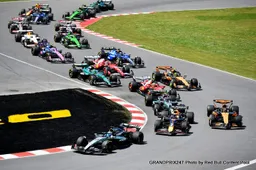
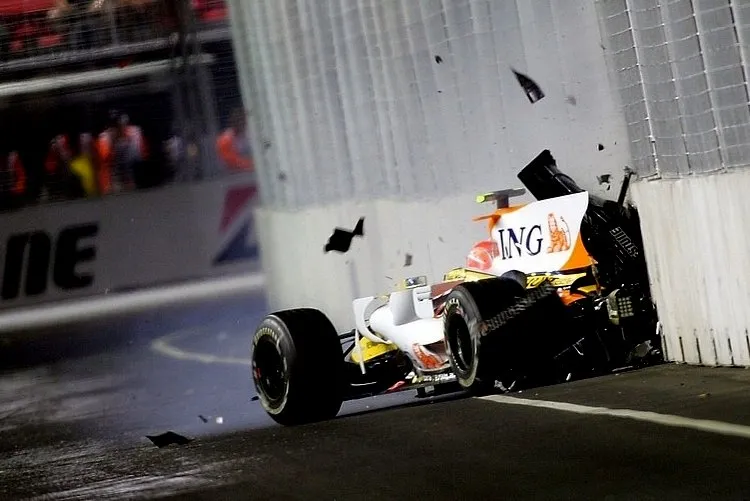
Felipe Massa had taken a commanding pole and led confidently ahead of Lewis Hamilton through the opening laps. Kimi Räikkönen followed in third, unable to match his teammate’s early pace. Then, on lap 13, Piquet lost control of his Renault and hit the wall, bringing out the Safety Car. The incident would completely reshape the race.
With the pit lane closed, Robert Kubica and Nico Rosberg were forced to stop for fuel and later penalised, while chaos erupted when Ferrari double-stacked their cars.
Massa was released too early, tearing the fuel hose from his car and nearly colliding with Adrian Sutil. He later served a drive-through penalty, ending his chances of scoring points.
Crash instigated Safety Car to advantage Alonso

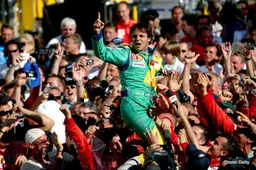
Having pitted moments before the Safety Car, Alonso inherited the lead as others fell back through penalties. From there, the Spaniard controlled the pace flawlessly to secure Renault’s first win since 2006, admitting fortune had played its part: “Without the Safety Car maybe I would have finished in 15th or 14th. We were very fortunate today, but the car was fantastic throughout the weekend.”
Hamilton recovered to fourth after a spirited scrap with David Coulthard, while Rosberg’s pace after his stop-and-go penalty earned him an excellent second place for Williams.
Ferrari’s woes deepened when Räikkönen crashed late in the race, ending a miserable evening for the team. Under the floodlights, Marina Bay proved both stunning and punishing, its 24 corners and relentless bumps testing every driver’s endurance.
As the fireworks lit the skyline, Alonso’s victory stood as both redemption and irony, a win built on chaos, in a race that changed Formula 1 forever. But it was not over.
2008 Singapore Grand Prix Lap-By-Lap

Start: Massa keeps his advantage into the first corner.
Lap 1: Kovalainen touches Kubica and loses two positions, he is now 7th.
Lap 4: Rosberg briefly passes Trulli at Turn 1 but goes wide, allowing the Italian to retake 9th place.
Lap 7: Rosberg overtakes Trulli.
Lap 8: Nakajima overtakes Trulli.
Lap 9: Alonso also passes Trulli.
Lap 10: Massa leads by 3.3s over Hamilton. Then come Raikkonen (+7.3s), Kubica (+14.9s), Vettel (+21.9s), Glock (+23.6s), Kovalainen (+25.8s), Heidfeld (+27.3s), Rosberg (+38.0s), Nakajima (+47.8s) and Alonso (+51.5s) in 11th.
Lap 12: Alonso, who started on soft tyres, pits for refuelling. He rejoins last.
Lap 13: Spin for Bourdais, he rejoins 18th.
Lap 14: Piquet loses control of his car exiting Turn 17 and crashes.
Lap 15: Safety Car deployed. Barrichello retires with engine failure. Rosberg pits.
Lap 16: Kubica comes in for a pit stop.
Lap 17: The pit lane opens. Many drivers stop for refuelling. Massa leaves too early, dragging the fuel hose with him. He drives down the pit lane before stopping. Raikkonen, waiting behind him, also loses time. The Brazilian rejoins 18th and last.
Lap 20: Racing resumes. Rosberg leads ahead of Trulli, Fisichella, Kubica, Alonso, Webber, Coulthard, Hamilton, Glock, and Vettel in 10th. Raikkonen is 15th, Massa 18th.
Lap 22: Rosberg and Kubica are under investigation for pitting while the pit lane was still closed.
Lap 24: Massa serves a drive-through penalty for the pit lane incident. Rosberg and Kubica receive a 10-second stop-and-go penalty.
Lap 25: Rosberg leads by 11.2s over Trulli, followed by Fisichella (+16.6s), Kubica (+17.2s), Alonso (+18.2s), Webber (+19.8s), Coulthard (+20.8s), Hamilton (+21.4s), Glock (+22.3s), and Vettel (+23.0s) in 10th.
Lap 27: Kubica serves his penalty and rejoins last.
Lap 28: Rosberg serves his penalty and rejoins 3rd. Trulli leads.
Lap 29: Fisichella pits and rejoins 17th.
Lap 30: Webber retires.
Lap 33: Trulli pits and rejoins 8th. Alonso is the new leader.
Lap 38: Nakajima overtakes Trulli.
Lap 39: Raikkonen overtakes Trulli as well.
Lap 40: Rosberg pits and rejoins 7th.
Lap 41: Alonso pits and rejoins still in the lead.
Lap 45: Alonso leads by 6.1s over Glock, followed by Rosberg (+14.8s), Raikkonen (+18.6s), Hamilton (+25.8s), Trulli (+35.2s), Vettel (+36.3s), Heidfeld (+37.9s), Coulthard (+40.6s), and Nakajima (+51.2s) in 10th.
Lap 46: Glock pits and rejoins 5th.
Lap 50: Raikkonen pits and rejoins 5th. Massa loses control of his Ferrari at Turn 18 and brushes the wall. He continues just before Sutil crashes in the same place. Safety Car deployed.
Lap 51: Trulli retires.
Lap 54: Racing resumes.
Lap 58: Raikkonen goes off at Turn 10 and ends his race in the wall.
Lap 61: Alonso wins.
Lap 1: Kovalainen touches Kubica and loses two positions, he is now 7th.
Lap 4: Rosberg briefly passes Trulli at Turn 1 but goes wide, allowing the Italian to retake 9th place.
Lap 7: Rosberg overtakes Trulli.
Lap 8: Nakajima overtakes Trulli.
Lap 9: Alonso also passes Trulli.
Lap 10: Massa leads by 3.3s over Hamilton. Then come Raikkonen (+7.3s), Kubica (+14.9s), Vettel (+21.9s), Glock (+23.6s), Kovalainen (+25.8s), Heidfeld (+27.3s), Rosberg (+38.0s), Nakajima (+47.8s) and Alonso (+51.5s) in 11th.
Lap 12: Alonso, who started on soft tyres, pits for refuelling. He rejoins last.
Lap 13: Spin for Bourdais, he rejoins 18th.
Lap 14: Piquet loses control of his car exiting Turn 17 and crashes.
Lap 15: Safety Car deployed. Barrichello retires with engine failure. Rosberg pits.
Lap 16: Kubica comes in for a pit stop.
Lap 17: The pit lane opens. Many drivers stop for refuelling. Massa leaves too early, dragging the fuel hose with him. He drives down the pit lane before stopping. Raikkonen, waiting behind him, also loses time. The Brazilian rejoins 18th and last.
Lap 20: Racing resumes. Rosberg leads ahead of Trulli, Fisichella, Kubica, Alonso, Webber, Coulthard, Hamilton, Glock, and Vettel in 10th. Raikkonen is 15th, Massa 18th.
Lap 22: Rosberg and Kubica are under investigation for pitting while the pit lane was still closed.
Lap 24: Massa serves a drive-through penalty for the pit lane incident. Rosberg and Kubica receive a 10-second stop-and-go penalty.
Lap 25: Rosberg leads by 11.2s over Trulli, followed by Fisichella (+16.6s), Kubica (+17.2s), Alonso (+18.2s), Webber (+19.8s), Coulthard (+20.8s), Hamilton (+21.4s), Glock (+22.3s), and Vettel (+23.0s) in 10th.
Lap 27: Kubica serves his penalty and rejoins last.
Lap 28: Rosberg serves his penalty and rejoins 3rd. Trulli leads.
Lap 29: Fisichella pits and rejoins 17th.
Lap 30: Webber retires.
Lap 33: Trulli pits and rejoins 8th. Alonso is the new leader.
Lap 38: Nakajima overtakes Trulli.
Lap 39: Raikkonen overtakes Trulli as well.
Lap 40: Rosberg pits and rejoins 7th.
Lap 41: Alonso pits and rejoins still in the lead.
Lap 45: Alonso leads by 6.1s over Glock, followed by Rosberg (+14.8s), Raikkonen (+18.6s), Hamilton (+25.8s), Trulli (+35.2s), Vettel (+36.3s), Heidfeld (+37.9s), Coulthard (+40.6s), and Nakajima (+51.2s) in 10th.
Lap 46: Glock pits and rejoins 5th.
Lap 50: Raikkonen pits and rejoins 5th. Massa loses control of his Ferrari at Turn 18 and brushes the wall. He continues just before Sutil crashes in the same place. Safety Car deployed.
Lap 51: Trulli retires.
Lap 54: Racing resumes.
Lap 58: Raikkonen goes off at Turn 10 and ends his race in the wall.
Lap 61: Alonso wins.
The Crashgate plot unravels

For most of the Formula 1 paddock, the incident in Singapore was strange, but few dreamt there was a race fix that had just happened live on TV. And the culprits kept it quiet until Briatore pulled the trigger to his self-demise and cast himself forever as F1's nastiest villain. Below is the timeline to date.
28 September 2008: Singapore Grand Prix
Nelson Piquet Jr. crashes at Turn 17, bringing out the Safety Car and transforming the race. Fernando Alonso, who had pitted moments earlier, goes on to win from 15th on the grid. The incident is initially seen as a simple driver error.
Nelson Piquet Jr. crashes at Turn 17, bringing out the Safety Car and transforming the race. Fernando Alonso, who had pitted moments earlier, goes on to win from 15th on the grid. The incident is initially seen as a simple driver error.
Late 2008: Early suspicions
Ferrari’s Jean Todt reportedly tells Felipe Massa soon after the race that he believes Piquet crashed deliberately. Massa, fighting for the title at the time, dismisses the theory.
Ferrari’s Jean Todt reportedly tells Felipe Massa soon after the race that he believes Piquet crashed deliberately. Massa, fighting for the title at the time, dismisses the theory.
July 2009: Piquet confesses
After being dropped by Renault mid-season, Piquet Jr. provides a statement to the FIA admitting he crashed on team orders from managing director Flavio Briatore and chief engineer Pat Symonds.
After being dropped by Renault mid-season, Piquet Jr. provides a statement to the FIA admitting he crashed on team orders from managing director Flavio Briatore and chief engineer Pat Symonds.
August 2009: Investigation begins
Brazilian media leaks the story. The FIA confirms an official investigation into Renault’s conduct at the 2008 Singapore Grand Prix.
Brazilian media leaks the story. The FIA confirms an official investigation into Renault’s conduct at the 2008 Singapore Grand Prix.
4 September 2009: Renault charged
The FIA charges Renault with conspiring to fix the result of the race and summons the team to appear before the World Motor Sport Council on 21 September.
The FIA charges Renault with conspiring to fix the result of the race and summons the team to appear before the World Motor Sport Council on 21 September.
16 September 2009: Briatore and Symonds resign
Renault announces it will not contest the charges. Briatore and Symonds both leave the team ahead of the hearing.
Renault announces it will not contest the charges. Briatore and Symonds both leave the team ahead of the hearing.
21 September 2009: FIA verdict
The WMSC finds Renault guilty of conspiring to cause a deliberate crash. The team receives a suspended disqualification until the end of 2011. Briatore is banned indefinitely from FIA-sanctioned events, Symonds is banned for five years, Piquet Jr. is granted immunity for cooperating, and Alonso is cleared of any involvement.
The WMSC finds Renault guilty of conspiring to cause a deliberate crash. The team receives a suspended disqualification until the end of 2011. Briatore is banned indefinitely from FIA-sanctioned events, Symonds is banned for five years, Piquet Jr. is granted immunity for cooperating, and Alonso is cleared of any involvement.
Late September 2009: Sponsor exodus
Renault’s key sponsors ING and Mutua Madrileña immediately terminate their contracts. Their logos are removed before the following Singapore Grand Prix.
Renault’s key sponsors ING and Mutua Madrileña immediately terminate their contracts. Their logos are removed before the following Singapore Grand Prix.
January 2010: Legal challenge
Briatore and Symonds file suit in the Tribunal de Grande Instance in Paris, arguing that the FIA’s bans were unlawful.
Briatore and Symonds file suit in the Tribunal de Grande Instance in Paris, arguing that the FIA’s bans were unlawful.
5 January 2010: Court overturns bans
The French court rules in favour of Briatore and Symonds, declaring that the FIA exceeded its authority. Their rights to work in motorsport are restored.
The French court rules in favour of Briatore and Symonds, declaring that the FIA exceeded its authority. Their rights to work in motorsport are restored.
April 2010: FIA settlement
The FIA accepts the court’s decision. A private agreement allows both men to return to Formula 1 after 2012, effectively reducing their suspensions to under three years.
The FIA accepts the court’s decision. A private agreement allows both men to return to Formula 1 after 2012, effectively reducing their suspensions to under three years.
2011–2013: Returns and rehabilitation
Symonds re-enters Formula 1 in 2013 as Williams’ technical director. Briatore resumes work as a driver manager and business consultant but does not immediately return to a team role.
Symonds re-enters Formula 1 in 2013 as Williams’ technical director. Briatore resumes work as a driver manager and business consultant but does not immediately return to a team role.
June 2024: Briatore returns to F1 management
Flavio Briatore officially rejoins the Formula 1 paddock as Executive Advisor to the Alpine F1 Team, marking his first official team position since the 2009 scandal
Flavio Briatore officially rejoins the Formula 1 paddock as Executive Advisor to the Alpine F1 Team, marking his first official team position since the 2009 scandal
The Verdict

At an extraordinary meeting in Paris on 21 September 2009, the FIA World Motor Sport Council found the ING Renault F1 Team guilty of conspiring with Nelson Piquet Jr. to deliberately cause a crash during the 2008 Singapore Grand Prix, in serious breach of the International Sporting Code and F1 regulations.
Renault’s internal investigation confirmed that Flavio Briatore, Pat Symonds and Piquet Jr. were solely responsible. The team admitted guilt, cooperated fully, apologised unreservedly, and removed both Briatore and Symonds. Renault also agreed to pay FIA investigation costs and fund safety-related projects.
Recognising Renault’s cooperation, the FIA imposed a suspended disqualification until the end of 2011, which would only be activated if the team reoffended. The FIA condemned the act as a grave threat to the sport’s integrity and to safety.
Briatore was banned indefinitely from any FIA-sanctioned activity or driver management, while Symonds received a five-year ban. Piquet Jr. was granted immunity for providing evidence, and Fernando Alonso was cleared of any involvement.
The Crashgate affair remains one of the most damaging episodes in Formula 1 history. It prompted sweeping FIA reforms on team governance, radio communication oversight, and sporting integrity. The Singapore GP victory stands, but the scandal permanently altered the sport’s ethical landscape.
Consequences and legacy of F1's darkest night

Reaction across the Formula 1 paddock was swift and unforgiving. Three-time world champion Sir Jackie Stewart said: “There is something fundamentally rotten and wrong at the heart of Formula 1. Never in my experience has F1 been in such a mood of self-destruction.”
Then-F1 boss Bernie Ecclestone also distanced himself from Briatore, saying: “You can’t defend him at all. What he did was completely unnecessary.”
Felipe Massa, who lost the 2008 World Championship by a single point, said in hindsight: “I could see from Briatore’s face that he was lying,” adding that the scandal “destroyed the fairness of that season.”
The verdict and subsequent bans forced sweeping reform within Formula 1. FIA President Max Mosley described the affair as a “wake-up call” for the sport, leading to tighter governance and stricter ethical oversight. Renault apologised unreservedly and accepted full responsibility for the actions of its former management.
Even as the team was spared outright disqualification, the ruling left a permanent scar. Many within Formula 1 viewed Crashgate as a turning point, the moment when manipulation crossed from strategy into crime.
Years later, the incident remains a defining cautionary tale of how far ambition can push the limits of sporting integrity.
World Motor Sport Council Crashgate Press Release

21/09/2009. At an extraordinary meeting of the World Motor Sport Council held in Paris on 21 September 2009, the ING Renault F1 team ("Renault F1") admitted that the team had conspired with its driver Nelson Piquet Jr. to cause a deliberate crash at the 2008 Singapore Grand Prix, in breach of the International Sporting Code and F1 Sporting Regulations.
Renault F1 stated at the meeting that it had conducted a detailed internal investigation, which found that: (i) Flavio Briatore, Pat Symonds and Nelson Piquet Jr. had conspired to cause the crash; and (ii) no other team member was involved in the conspiracy.
The FIA has conducted its own detailed investigation and its findings correspond with those of Renault F1.
At the meeting of the World Motor Sport Council, Renault F1 made the following points in mitigation:
- it had accepted, at the earliest practicable opportunity, that it committed the offences with which it was charged and cooperated fully with the FIA's investigation;
- it had confirmed that Mr. Briatore and Mr. Symonds were involved in the conspiracy and ensured that they left the team;
- it apologised unreservedly to the FIA and to the sport for the harm caused by its actions;
- it committed to paying the costs incurred by the FIA in its investigation; and
- Renault (the parent company, as opposed to Renault F1) committed to making a significant contribution to FIA safety-related projects.
- it had accepted, at the earliest practicable opportunity, that it committed the offences with which it was charged and cooperated fully with the FIA's investigation;
- it had confirmed that Mr. Briatore and Mr. Symonds were involved in the conspiracy and ensured that they left the team;
- it apologised unreservedly to the FIA and to the sport for the harm caused by its actions;
- it committed to paying the costs incurred by the FIA in its investigation; and
- Renault (the parent company, as opposed to Renault F1) committed to making a significant contribution to FIA safety-related projects.
Nelson Piquet Jr. also apologised unreservedly to the World Motor Sport Council for his part in the conspiracy.
The following decision was taken:
The World Motor Sport Council finds that Renault F1 team members Flavio Briatore, Pat Symonds and Nelson Piquet Jr. conspired to cause a deliberate crash at the 2008 Singapore Grand Prix. The World Motor Sport Council therefore finds Renault F1, which, under article 123 of the International Sporting Code, is responsible for the actions of its employees, in breach of Articles 151(c) and point 2(c) of Chapter IV of Appendix L of the Code, and Articles 3.2, 30.3 and/or 39.1 of the Formula One Sporting Regulations.
The World Motor Sport Council considers Renault F1's breaches relating to the 2008 Singapore Grand Prix to be of unparalleled severity. Renault F1's breaches not only compromised the integrity of the sport but also endangered the lives of spectators, officials, other competitors and Nelson Piquet Jr. himself. The World Motor Sport Council considers that offences of this severity merit permanent disqualification from the FIA Formula One World Championship.
However, having regard to the points in mitigation mentioned above and in particular the steps taken by Renault F1 to identify and address the failings within its team and condemn the actions of the individuals involved, the WMSC has decided to suspend Renault F1's disqualification until the end of the 2011 season. The World Motor Sport Council will only activate this disqualification if Renault F1 is found guilty of a comparable breach during that time.
In addition the World Motor Sport Council notes Renault F1's apology and agrees that the team should pay the costs of the investigation. It also accepts the offer of a significant contribution to the FIA's safety work.
As regards Mr. Briatore, the World Motor Sport Council declares that, for an unlimited period, the FIA does not intend to sanction any International Event, Championship, Cup, Trophy, Challenge or Series involving Mr. Briatore in any capacity whatsoever, or grant any license to any Team or other entity engaging Mr. Briatore in any capacity whatsoever.
It also hereby instructs all officials present at FIA-sanctioned events not to permit Mr. Briatore access to any areas under the FIA's jurisdiction. Furthermore, it does not intend to renew any Superlicence granted to any driver who is associated (through a management contract or otherwise) with Mr. Briatore, or any entity or individual associated with Mr. Briatore.
In determining that such instructions should be applicable for an unlimited period, the World Motor Sport Council has had regard not only to the severity of the breach in which Mr. Briatore was complicit but also to his actions in continuing to deny his participation in the breach despite all the evidence.
As regards Mr. Symonds, the World Motor Sport Council declares that, for a period of five years, the FIA does not intend to sanction any International Event, Championship, Cup, Trophy, Challenge or Series involving Mr. Symonds in any capacity whatsoever, or grant any license to any Team or other entity engaging Mr. Symonds in any capacity whatsoever.
It hereby instructs, for a period of five years, all officials present at FIA-sanctioned events not to permit Mr. Symonds access to any areas under the FIA's jurisdiction. In determining that such instructions should be effective for a period of five years the World Motor Sport Council has had regard: (i) to Mr. Symonds' acceptance that he took part in the conspiracy; and (ii) to his communication to the meeting of the World Motor Sport Council that it was to his "eternal regret and shame" that he participated in the conspiracy.
As regards Mr. Piquet Jr., the World Motor Sport Council confirms the immunity from individual sanctions under the International Sporting Code in relation to this incident, which the FIA had granted to him in exchange for volunteering his evidence.
As regards Fernando Alonso, the World Motor Sport Council thanks him for cooperating with the FIA's enquiries and for attending the meeting, and concludes that Mr. Alonso was not in any way involved in Renault F1's breach of the regulations.
(Sources: StatsF1 Archives & FIA)
Latest News
Loading