Could Finland finally have another Formula 1 star in the making?
F1 Drivers NewsThursday, 28 May 2026 at 05:27

For decades, Finland produced Formula 1 drivers at a remarkable rate. From Mika Häkkinen to Kimi Räikkönen and Valtteri Bottas, the country became famous for consistently developing elite racing talent despite its relatively small population.
In recent years, however, many Finnish
motorsport fans have started asking the same question: where is the next
generation?
Now, a new wave of young Finnish drivers
is beginning to attract international attention, and several names are quietly
moving through the junior formula ladder at an impressive pace.
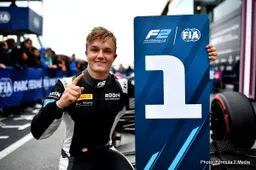
Tuukka Taponen is attracting serious attention

The most closely watched Finnish prospect
at the moment is undoubtedly Tuukka Taponen.
The Lohja-born driver has rapidly emerged
as one of the most promising young talents in European junior formula racing.
Taponen won the karting world championship in 2021 before joining the Ferrari
Driver Academy, one of the most prestigious young driver programs in
motorsport.
His rise since then has been fast.
Taponen finished second in the Formula 4
UAE Championship in 2023 and later won the Formula Regional Middle East
Championship in 2024. He also secured third place in the highly competitive
Formula Regional European Championship standings.
The Finnish driver now competes in FIA
Formula 3 and recently confirmed a move to MP Motorsport for the 2026 season
after an encouraging rookie campaign.
Many Finnish fans see him as the
country’s strongest Formula 1 prospect since Bottas.
Luka Sammalisto is progressing quickly through Formula racing

Another Finnish name gaining momentum is Luka Sammalisto.
The Ylöjärvi-born driver has impressed many observers with his performances in
Italian Formula 4, one of Europe’s toughest junior categories. Sammalisto
secured multiple podium finishes during the 2025 season and finished eighth
overall in the championship standings.
He has already earned praise from former
Formula 1 world champion Mika Häkkinen, who has publicly followed his
development.
Sammalisto was also linked with a move to
Formula Regional machinery for 2026, highlighting how quickly his career is
advancing.
While Formula 1 remains a distant goal
for any junior driver, his trajectory has clearly started attracting attention
within European motorsport circles.
Finland’s motorsport tradition still matters

Finland’s reputation in motorsport
continues to carry significant weight internationally. Despite having a
population of only around 5.5 million people, the country has produced multiple
Formula 1 race winners and world champions over the last three decades.
Many insiders believe Finland’s strong
rally culture, difficult winter driving conditions, and competitive karting
scene continue to help develop technically skilled drivers from a young age.
Young Finnish racers also benefit from
the legacy created by previous generations. Drivers like Häkkinen and Räikkönen
helped establish Finland as a respected motorsport nation, making international
teams more willing to pay attention to talented Finnish juniors.
Modern motorsport has become increasingly
dependent on digital audiences and international sponsorships. Formula 1 teams
and junior racing categories are now attracting companies far outside
traditional automotive industries, particularly from the technology, fintech,
and entertainment sectors.
In Nordic markets, discussions around newer digital
payment platforms and services such as uudet Zimpler kasinot have also become more
common as companies compete for visibility among younger mobile-focused
audiences.
Reaching Formula 1 has never been harder

Much of this change is being driven by
viewers who follow racing primarily through streaming platforms, social media
clips, and mobile content rather than traditional television broadcasts.
As
competition for visibility continues growing, many newer gaming and
payment-related brands are trying to establish themselves through sports
partnerships and online marketing campaigns.
At the same time, modern Formula 1 is far
more competitive and financially demanding than it was twenty years ago.
Young drivers now need extensive
sponsorship backing, simulator programs, academy support, and years of success
in junior categories just to reach Formula 2 or Formula 3. Even highly talented
drivers can struggle to progress without major financial support.
That reality makes the rise of drivers
like Taponen and Sammalisto even more significant.
Both have managed to build strong
reputations early in their careers while competing against some of the best
young talents in Europe.
Whether either driver eventually reaches
Formula 1 remains impossible to predict. Motorsport careers can change
extremely quickly, especially at junior level.
Still, for Finnish fans searching for the
country’s next major Formula 1 hope, there are finally reasons to pay attention
again.
Latest News

Loading