Charles Leclerc: With a good race start we can maybe put Mercedes under a bit of pressure
F1 Drivers NewsSaturday, 28 March 2026 at 11:26
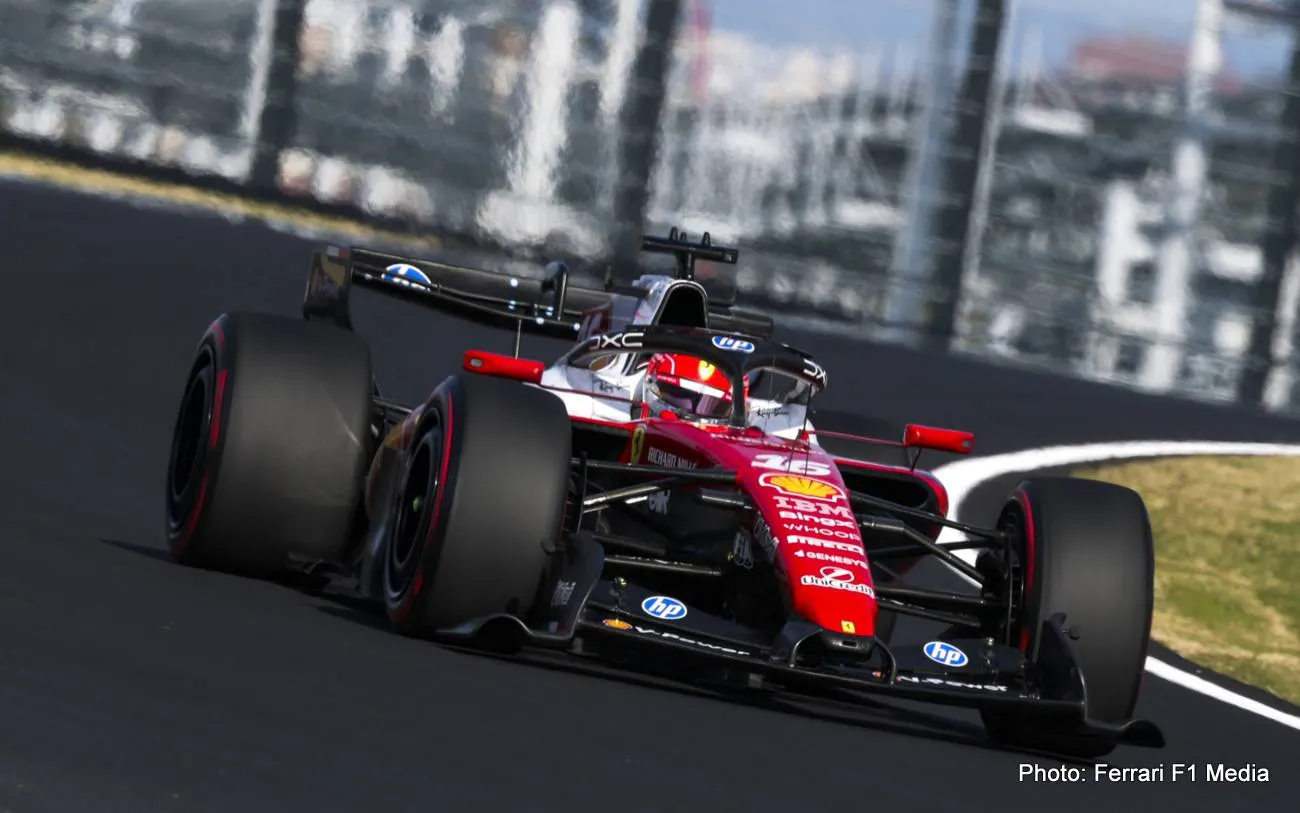
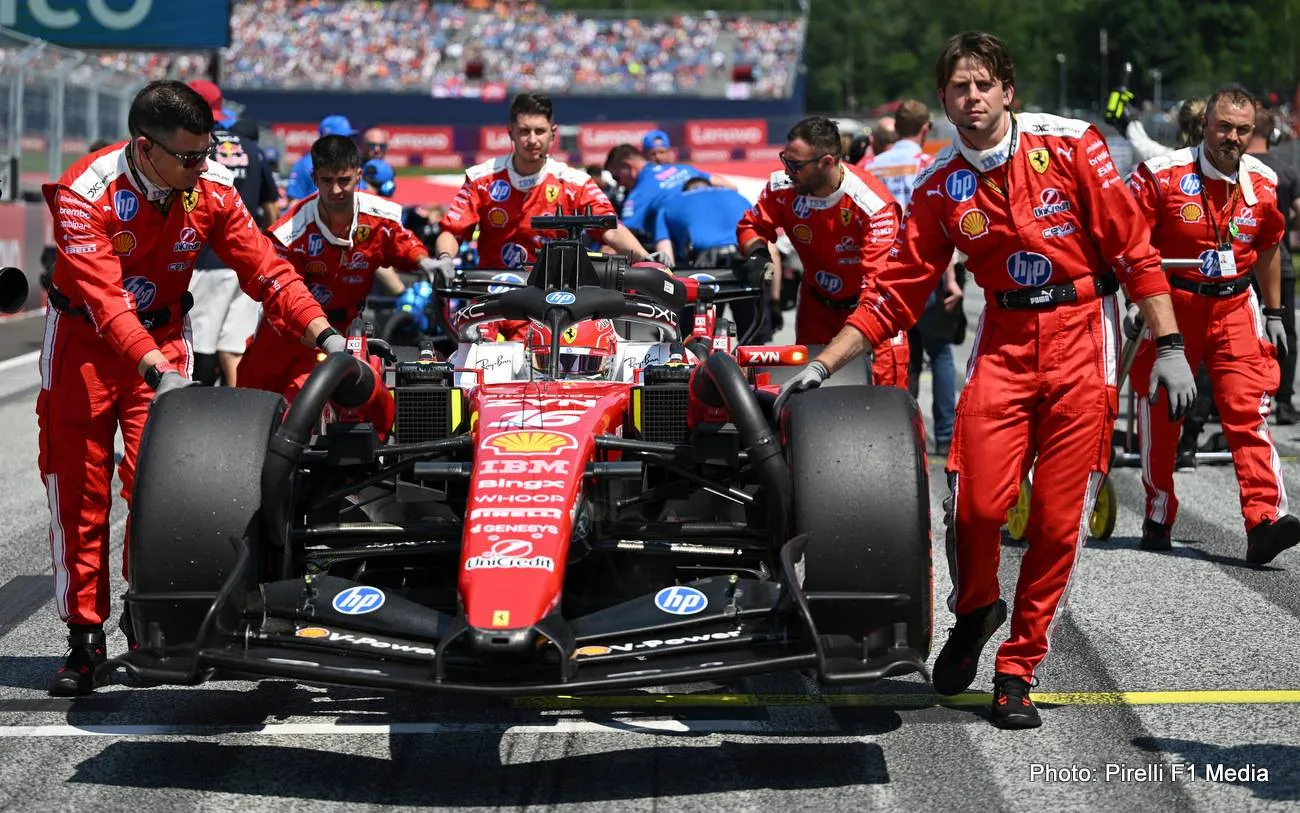
Charles Leclerc believes Ferrari’s best chance of challenging at the front in Sunday’s Japanese Grand Prix hinges on the opening metres, after qualifying fourth at Suzuka in a session where he admitted he was “pushing to the max”.
During Qualifying for the Japanese Grand Prix, Antonelli produced a strong Q3 lap despite a visible snap of oversteer, an incident that initially appeared costly but, in his view, actually worked in his favour.
After the session at Suzuka, Leclerc explained: “It was okay, I wasn’t too stressed. I don’t know what the perception was of that moment, because I feel like many people were saying I was losing lap time because of that."
The Moneqasque elaborated on how he was driving when it seemed he was out of control: “I actually gained a lot of lap time by carrying that amount of speed in that corner, so actually it was a good thing that I had this moment, and I don’t think it sacrificed any of my lap after that. I was just pushing to the max, and it was a pretty good lap overall.”
While the lap itself delivered P4, Leclerc pointed to a recurring limitation that continues to cost Ferrari in qualifying, particularly under maximum attack in Q3: “The only thing that we struggle with on our side for now is whenever we push in Q3, the optimisation of the system is struggling a little bit, and then we lose time in the straight."
Ferrari seeking solutions to frustrating issues

Leclerc continued: "We lost a lot of lap time in the straight in Sectors 2 and 3. That is very frustrating because as a driver you cannot do much, but I know the FIA is working actively on this issue and hopefully we can find a solution soon, as in qualifying it’s very frustrating," added Leclerc.
The problem mirrors what has been seen across the field under the new regulations, where energy deployment and system optimisation are increasingly decisive, particularly at a circuit like Suzuka where rhythm and efficiency are critical.
Starting behind the Mercedes pair of Kimi Antonelli and George Russell, as well as McLaren’s Oscar Piastri, Leclerc acknowledged the scale of the challenge but made clear where Ferrari’s opportunity lies: “With a good start, we can maybe put them under a bit of pressure.
"I'll truly think that at one point they will get away like they’ve done in the past two races, they’ve got too much of a pace advantage. However, if for some reason we manage to take the fight until the last lap of the race, which is a long shot, then maybe we can hope for the win. But as soon as they have one lap in free air, it will be impossible for us to get back.”
Hamilton echoes concerns over pace deficit

That assessment reinforces the current pecking order, with Mercedes holding a clear advantage once clean air is established, leaving rivals reliant on starts, strategy, and early race positioning.
In the other Ferrari, Lewis Hamilton, who qualified sixth behind Lando Norris, delivered a similar verdict on Scuderia’s current limitations, despite feeling comfortable with the car over one lap.
Hamilton said: “I think we did a good job with the set-up, the car was feeling pretty decent. It’s just we’re obviously lacking a lot of speed in the middle sector and a little bit in the last sector. Part of it is power and deployment, which is quite important here.”
Asked whether Ferrari can challenge McLaren and fight for a podium, the seven-time Formula 1 world champion remained cautious: “I don’t know. I think they’ve really taken a step forward or two this weekend, so I think it’s going to be challenging. If we can get them off the line, maybe we can hold them.”
For Ferrari, Suzuka presents a familiar scenario. The underlying pace is not enough to dictate the race, leaving execution, starts, and opportunity as the only realistic route to the front and the top step of the 2026 Japanese Grand Prix podium.
(Reporting by Agnes Carlier from Suzuka)
(Reporting by Agnes Carlier from Suzuka)

Latest News


Loading