Formula 1 cuts emissions by 26%, on track for Net Zero by 2030
F1 NewsWednesday, 23 July 2025 at 08:32
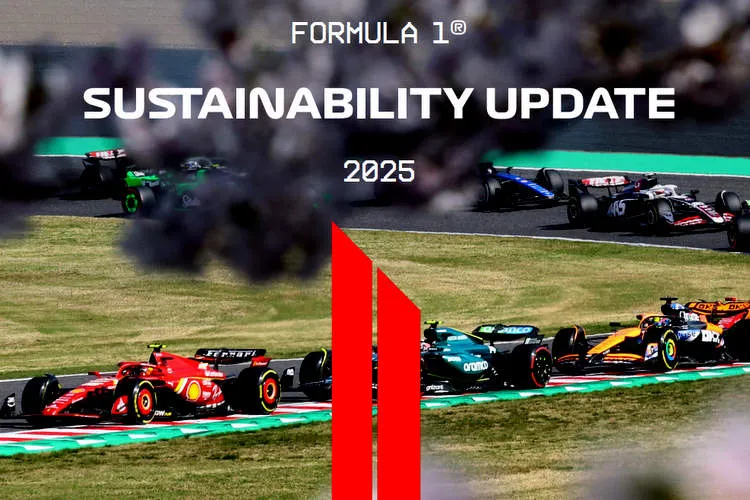
Formula 1 has reaffirmed its commitment to becoming a Net Zero carbon sport by 2030, announcing a 26% reduction in its absolute carbon emissions by the end of the 2024 season compared to its rebaselined 2018 footprint.
Despite an expanded calendar and growing global audience, Formula 1 has successfully lowered its carbon output from 228,793 tCO₂e in 2018 to 168,720 tCO₂e in 2024, underscoring the effectiveness of its sustainability strategy.
The reduction comes during a time of significant growth for Formula 1. Since 2018, the race calendar has grown from 21 to 24 events, race attendance has surged from 4 million to 6.5 million, and the global fanbase now exceeds 826 million.
Without operational changes, this expansion could have increased the sport's carbon footprint by around 10%. Instead, Formula 1 is now over halfway toward its minimum 50% emissions reduction target, with remaining unavoidable emissions to be offset through credible sustainability programs.
Major Sources of Reductions

Key areas of progress include:
- Factories and Facilities: Emissions dropped by 59%, down more than 34,000 tCO₂e, thanks to widespread adoption of renewable energy across F1 and team sites.
- Travel: A 25% reduction, nearly 20,000 tCO₂e, was achieved through increased use of Sustainable Aviation Fuel (SAF) and remote broadcast operations.
- Logistics: Emissions fell by 9%, or 6,438 tCO₂e, with investments in freight containers compatible with more efficient 777 aircraft, SAF-powered cargo flights, and increased use of biofuel trucks in Europe.
- Event Operations: On a per-race basis, emissions dropped by 12%. Although overall emissions rose slightly due to a larger race calendar, the per-event efficiency has improved considerably.
Technological and Operational Innovation

F1’s transition to more sustainable operations has been fueled by targeted investments and strategic collaborations across the sport. The 2024 season saw SAF used in air freight logistics through partnerships with DHL and Qatar Airways, reducing over 8,000 tCO₂e in emissions, equivalent to a 19% drop versus traditional jet fuel use.
Remote broadcast operations have further limited unnecessary travel. Since 2020, Formula 1 has developed the world’s largest intercontinental remote production system. By 2024, roughly 140 personnel operated remotely from the Media & Technology Centre in the UK each race weekend, significantly cutting the carbon footprint of media operations.
The sport also invested in freight container upgrades to allow the use of 777 planes, cutting an estimated 9,000 tCO₂e in emissions. For the European leg of the championship, F1 equipment is transported by biofueled trucks that cut related emissions by 83%.
Cleaner Circuits and Race Operations

A critical part of F1’s emissions strategy has been improving sustainability at race venues. In 2024, 80% of promoters powered parts of their events using renewable sources including solar panels, biofuels, and green tariffs.
Collaborations with energy provider Aggreko allowed the expansion of low-carbon event energy systems using hydrotreated vegetable oil (HVO), biofuel, solar panels, and battery storage. Piloted at one Grand Prix in 2023, the system was deployed at three races in 2024 and will be used at all European Grands Prix from 2025, targeting over 90% reduction in event energy emissions.
F1’s race calendar has also been adjusted to optimise geographical flow and reduce logistics-related emissions. Changes in 2024 included moving the Japanese GP to April to align with other Asia-Pacific races, grouping Azerbaijan with Singapore, and placing Qatar back-to-back with Abu Dhabi. Starting 2026, the Canadian GP will move to May before Monaco, consolidating the European season and eliminating a transatlantic freight trip.
Advanced Fuels and Tyre Sustainability

Fuel innovation continues to be a key focus. In 2024, F2 and F3 cars ran on a 55% sustainable fuel blend developed by Aramco, while FIA medical and safety cars used a 40% blend. In 2025, the junior series cars will switch to 100% advanced sustainable fuel, in preparation for Formula 1’s own transition in 2026 with the next-generation hybrid engines. The fuels are ‘drop-in’ capable, meaning they could be used in conventional road cars, broadening their potential environmental impact.
Pirelli, F1’s official tyre supplier, also contributed through multiple sustainability measures. All tyres used in 2024 complied with the Forest Stewardship Council (FSC) standards for natural rubber sourcing. After each race weekend, tyres were converted into secondary raw materials.
Tyres are now developed using virtual simulation technology, which reduces waste and cuts development emissions, while all tyre production energy comes from 100% certified renewable sources.
Governance, Methodology, and Transparency

F1’s emissions are calculated using market-based methods, in line with the Greenhouse Gas Protocol. In 2024, over 90% of emissions were derived from supplier and activity-specific data, ensuring accuracy and accountability.
Following improved data quality and methodological updates, a re-baselining of 2018 emissions was conducted. The baseline was revised from 256,551 tCO₂e to 228,793 tCO₂e to reflect actual operational boundaries and consistent accounting standards.
F1 reports its progress through third-party platforms and remains a signatory of the UN Sports for Climate Action initiative since 2020. It also maintains ISO20121 Event Sustainability Management certification and FIA 3 Star Environmental Accreditation for event execution.
Net Zero Statements from Formula 1 Leadership

Formula 1 CEO Stefano Domenicali emphasised the importance of the sport’s long-term sustainability vision: “We are strongly committed to achieving Net Zero by 2030. While continuing to grow globally, we have shown that sustainable development is possible and that the strategies we have adopted are yielding tangible results. We will continue to pursue our projects, such as the use of advanced sustainable fuels in all Formula 1 cars from next year, a step that opens up significant opportunities for road cars and other transport sectors.”
Ellen Jones, Head of ESG at Formula 1, echoed this: “Today’s results are the product of years of hard work across the sport. Formula 1 is uniquely placed to show that performance and sustainability can support one another. I look forward to seeing the impact of initiatives already announced and those yet to come, to help us deliver on our goals.”
What’s next for Formula 1 on road to Net Zero?

Looking forward, F1 will expand its sustainability programmes in three key areas:
- Fuel Transition: Full-scale deployment of advanced sustainable fuel in 2026, increased use of SAF, and expanded biofuel use for land and sea freight.
- Logistics Innovation: Shift from air to sea freight where feasible and strategic positioning of regional logistics hubs.
- Stakeholder Engagement: Accelerated collaboration across teams, promoters, and suppliers to integrate and align sustainable operations sport-wide.
Formula 1’s 2025 sustainability update shows a sport not only embracing its environmental responsibilities but using its reputation for innovation and precision engineering to lead on climate action.
With meaningful progress and a clear roadmap to Net Zero, the sport aims to be a beacon for sustainable transformation in global motorsport and beyond.
Latest News



Loading