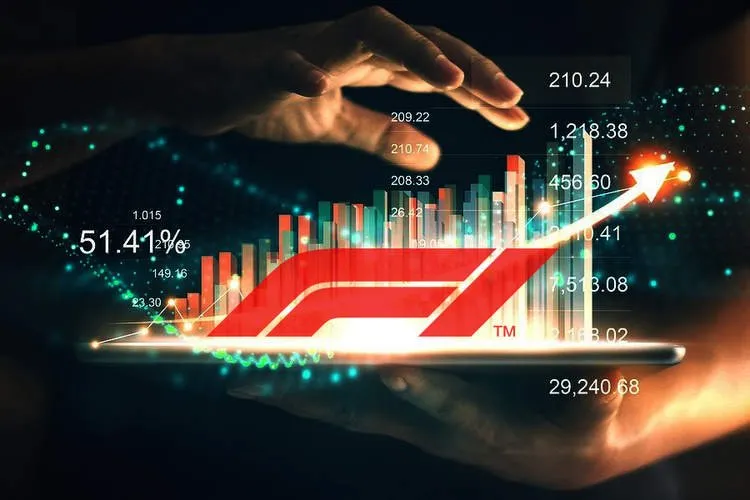
Undoubtedly, speed is a crucial element, whether it is a race or technology. Information has become a driving factor, and every industry has started utilizing data to stay one step ahead.
The same goes for Formula 1 racing. It is not just an exciting racing game; it is a perfect example of how data analysis can help attain maximum performance. Every team is now focusing on big data analytics to boost the performance.
In Formula 1, where split-second or precision decisions can break or make the success of a team, data-driven decisions have become crucial to winning strategies. Teams depend on results from data analysis to optimize their car’s performance, enjoy a competitive edge and come up with effective strategic decisions. Keep reading to understand how data analysis is revolutionizing this sport.
Understanding Big Data Analysis in Formula 1
The process of data analysis in Formula 1 involves gathering and then analysing massive amounts of data to enhance a car’s performance and other factors. Teams collect data including engine performance, fuel consumption, tire wear, driver behaviour, vehicle’s aerodynamics and more. The outcomes from the analysis help the team to come up with informed decisions like care development, pit stops, racing strategies, etc. Now, let’s dive into further details.
Data-Driven Racing Performance

The performance of drivers and cars is key to success in today’s Formula 1 racing. This game requires drivers to completely focus on the racing track. Real-time decisions taken for pit stops at the right time and decreasing or increasing the car’s speed at the turn can make a huge difference in the racing results. As per Christian Horner, the Oracle Red Bull Racing’s CEO, their team use data analytics for different purposes, from enhancing performance to designing cars and choosing drivers.
They gather data from various sensors as well as a telemetry data system installed in the car. Data analysis helps the team to make instant decisions during the race, boosting overall performance.
Predictive Analytics Through Data Analysis
Predictive analytics involves the use of historical data and making nearly accurate predictions about future results. For instance, the team uses data from all previous races and predicts how the car and driver will perform in different weathers or on various tracks. This also helps in designing more powerful cars and adding extra safety features.
Besides, teams used various modelling methods to simulate different race scenarios, adding variables like weather forecasts, track conditions, and the performance of competitors. This allows them to create race strategies like tyre change, pit stop duration, fuel loads and more. With statistical models, ML and predictive analysis, it is possible to predict race’s outcomes.
Use of Data for Driver’s Analysis

Data isn’t just useful for cars; it also helps drivers. When collecting telemetry data, teams analyse the driver’s balancing power, throttling positions, braking patterns, speed, and other important behaviours. A detailed analysis of these factors can help teams improve stability of track speed and drivers can attain quicker lap times.
Formula 1 cars are powerful and high-tech cars. They generate around 400 GB of data during a single race. And to make an instant decision, the data should be processed and analysed instantly. For that, teams use advanced tools such as RaceWatch, MatchTracker, AI, ML and more.
Aerodynamics Performance Optimization Through Data Analysis
An F1 car has 300+ sensors that help in analysis and optime around 4000 parameters. Speaking about these parameters, they include functionality of engines, air-fuel combination, torque curves and more.
McLaren Racing’s head of electronics, Stephen Watt, has said that Formula 1 cars are just like the tip of the iceberg. Their teams are data-driven, and data is being collected and analysed continuously to create effective performance strategies based on the racetracks and drivers.
Data analysis has made it possible for real-time car settings adjustment. For example, a team can configure the aerodynamics of the car for various segments to create a perfect balance between tyre conservation and speed based on the data from practice sessions.
Detection of Potential Failure
Engineers can use the real-time data from the sensors installed in F1 cars to predict any potential failure. Let’s understand this with an example. During a race in the Melbourne Grand Prix 2022, the engineering team informed Russel to cool down his car and slow down during turns after detecting an engine overheating issue.
Data Analysis in F1 For Better Fan Engagement

Data analytics not only helps drivers, but it also plays a significant role in enhancing fan engagement. As per research conducted by Betrino,
Formula 1 received more than 2 million viewers in 2023. It is a 100 percent increase in total viewership compared to the viewership of 2018. Well, a major reason behind this direct communication with the audience. By conducting detailed social media analytics, it is possible to identify the dislikes and likes of fans and customize content accordingly.
Final Words
In today’s advanced race cars, quick and accurate analysis of data has become a key to victory. Data-driven decisions have not only changed this racing game but also have helped teams unlock new levels of performance, proving the benefits of innovation and technology on the tracks.
Formula 1 racing is evolving with time, and it can be said that data analysis will be considered as a driving force behind every victory and turn. Without this, achieving performance wouldn’t be possible for teams. Besides, this has opened multiple ways for innovation in F1 cars.
Latest News




Loading