Some technical insights ahead of the 2026 Formula 1 Austrian Grand Prix
F1 NewsTuesday, 23 June 2026 at 08:00
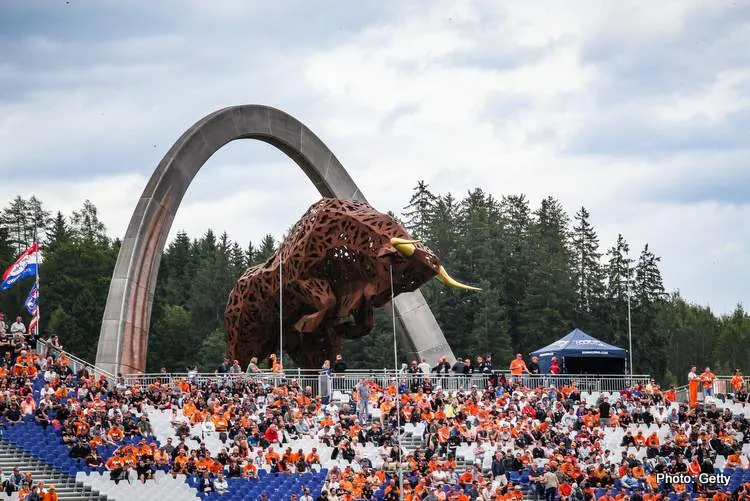
Formula 1 returns this weekend for the 2026 Austrian Grand Prix at the Red Bull Ring, a unique circuit with its own set of challenges.
Williams believe a combination of tyre management, strategic variation and unpredictable weather could play a decisive role at this weekend's Austrian Grand Prix.
Ahead of Round 8 of the 2026 Formula 1 season at the Red Bull Ring, Chief Trackside Engineer Paul Williams outlined the key technical challenges facing teams at one of the shortest and most demanding circuits on the calendar.
Power and aerodynamic efficiency are expected to be critical around the compact Austrian venue, which combines predominantly low-speed right-hand corners with two high-speed sequences and several long straights.
The circuit also presents significant braking demands. Wheel lock-ups remain a risk, particularly through Turns 3 and 4, while the track's elevation changes add further complexity to braking zones. Teams will also need to monitor floor wear carefully, with aggressive kerb usage having caused damage in previous years.
Warm conditions are forecast for the weekend, with temperatures expected to approach 30°C. However, Williams are also preparing for the possibility of afternoon thunderstorms, a common feature of the Alpine region.
The team's engineers expect rapidly changing conditions to remain a possibility throughout the weekend, potentially creating opportunities for strategy calls and race interruptions.
New power units face first altitude challenge

Austria will provide the first high-altitude test of Formula 1's new 2026 power units.
While Williams do not anticipate major reliability or performance concerns, the team will closely monitor turbo response as the new generation of engines encounters thinner air for the first time.
The Red Bull Ring will also feature four straight-line mode zones under the 2026 regulations, all of which remain active in both wet and dry conditions.
Energy management is expected to be relatively straightforward compared to some of the season's more demanding circuits, with battery deployment following a predictable pattern throughout a qualifying lap.
Tyre warm-up expected to be crucial

Pirelli has selected the softest compounds in its range for Austria, bringing the C3, C4 and C5 tyres, the same allocation used at the circuit last season.
Tyre preparation is expected to play a significant role, particularly in qualifying. The combination of a short lap and long straights makes it difficult to generate temperature, especially in the front tyres, meaning build laps could become important during qualifying runs.
Although Austria is not among the most demanding circuits in terms of lateral loads, the high-speed sequences through Turns 6 and 7 and Turns 9 and 10 generate a large proportion of the tyre energy seen over a lap.
In race conditions, rear tyre overheating and wear are expected to become the primary limitation, particularly if track temperatures remain high.
Multiple strategies remain possible

Williams expect a two-stop strategy to be the preferred option for Sunday's race, although several alternatives remain viable.
Most teams are likely to save two sets of medium tyres for the Grand Prix, but all three compounds could feature in race strategy calculations. As a result, teams may adopt different approaches regarding starting tyres and stint lengths, with some potentially avoiding the hard compound altogether.
The possibility of a Safety Car or Virtual Safety Car also remains a factor. Williams believe a late-race intervention could encourage some teams to switch to a more aggressive three-stop strategy.
With tyre preparation, energy management and changing weather all in play, the Austrian Grand Prix is shaping up to be one of the most strategically intriguing races of the 2026 season.
Latest News



Loading