What Does the Future Hold for New Races on the Formula 1 Calendar?
Special FeatureTuesday, 14 April 2026 at 06:25
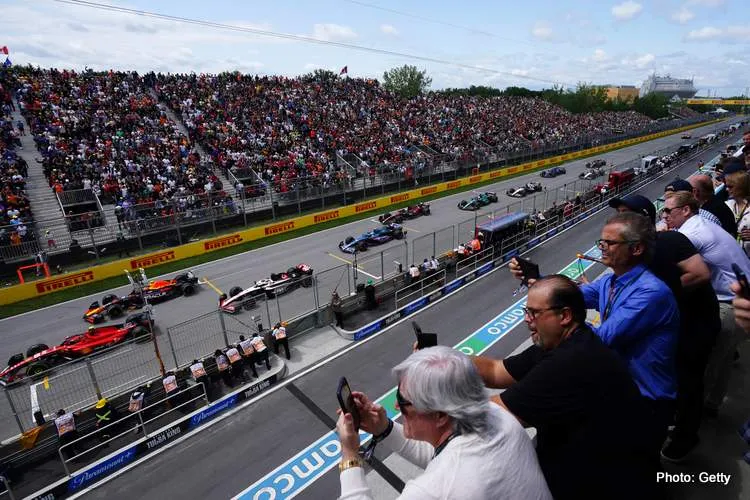
Formula 1 has never been static. From its earliest days racing on dusty airfields and winding street circuits to today’s globe‑spanning, hyper‑commercial spectacle, the calendar has always evolved to reflect the sport’s ambitions.
In recent years, however, the pace of change has accelerated
dramatically. With new markets opening, governments eager to host prestige
events, and F1’s owners pushing for global expansion, the question is no longer
whether new races will appear but where, why, and how
they will reshape the sport similar to Formula 1 betting with Monopoly Casino.
Liberty Media’s stewardship has transformed F1 from a
European‑centric championship into a global entertainment product. The addition
of Miami and Las Vegas in the United States, Jeddah in Saudi Arabia, and
Qatar’s long‑term deal signal a clear direction: F1 wants to be everywhere, all
at once.
This strategy is driven by three forces:
- Commercial opportunity: New hosts often pay higher fees than traditional circuits, making expansion financially irresistible.
- Audience growth: Markets like the U.S., China, and the Middle East offer massive untapped fan bases.
- Political and cultural influence: Countries increasingly view F1 as a tool for soft power, tourism, and global visibility.
Given these dynamics, the future calendar will likely
continue expanding into regions that combine financial muscle with strategic
value.
Emerging Markets: Where Could F1 Go Next?

Several locations are already in active discussions or have
expressed interest in hosting a Grand Prix. While nothing is guaranteed, a few
stand out as strong contenders.
1. Africa
Africa remains the only continent without a race, and F1
leadership has repeatedly stated that returning there is a priority. South
Africa’s Kyalami circuit is the most realistic option, with a rich motorsport
heritage and a layout capable of hosting modern F1 machinery. However,
negotiations have stalled in recent years due to financial and political
complications.
If Kyalami cannot be revived, other African nations like Morocco,
Rwanda, and even Egypt have shown interest. A race in Africa would be
symbolically powerful, commercially valuable, and widely celebrated by fans.
2. Southeast Asia
The region is booming economically and demographically,
making it a prime target.
- Thailand has openly pursued a street race in Bangkok.
- Indonesia has the Mandalika circuit, though it currently lacks the infrastructure for F1.
- Vietnam, which nearly debuted in 2020 before political issues intervened, remains a wildcard.
Given the success of Singapore and the region’s appetite for
major events, it’s likely that F1 will return to Southeast Asia in the near
future.
3. India
The Buddh International Circuit hosted races from 2011 to
2013 before tax disputes and logistical challenges forced its removal. But
India’s economy has grown significantly since then, and the country’s
motorsport culture is stronger than ever. With the rise of Indian drivers in
junior categories and major corporate interest, a return is increasingly
plausible though it would require political alignment and financial guarantees.
4. The Middle East
The Gulf states have become central to F1’s calendar, and
that trend is unlikely to slow. Saudi Arabia has expressed interest in building
a permanent circuit in Qiddiya, while other nations in the region may seek to
join the calendar as part of broader tourism strategies.
The Challenge
While new races are exciting, the calendar is already
stretched to its limits. With 24 races scheduled in recent seasons, teams and
drivers have voiced concerns about burnout, logistics, and sustainability.
Adding new races means something else must give. Traditional
European circuits Spa, Monza, Silverstone face increasing pressure as newer
hosts offer higher fees. The sport risks losing part of its heritage in pursuit
of global expansion.
This tension will define the next decade of F1 scheduling.
Sustainability and the Future of Race Locations

F1 has committed to becoming net‑zero carbon by 2030, a goal
that will influence where and how races are held. Future hosts may need to
demonstrate:
- Renewable energy infrastructure
- Sustainable transport links
- Environmentally responsible event planning
Circuits that cannot meet these standards may struggle to
secure long‑term deals. Conversely, countries investing heavily in green
technology could become more attractive hosts.
Street Circuits vs. Permanent Tracks
Another trend shaping the future is the rise of street
circuits. They offer dramatic visuals, urban accessibility, and strong
commercial appeal. However, they often produce less exciting racing and require
significant disruption to local communities.
Permanent circuits, meanwhile, provide better racing but
often lack the glamour and financial pull of city‑centre events.
The future calendar will likely be a hybrid: iconic
permanent tracks balanced with high‑profile street races in major global
cities.
What Fans Want and What F1 Must Balance

Fans consistently express a desire for:
- More traditional circuits
- Fewer street races
- Better geographic grouping to reduce travel
- Preservation of historic venues
F1 must balance these preferences with commercial realities.
The sport’s future success depends on maintaining its heritage while embracing
new markets.
The Bottom Line
The future of new races on the F1 calendar will be shaped by
global economics, political ambition, sustainability goals, and fan sentiment.
Africa is the most symbolically important frontier, Southeast Asia the most
commercially promising, and the Middle East the most financially aggressive.
But with the calendar already at capacity, every addition
will require a difficult trade‑off. The next decade will define what F1 wants
to be: a global entertainment empire, a heritage‑driven sport, or most likely a
blend of both.
Latest News




Loading