Rent a Car Zakynthos: The Beaches and Roads That Buses Never Reach
Special FeatureThursday, 21 May 2026 at 01:09
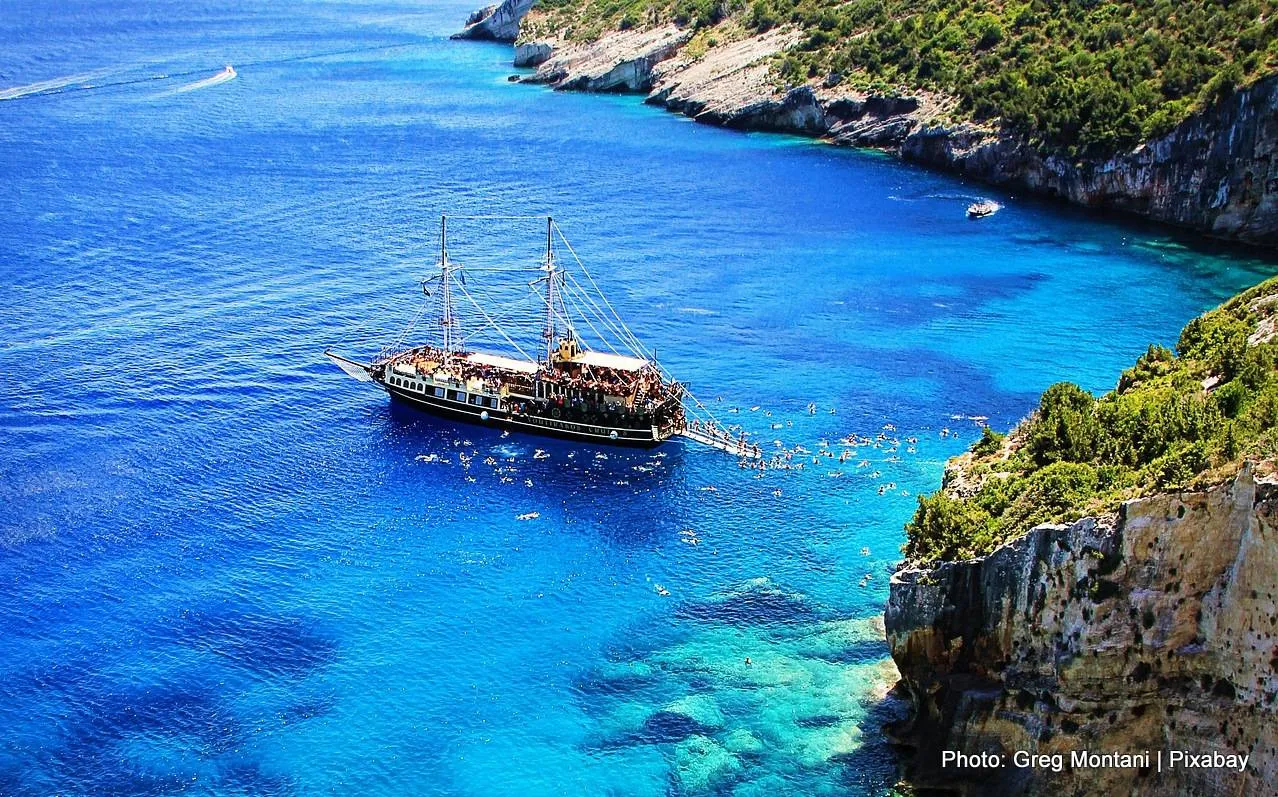
Zakynthos is two islands wearing the same name. One is the postcard: Navagio from the cliff-top viewpoint, the Blue Caves on a tour boat, Laganas beach with its rows of sunbeds and party bars.
This Zakynthos is easy. Hotels arrange transfers, organized excursions cover the famous stops, and a visitor who never leaves the resort strip still gets a real holiday.
The other Zakynthos is harder to reach and considerably more rewarding. Stone fjords where the water turns the color of liquid emerald. Sulfur springs that bubble into the sea. Cliff-top villages where no tour bus has ever stopped. Beaches at the end of dirt tracks where, in September, you might be the only person there.
This guide is about the second island. To reach it you need to rent a car Zakynthos offers, and you need to know where to go.
Why a Car Changes the Trip
Public transport on Zakynthos exists but operates on a tourist's worst schedule. Buses connect Zakynthos Town with the main resort towns — Laganas, Tsilivi, Argassi, Alikanas — and almost nothing else. The western coast, where the most striking landscapes sit, has no bus service worth the name. Taxis are available but expensive and disinclined to wait at remote spots.
Quad bikes and scooters are popular alternatives, particularly with younger travelers, but they have real limits. Mountain roads are long and exposed. The sun is brutal between June and September. Storage is minimal — try carrying a cooler, towels, and snorkel gear on a quad for three adults. For couples and families looking to actually use the island, a small car is the practical answer.
Daily rates for 2026 sit around €30–40 for a compact in May, June, September, and October, climbing to €50–80 in July and August. Bookings made three to four months ahead consistently beat last-minute walk-up prices. International brands operate at Zakynthos International Airport (ZTH); local agencies in town and the resort areas often quote lower rates and deliver to your hotel.
The Western Coast: Where the Roads Get Interesting
The western side of Zakynthos is the wild side. Cliffs drop hundreds of meters into the Ionian. Villages cling to ridges. The drive itself, on the road between Anafonitria, Volimes, and Agios Leon, is one of the genuinely scenic routes in the Greek islands.
A few specific stops justify the rental on their own.
Porto Limnionas sits on the west coast below Agios Leon. The access road is paved but narrow, ending at a small taverna above a fjord-like inlet of impossibly clear water. Stone steps lead down to flat rocks where swimmers enter directly into a natural pool framed by cliffs. There are no sunbeds, no bars on the water, no organized infrastructure beyond the single taverna. It is exactly what people who say they want to escape the crowds claim to want.
Korakonissi lies further north along the same coast. The approach is rougher — the last kilometer turns to gravel, and parking is informal — but the reward is a natural rock arch over deep, clear water, popular with confident swimmers and cliff-jumpers. Bring reef shoes; the entry is sharp.
Porto Steniti, near Korakonissi, offers similar geography on a smaller scale, with stone platforms and a feeling of genuine isolation. Neither bus nor organized tour comes here.
Plakaki, southwest of Keri, is a marble slab projecting into the sea at the end of a switchback lane. No facilities, no shade, no easy way in without your own vehicle. The water is among the clearest on the island.
The road to all of these stops is the same: from the resort strip, head inland, climb into the mountains via Maherado or Lagopodo, and pick up the western coast road at Agios Leon. Allow at least 45 minutes from Tsilivi or Laganas, longer if you stop — and you will stop.
The Northern Capes
The northern third of Zakynthos has a different character — gentler, greener, and structured around the village of Volimes and the cape that holds Navagio's famous viewpoint.
The Navagio viewpoint itself is reachable only by car or scooter. The road from Volimes to the cliff-top platform takes about twenty minutes, ending at a small parking area. From there a short walk leads to the railing where the shipwreck photograph happens. Note: as of recent seasons, the platform has been partially restricted for safety reasons, and access to the beach below is by boat from Porto Vromi or Agios Nikolaos only.
Xigia Beach, on the northeast coast between Volimes and Makris Gialos, is famous for its sulfur springs — natural mineral water that mixes with the sea and is said to be good for skin and joints. The smell takes some adjustment. The small beach beside it, accessible by a steep but manageable stairway, is quieter and equally beautiful.
The Blue Caves at Cape Skinari are technically reachable only by boat, but having a car to reach the cape itself — and the lighthouse and tavernas above it — turns the visit into a half-day of its own rather than a rushed organized excursion.
The South: Keri, Marathonisi, and the Turtle Coast
The south of Zakynthos is gentler country — olive groves, vineyards, beaches that slope gradually rather than dropping from cliffs. It is also the heart of the National Marine Park, where loggerhead turtles nest.
Keri village sits on a hill above the southwestern tip of the island. From here a narrow road leads down to the Keri Caves, where boats depart for short tours to sea caves and the uninhabited islet of Marathonisi (Turtle Island), one of the most reliable nesting sites for Caretta caretta in the Mediterranean. The Keri lighthouse, a short drive further, offers one of the better sunset views on the island.
Dafni Beach, on the southern coast near Vasilikos, is part of the marine park and protected for turtle nesting. Access is by a long dirt road, and facilities are minimal. The reward is a long, quiet stretch of beach with the kind of authentic feel that has largely vanished from the resort coast.
None of these are reachable by bus on any practical timetable.
Practical Notes on the Roads
A few honest details worth knowing before you rent a car Zakynthos visitors so commonly underestimate.
Roads to the west are mountainous and winding. A small car is more practical than a large one. Manual transmission is more common; automatic should be booked early. Drive defensively — local drivers are confident, and oncoming traffic on tight curves is a real concern.
Many access roads to remote beaches are gravel or dirt. Standard insurance often excludes tire and undercarriage damage on unpaved roads. Confirm before driving anywhere with a "no asphalt" sign, and consider a full-coverage policy with zero excess. The premium is modest; the protection is not.
Fuel up before mountain stretches. Stations are common around Zakynthos Town and the resort strip but sparse in the west. A quarter tank is the point to refill, not the point to start worrying.
Carry cash. Many small tavernas, parking attendants, and rural fuel stations still prefer it. ATMs in remote villages are unreliable.
On Zakynthos that freedom is not a luxury
Drive in daylight when possible. Western coast roads have no lighting, narrow shoulders, and occasional livestock. Night driving is doable but adds risk for no real reward — the views are the point, and they require sunlight.
The travelers who only see Navagio from a boat and Laganas from a sunbed have seen one Zakynthos. They are not wrong to enjoy it. But the island has another layer, and that layer is unlocked by the simple act of picking up a rental car at the airport and being willing to drive a road that does not appear in a brochure.
The point is not the car. The point is what the car gives you: the right to stop where you want, to follow a sign that says only the name of a village, to find a beach that you will not share with two thousand other people. On Zakynthos that freedom is not a luxury. It is the difference between the postcard and the country.


Latest News










Loading

