History of the greatest Formula 1 drivers and their legacy
Special FeatureThursday, 25 September 2025 at 01:10
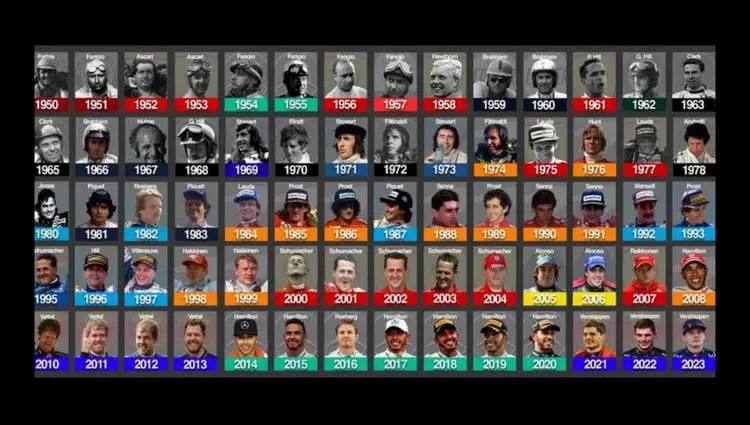
For decades, Formula 1 has been considered the pinnacle of motorsport. It combines speed, strategy and driver skill, creating legends that become part of world history.
Since the first championships were held in the mid-20th century, fans have watched the rivalry between great athletes whose achievements inspire new generations.
Interest in Formula 1 is particularly strong in Britain: the country has given the world many outstanding drivers and teams, and Grand Prix broadcasts consistently attract millions of viewers.
British heroes and international rivals

One of Britain's most important contributions to Formula 1 has been its outstanding drivers. Stirling Moss, Jim Clark and James Hunt laid the foundations for British success back in the 1960s and 1970s, and their driving style is still admired today.
Later, Lewis Hamilton became the symbol of a new generation, breaking Michael Schumacher's records for the number of victories and winning numerous titles.
The British were rivalled by equally brilliant drivers from other countries: Ayrton Senna from Brazil, Alain Prost from France and Niki Lauda from Austria. These legends shaped not only sports statistics, but entire eras.
Excitement and betting around Formula 1

The great rivalry on the track is inevitably reflected in the betting industry. Fans in Britain actively predict the outcomes of Grand Prix races, making their choices based on the form of the drivers, the technical condition of the cars and the weather conditions.
Unlike traditional sports, betting on Formula 1 involves many variables: the number of pit stops, team strategy and the likelihood of accidents. Casinos also capitalise on the popularity of motor racing by offering slots and mini-games with a racing theme.
This format creates a special atmosphere, allowing fans to feel the excitement even off the track. The integration of betting and themed games emphasises that Formula 1 is perceived not only as a sport but also as part of entertainment culture.
For British users who want to try lucrative bonuses without unnecessary restrictions, the selection of free spins no deposit non gamstop will be useful, where you can find verified platforms with transparent conditions and modern gaming offers.
Technological evolution and safety
The development of Formula 1 is impossible to imagine without innovation. While in the 1950s, drivers took to the track with virtually no protection, today's cars are equipped with sophisticated safety systems.

The introduction of Halo, upgraded braking systems and new materials have dramatically reduced the level of risk. British engineers from McLaren and Williams have repeatedly made revolutionary changes to car design, setting trends for the entire industry.
Technological achievements
- Modern hybrid powertrains.
- Energy recovery systems.
- High-precision simulators for driver training.
Legends of the past and modern Champions

The stories of Ayrton Senna, Michael Schumacher and Jim Clark continue to inspire millions of people. Each of them brought a unique style to the sport: Senna — fearless aggression, Schumacher — discipline and methodicalness, and Clark brought filigree technique.
Their legacy lies not only in their victories, but also in how they changed the perception of racing. Young drivers learn from the legends by analysing archive footage and reproducing techniques on simulators.
Today, Lewis Hamilton, Max Verstappen and Charles Leclerc are in the spotlight. Each of them represents their own generation and philosophy. Hamilton focuses on social issues, Verstappen demonstrates an aggressive style and confidence in Red Bull, and Leclerc symbolises a new future for Ferrari. These drivers are writing new pages in history, continuing the legacy of their predecessors.
Formula 1 on culture, cconomic impact and globalisation

Formula 1 has long gone beyond the realm of sport. It influences cinema, music and fashion. In Britain, iconic drivers become the subjects of documentaries and television series, while the design of the cars inspires fashion designers and artists.
The racing aesthetic has become firmly established in pop culture, creating images of speed, risk and freedom.
Formula 1 championships are not only a sport, but also a huge industry. Hosting a Grand Prix brings millions of pounds into the economies of the host countries, creates jobs and stimulates tourism.
By hosting the Silverstone stage, Britain annually confirms its status as the centre of world motorsport. Investments in teams and infrastructure show that Formula 1 remains a driver of globalisation.
The history of the greatest Formula 1 drivers is not just a list of records, but also a reflection of cultural and social changes. The legends of the past inspire today's champions, and new stars shape the future.
This history is particularly close to the British audience: the country is proud of its champions and continues to play a key role in the development of motorsport. The legacy of the great drivers remains an eternal symbol of courage, talent and the pursuit of excellence.
Latest News






Loading