Fernando Alonso blasts 2026 Formula 1 after Silverstone: Driver talent is dying, just press one button
F1 Drivers NewsThursday, 09 July 2026 at 18:38
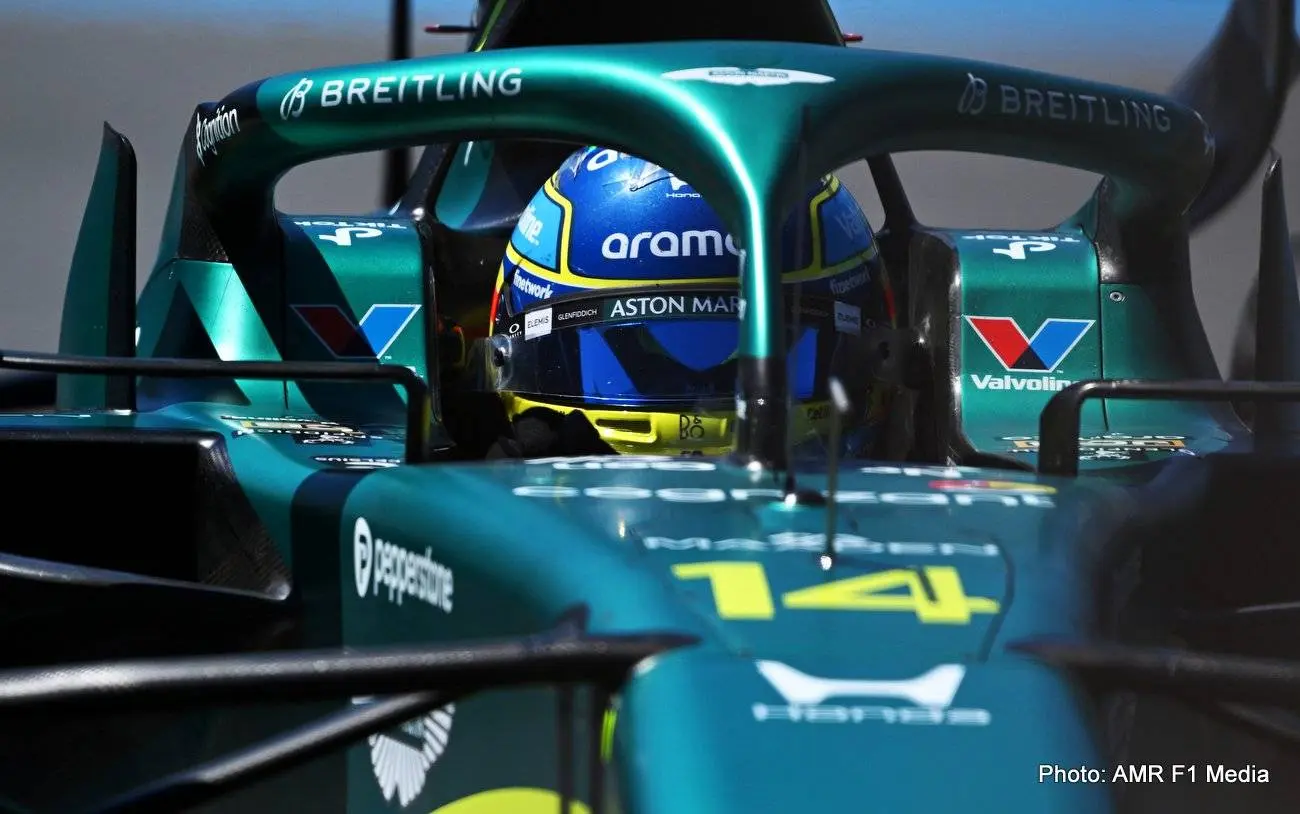
Much-heralded Formula 1 veteran, whose career spans a quarter century, Fernando Alonso has delivered his sharpest criticism yet of controversial 2026 regulations, insisting the current cars are reducing the importance of driver talent.
The Aston Martin veteran has been one of the loudest critics of the new era since pre-season testing in Bahrain. But his frustration has intensified as the season has unfolded, with Silverstone exposing the battery-led racing he warned about months ago.
Alonso’s argument is simple. Formula 1 has moved too far towards energy management, battery deployment and power-unit strategy. In his view, that has shifted the balance away from bravery, precision and racecraft.
Speaking to reporters after the British Grand Prix weekend, Alonso said, "It depends on what the fans and the sport want. I saw replays of the sprint, people overtaking in the middle of the straights with more battery. So there is not any driver input or driver talent needed to overtake a car in front of you.
"You don't need to outbrake anyone, you don't need to overtake on the outside, and you don't need to take any risk. You just press one button, and you overtake if you have a better power unit than the car in front," lamented the Spaniard, who has 434 Grand Prix starts on his CV, in a career that has spanned several rules eras.
Those comments cut to the heart of a wider debate around the 2026 rules package. Formula 1’s new generation of power units places far greater emphasis on electric power, with battery usage, recharge windows and deployment strategy now central to lap time.
Alonso: Driver input has disappeared

Formula 1 leadership has promoted the changes as more relevant and more strategic. The cars use sustainable fuel, active aerodynamics and new energy modes intended to create different racing patterns. But Alonso believes the consequences are now obviously on track.
In Spanish media, he went even further. Alonso said: “We said it at the beginning of the year. These regulations were going to bring this type of racing. The driver’s role has disappeared, where you push in the corners or make a slightly risky overtake around the outside or dive in at the last moment, braking as late as possible.
"You have to have more battery than the car in front; press the button and overtake. The driver’s part has disappeared, the part where a driver attacks corners or makes a risky move around the outside. Now, if you need more battery than the car ahead, press the button and pass.
“It is the new Formula 1, whether you like it more or less, and it makes the driver less important. But at the same time, we cannot complain. It is what the teams or the federation think is best," added the Spaniard.
That balance matters. Alonso is not refusing to race the cars. He is saying this is the formula chosen by the sport, and the drivers must maximise it. But that does not mean he likes what Formula 1 has become.
Beautiful circuits turned into charging stations

Silverstone was always likely to be a flashpoint for the 2026 debate. The circuit is built around fast corners, flowing rhythm and commitment through sections such as Copse, Maggotts, Becketts and Chapel.
For Alonso, those corners represent what F1 used to reward. They demanded confidence, downforce, precision and physical strength. Under the new rules, he argued before the weekend, they risked becoming energy-saving zones.
Alonso said before Silverstone: “I think the next two races are going to be a different experience than what we've been used to driving in Silverstone and Spa. Beautiful circuits in the past, especially with the ground-effect cars.
"I think Silverstone was probably the best of the circuits, suiting that car perfectly. This year is going to be very different and not fun to drive the cars. Looking at the simulator laps and things like that it's going to be quite sad, I think, for the drivers, but also for the spectators.” He was correct.
Asked what Maggotts, Becketts and Chapel would become under the 2026 package, Alonso needed only three words: “A charging station.” That line captured the problem better than any technical explanation. One of Formula 1’s great tests of courage had, in Alonso’s view, become a place to harvest energy for the next straight.
Alarm bells in Bahrain

Alonso’s criticism did not begin at Silverstone. It started in Bahrain testing, when drivers first began to understand how much lap time would be dictated by energy strategy rather than pure corner speed. Back then, Alonso used Turn 12 at Sakhir as his example. The corner has traditionally been a fast, committed right-hander where downforce level and driver confidence can make a difference.
Alonso said, "In Bahrain, Turn 12 has historically been a very challenging corner. So you used to choose your downforce level to go into Turn 12 just flat. So you remove downforce until you are in Turn 12 just flat with new tyres and then in the race. So driver skill was a decisive factor to go fast in a lap time. Now in Turn 12 we are like 50 km/h slower because we don't want to waste energy there, and we want to have all on the straights.
"So to do Turn 12 instead of 260 km/h at 200 km/h, you can drive the car – the chef can drive the car in Turn 12 at that speed. But you don't want to waste energy because you want to have it on the straights." Alonso is making the point that it is not just about speed, but more about drivers being allowed to make a difference. Alonso believes the 2026 cars ask drivers to think more but risk less.
Monaco then gave Alonso a different problem with the same regulation set. There, the issue was not saving energy through high-speed corners but the inconsistent behaviour created by battery charging and engine braking.
Hybrid cars should not be racing

After Friday practice in Monte Carlo, Alonso said, "This is probably the worst generation of cars I ever drove in Monaco. The way you charge the battery, with the braking and lifting off and things like that, obviously creates a lot of inconsistency in the engine braking of the car.
Sometimes you have less, sometimes you have push, and sometimes not. If the battery is completely full, then you don't recharge because the battery is full. So you don't have engine braking. It's like pushing. It's just the rules. Hybrid cars should not be racing. It's as simple as that.”
That was Alonso at his most direct. But it also reflected a broader frustration shared by several drivers this year. The current cars may be technologically advanced but are not always satisfying to drive. There is a danger in dismissing Alonso’s criticism as nostalgia.
He has raced across more Formula 1 eras than almost anyone. He understands that every generation has its compromises. He even admitted in Bahrain that Formula 1 has always been dictated by something. Sometimes it was downforce. Sometimes it was tyre management. Now, it is energy.
But Alonso’s concern is that the current balance has moved too far from the driver. When overtaking becomes a battery mismatch, the spectacle may increase, but the art is reduced.
That is why Silverstone mattered. It took one of the sport’s greatest circuits and made Alonso’s argument visible. The passes came, but not always through braking, bravery or corner commitment.
For Alonso, the elder statesman of the sport, that is the uncomfortable truth of F1 in 2026. The cars are clever, complex and technically relevant. But if the driver matters less, Formula 1 has solved one problem by creating a bigger one.
Latest News
Loading