Austin prices soar for United States Grand Prix Formula 1 weekend
F1 Grand PrixFriday, 17 October 2025 at 07:30
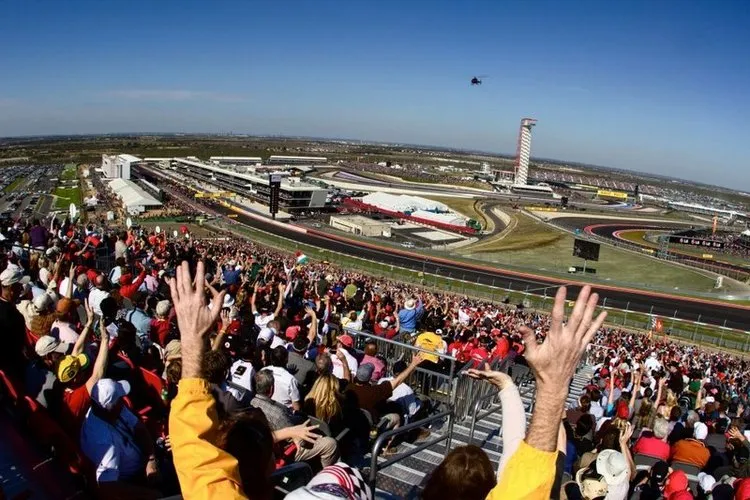
Formula 1 is booming, prices are skyrocketing as fans head to Austin for the 2025 United States Grand Prix to face one of the most expensive race weekends on the Formula 1 calendar, with accommodation and ticket costs now exceeding $1,200.
According to a new study by VegasInsider, Airbnb prices in Austin spike by 84% during the United States Grand Prix weekend, climbing from an average of $423 before race week to $780 from 17-19 October. When combined with a three-day wristband ticket, the total trip cost rises to $1,209.
Fans attending the full weekend will pay nearly three times more for accommodation than the week after the race, when nightly rates drop back to around $257.
The most expensive day to attend is Sunday’s race, with single-day tickets averaging $1,031 — more than double Saturday’s average of $482 and nearly six times Friday’s $172 entry cost. Between inflated accommodation rates and premium ticket pricing, total spending for a full race weekend could easily surpass $1,500.
Austin’s growing popularity as one of Formula 1’s premier U.S. destinations continues to drive record tourism demand. In 2021, United States Grand Prix visitors generated an estimated $400 million in direct local spending.
With both ticket and Airbnb prices peaking this October, attending the race has become one of Texas’s costliest sporting weekends, rivalling major football and music events. Welcome to Formula 1, America!
History of COTA on the Formula 1 calendar

When the United States Grand Prix returned to Formula 1 in 2012, the new Circuit of the Americas (COTA) in Austin became the sport’s first purpose-built American venue in decades. That debut race drew 117,429 fans on race day and around 265,000 across the weekend, instantly establishing COTA as a major player on the F1 calendar.
Financially, the event relied heavily on Texas’ Major Event Trust Fund, which contributed nearly $29 million in state support. Post-event reports showed the inaugural weekend generated about $34 million in direct hotel and tax revenue, slightly below expectations. Organisers did not disclose profit or loss, though officials said the race was a “positive net benefit” for the city despite high startup costs.
In 2013, total attendance dipped to around 250,000 as the novelty wore off. Numbers fell again to 237,000 in 2014 and 224,000 in 2015 after torrential rain hit the event. But by 2016, attendance recovered to 269,889, and in subsequent years COTA continued to grow into F1’s American home.
The biggest leaps came after Formula 1’s Netflix-era boom. The 2021 event drew an estimated 400,000 spectators over three days, followed by a record 440,000 in 2022. In 2023, attendance remained strong at 432,000, keeping Austin's United States Grand Prix ahead of both Miami and Las Vegas for total weekend turnout.
Rising U.S. TV audiences and profits

American television viewership mirrored that upward curve. NBC’s coverage of the 2013 U.S. GP averaged just over 1 million viewers — up 47% on the 2012 SPEED broadcast. By 2021, ESPN reported 1.2 million average viewers, while 2022 saw 1.3 million, peaking at 1.6 million on ABC. The 2024 race maintained that level, confirming steady domestic growth.
Globally, the Austin round remains one of F1’s highest-reach races outside Europe, consistently drawing more than 80 million international viewers each year since 2019.
While COTA’s exact profit figures are private, public filings and city reports indicate the race has evolved from subsidy-reliant to profitable. In 2012, the state’s trust fund underwrote costs, but by 2023, local reports estimated $900 million in total economic impact from the Grand Prix weekend. The race now generates more direct spending than any other annual sporting event in Texas, surpassing even NFL and major music festivals.
Organisers describe the United States Grand Prix as “sustainably profitable,” buoyed by full-capacity weekends, premium hospitality, and strong corporate demand. What began as a risky experiment in 2012 has since become a cornerstone of Formula 1’s American expansion — proof that Austin’s gamble on F1 has paid off in full.
Latest News
Loading

![Hamilton: I don’t know where [Horner] rumours have come from](https://r.testifier.nl/Acbs8526SDKI/resizing_type:fill/width:256/height:170/plain/https://s3-newsifier.ams3.digitaloceanspaces.com/grandprix247.com/images/2025-11/horner-vasseur-f1-villeneuve-ferrari.jpg@webp)