Analysis of 2025 Data Reveals Key Strategies for 2026 Canadian Grand Prix
F1 Grand PrixSunday, 11 January 2026 at 05:53

Circuit Gilles Villeneuve really shows any weak spots in modern Formula 1 cars and strategies.
Engineers looking at the 2025 data understand that getting the hang of the brakes and the kerbs in Montreal is the key to clinching the 2026 title.
January's silence in the factories betrays the anxiety building for the summer campaign. George Russell proved last season that survival often outweighs raw pace when the walls are close.
Teams currently finalizing their 2026 challengers must prioritize mechanical durability over theoretical downforce. Simulators in Brackley and Maranello are running non-stop to solve the puzzle of thermal degradation.
You can ignore the winter testing timesheets because they rarely translate to the stop-start madness of the Canadian Grand Prix. A team's real performance lies hidden in the data traces from the hairpin and the chicane.
High Stakes at Circuit Gilles Villeneuve in 2026
Russell's victory in 2025 showcased the value of patience on a track that punishes aggression. Most drivers pushed too hard last year and found the concrete barriers waiting for them. Circuit Gilles Villeneuve acts as a unique outlier because it combines street circuit hazards with permanent track speeds. Technical analysis of the Canadian GP confirmed that the stop-start nature of the layout creates a nightmare for braking systems. Drivers slam the pedal seven distinct times per lap, which generates immense heat in the calipers.
Managing this thermal energy determines the pecking order. Rotors glow white-hot and temperatures spike critically at the hairpin (Turn 10) where cars decelerate from over 300 km/h to under 60 km/h. Miss the braking point by a meter and your race ends in the run-off area. Surviving the distance requires a setup that balances cooling with aerodynamic efficiency. Opening brake ducts reduces heat but increases drag on the long straights.
Traction out of slow corners matters just as much as stopping power. Rear tires scream for mercy as drivers apply torque on the exit of the chicanes. Teams arriving in Montreal have to bring a suspension package that handles the kerbs without unsettling the chassis. Engineers often get caught out by the Wall of Champions at the final chicane where a single error in ride height calculation sends the car into the barrier.
F1 Trends and Betting Insights for Canadians
Betting patterns at licensed casinos have changed alongside the technical regulations in Formula 1. Fans are no longer just passive observers but active participants in the whole race weekend. Legal frameworks under Bill C-218 have empowered F1 fans to seek the highest payout online casinos in Canada trusted for placing race-day bets. Analyzing the odds has become as much a part of the pre-race ritual as checking the weather radar.
Data supports this massive cultural integration. Country data suggests that about 6 out of 10 Canadians now gamble frequently on their trusted platform of choice. Such engagement numbers explain why the sport is seeing an influx of analytical bettors who study tire degradation charts. According to data from last year, the net Canadian gambling revenue was projected to reach $15.59 billion by the end of 2025. Licensed platforms drive this growth by offering real-time prop bets on sector times and pit stop deltas.
User penetration in the licensed Canadian sports betting market hit 52.9% in 2025. More than half the audience is betting on outcomes, with odds showing confidence in upgrade packages. Bettors even look at winter testing rumors for early value, often moving away from favorites to try to gain better returns on reliability.
McLaren Internal Rivalry and Papaya Rules Dilemma
Lando Norris and Oscar Piastri form the most explosive and trusted driver pairing on the grid. The Papaya Rules controversy from 2025 highlighted the dangers of having two number-one drivers. Zak Brown faces a monumental task keeping his stars aligned when the visor goes down. "Papaya Rules" dictates that they can race but must not crash into each other.
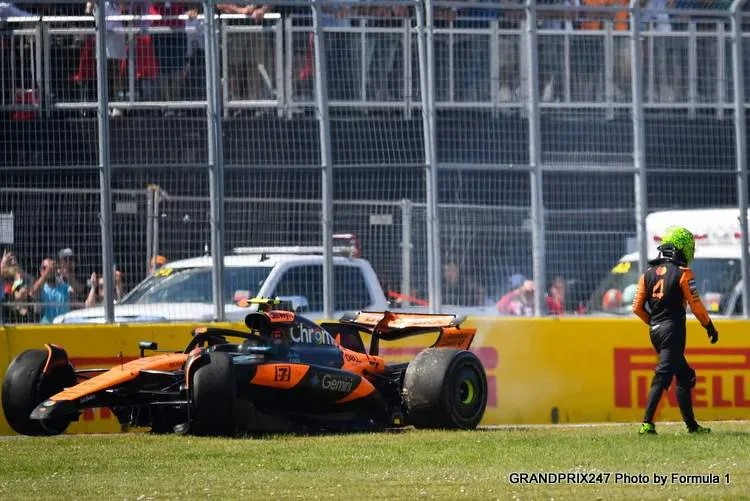
Ambiguity in that instruction nearly spelled disaster at the last Canadian Grand Prix. Norris and Piastri fought for the same piece of tarmac and allowed George Russell to slip through for the win. Hesitation costs race wins in such a tight field. Rivals like Red Bull and Mercedes operate with clearer hierarchies or more ruthless strategic calls.
Managing the egos in the Woking garage will be the central narrative of 2026. Can McLaren manage two alphas without handing the advantage to their competitors? If the team cannot establish clear engagement protocols before arriving in Montreal they will likely hand another victory to a more disciplined rival. Strategic clarity is the only way to convert raw pace into championship points.
Technical Evolution and Track Challenges for 2026
Suspension compliance dictates who survives the kerbs at turns three and four. Stiff setups required for ground-effect downforce often cause the car to bounce uncontrollably here. Red Bull struggled significantly with this in 2025 as their car had an immense aero load but could not ride the bumps effectively.
Ferrari capitalized on this weakness by bringing a softer mechanical platform. The Athletic technical reviews suggest that mechanical grip will again be the differentiator in 2026. Designing a suspension system that is compliant enough to absorb the kerb impact but stiff enough to maintain the aerodynamic seal is the primary winter challenge. Teams are currently running thousands of simulations to find this sweet spot.
Whoever solves the ride height equation in January will likely dominate the middle sector in June. Montreal ignores aerodynamic perfection if the mechanical grip is missing. Rain often throws strategies into chaos and safety cars bunch the field to test the nerves of every pit crew. 2026 promises to be a season where resilience counts for more than raw speed.

Latest News

Loading