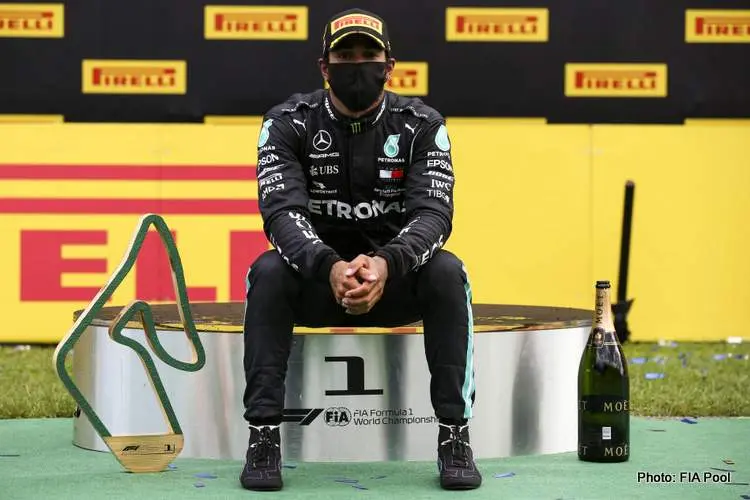
Lewis Hamilton secured his seventh Formula 1 world drivers' championship after winning the Turkish Grand Prix in Istanbul.
In 2017, Hamilton went vegan and has since used his platform to promote a number of environmental and animal rights concerns, including encouraging his fans to go vegan, ditch fur and boycott animal cruelty for entertainment.
Meat and Booze Free
Hamilton is committed to a lifestyle focused on plants and refuses to contaminate his body with any toxins, including booze. Lewis Hamilton explained how his life has improved from eating a plant-based diet, stressing how being vegan has changed his energy for the better. The Formula 1 driver said that while "being consistent" is best for your energy, you can often have "big oscillations and highs and lows in your energy levels."
The Edge of Veganism
Hamilton said he has two key reasons for vegan living: addressing animal rights and taking into account how his body is influenced by a plant-based diet. Traditionally, athletes assumed that the best way to fulfil their daily protein needs was through the intake of beef, but this has changed with increased knowledge of nutrition. Many foods that are based on plants are actually richer in protein than meat.
Plant-Based Proteins Have More Protein
There are 7 grams of protein in one ounce of meat protein, which is equivalent to several sources dependent on vegetables. In a 2019 study,' Plant-Based Diets for Cardiovascular Protection and Success in Endurance Sports,' it was confirmed that a plant-based dairy-free diet can minimize the elevated cardiovascular risks posed by endurance athletes, such as atherosclerosis (plaque building up within arteries) and myocardial injury (decreased blood flow to the heart). Check this article out for more information on vegan supplements.
Benefits of Veganism
Researchers at the Doctors Council for Conscientious Medicine have also indicated that due to improved cardiovascular wellbeing, lowered blood pressure and cholesterol and weight loss, a vegan diet can increase athletic performance.
Patrik Baboumian, an Armenian-German "strongest man in the world" and former body builder, attributed his success in bodybuilding to a vegan lifestyle. My recovery time was so much easier," he said, "so I could practice more.
Harvard Medical School research suggests that the antioxidant and anti-inflammatory effects of plants tend to shorten recovery periods, minimize delayed muscle soreness, reduce joint pain, and allow for faster injury healing. Plant-based diets also increase the viscosity of the blood, which helps to distribute oxygen effectively throughout the body, facilitating healing. Both of these considerations will also lead to career longevity.
In the Netflix series "The Game Changers" created by Arnold Schwarzenegger, which uses first-hand testimonials from professional athletes to illustrate how a vegan diet boosts athletic success, the plant-based shift in sports culture is clear.
When she was diagnosed with an autoimmune disease called Sjögren's syndrome that caused her to suffer from joint and muscle pain, Venus Williams decided to switch to a raw, vegan diet. See this page for more on veganism and its benefits.
Williams announced in an interview with Health magazine that her current lifestyle was life-changing, helping her to return to tennis. She said, "I feel like I am doing the right thing for me.”
Latest News

Loading