What caused George Russell's Canadian Grand Prix DNF? Mercedes explains
F1 NewsFriday, 29 May 2026 at 11:58
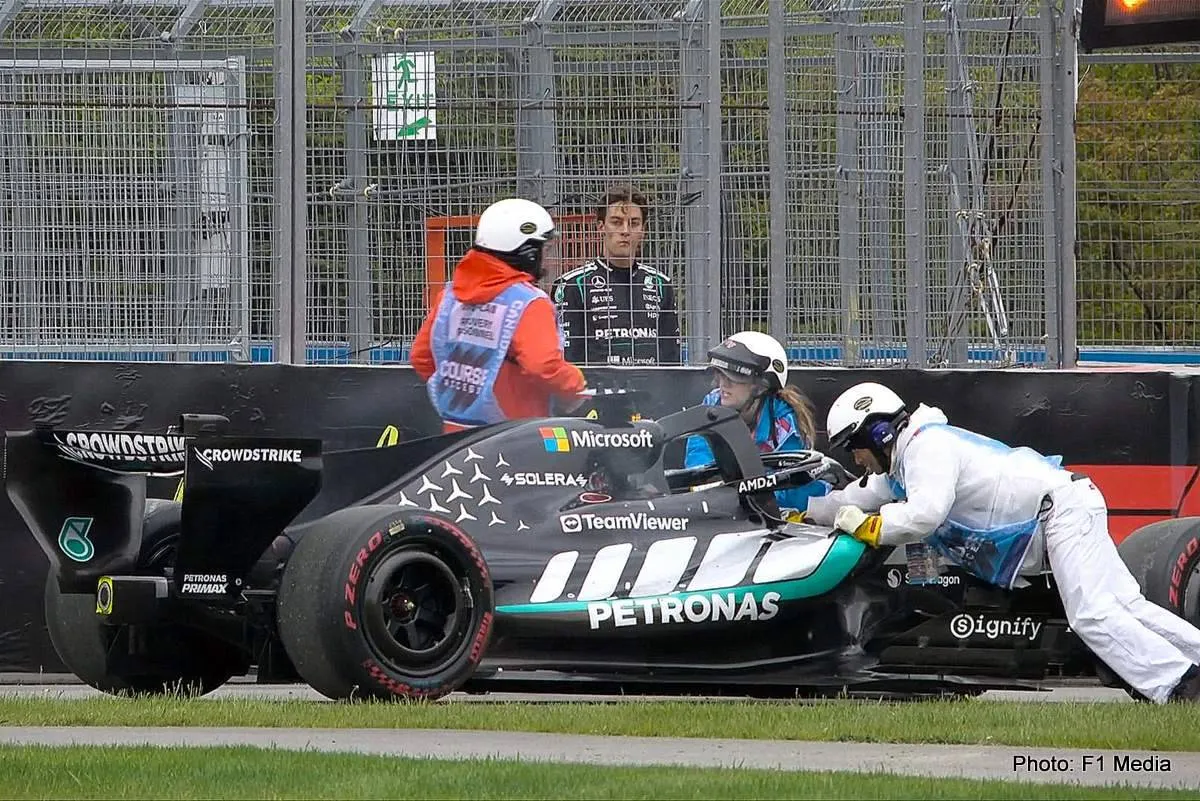
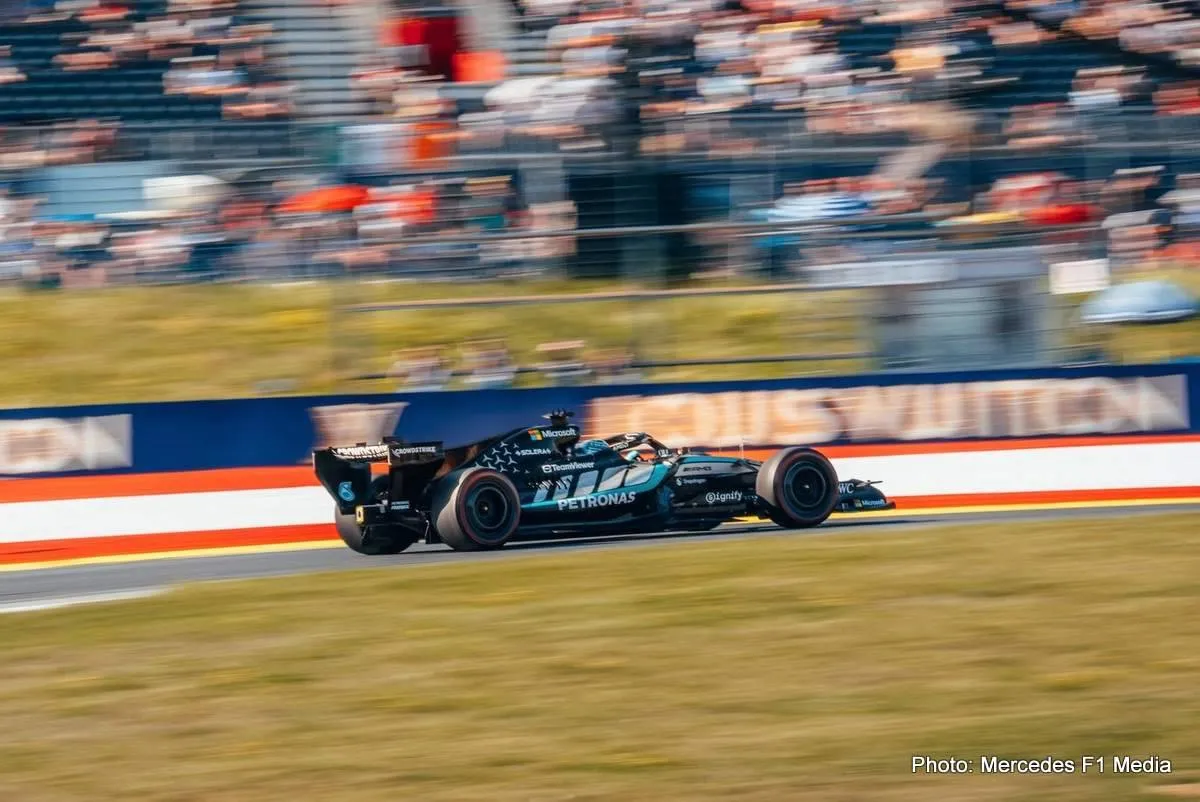
Mercedes Technical Director James Allison reflected on his team's Canadian Grand Prix while also revealing why George Russell's W17 failed on Lap 30 of the race.
Mercedes came to Canada looking to restamp their authority over their rivals with the first major upgrade package for their 2026 Formula 1 car, the W17. Ferrari, Red Bull Racing, and McLaren updated their cars in Miami, the latter also adding more parts in Montreal.
Mercedes seemed to succeed as their advantage over their rivals grew with the new package, with Russell and Kimi Antonelli locking out the front rows on the starting grids of the Sprint Race and the Grand Prix.
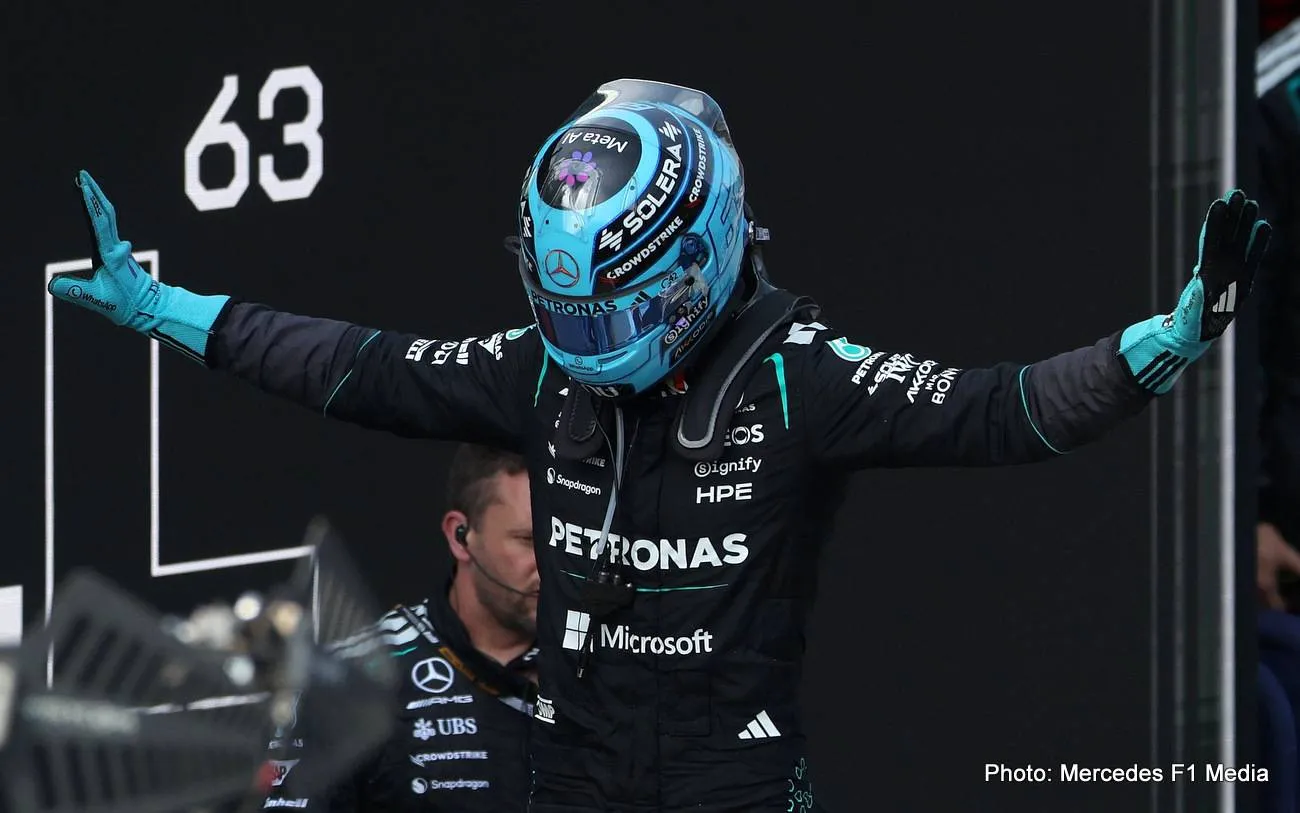
But despite their improved performance, Mercedes were hit by reliability issues with Russell's costly retirement during the race while fighting for the lead with Antonelli.
In a post-race Mercedes debrief, Allison said: “It was a big weekend for us—key because it was the weekend where we introduced our first major upgrade for the year, and we were looking for it to be strong.
“It was, but a weekend that was otherwise extremely good from a performance point of view was marred by the disappointment we all feel for letting George down with the reliability of the car," the Briton lamented.
Delving further into the issue that caused Russell's DNF, Allison explained: “It was an engine kill that was caused by a failure in the battery, which just suffered a catastrophic failure a third of the way into the race and brought George’s race to an end there.
“We can see enough at the end of the race that the battery was fairly unhappy, some heat damage there, and we’ll have to figure out in the coming days and weeks exactly what caused that and put it right," the Mercedes tech boss concluded.
Russell, following his retirement in Canada, is 43 points behind Antonelli in the 2026 F1 Drivers' Championship.
Latest News



Loading