Source: Bahrain Grand Prix won't happen on set date, maybe not at all this year
F1 NewsTuesday, 10 March 2026 at 14:09
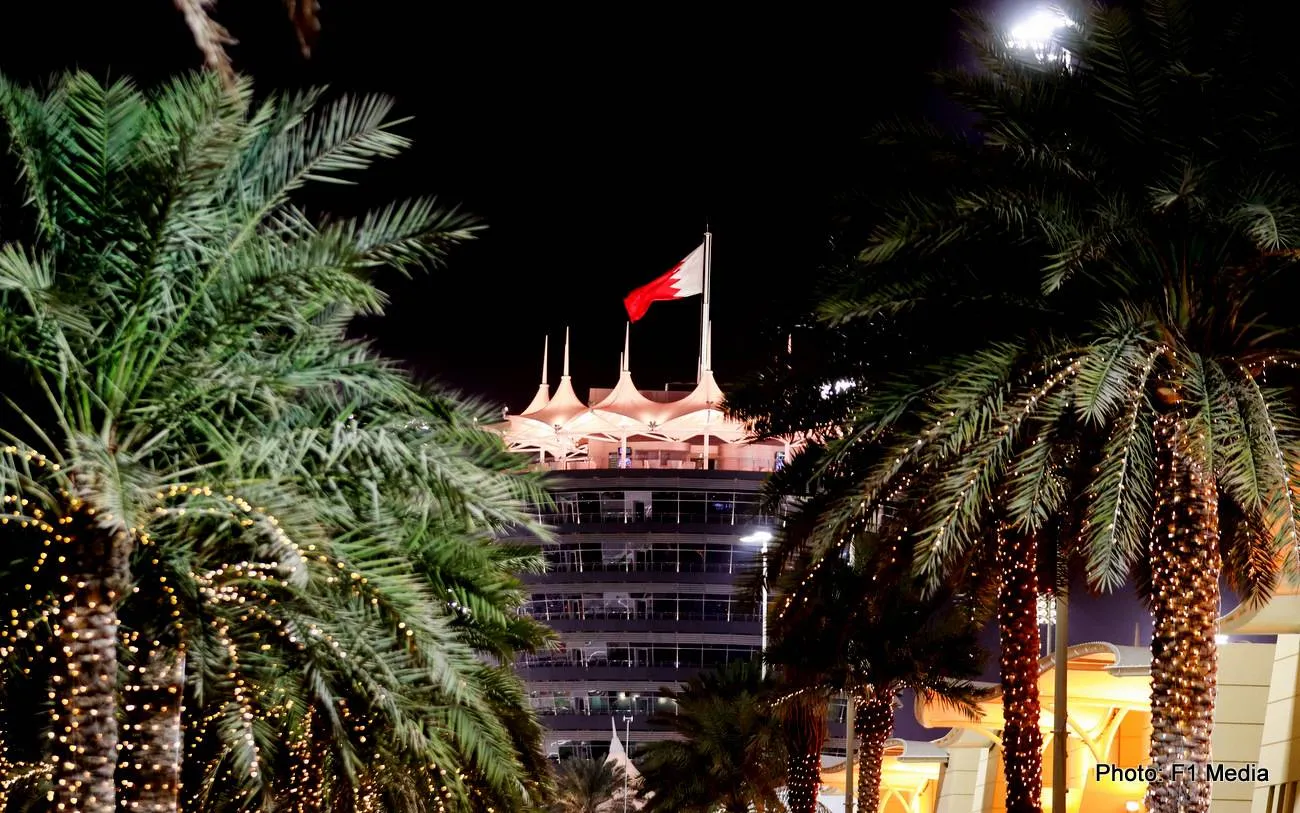
The Formula 1 Bahrain Grand Prix, scheduled for April 10 to 12 won't happen as the expanding USA-Israel-Iran war spreads across the Gulf and places Bahrain under direct attack.
A source close to the Bahrain International Circuit in Sakhir, who insisted not to be named, as news out of the region is being strictly curtailed by the local authorities. Nevertheless, the person confirmed that the Bahrain Grand Prix won't happen on 10-12 April.
The source cited infrastructure chaos, travel to the Sakhir race for key personnel impacted, temporary recruitment and staff appointments for the Grand Prix weekend at Sakhir, freight stuck in the straits of Hormuz blockade resulting in massive delivery backlog, while many of the local senior management and Sheikhs involved with the race have gone underground for safety reasons.
However, the person could not shed light on whether the Saudi Grand Prix, which is scheduled to take place a week later. But our source was adamant that the Bahrain Grand Prix wouldn't happen.
Going as far as saying that nothing is certain except that the Gulf countries are shocked by what has transpired, and predicts a massive change in engagement with the West in future. Describing a small country, frightened and shocked beyond belief. Their worst nightmare is unfolding. [Be safe, my friend.]
Reports from several reputable media outlets on both sides of the war narrative suggest that our source in Bahrain will be proven correct in the coming days.
While Formula 1 has not yet cancelled the event, multiple reports from major international outlets and sources inside the paddock indicate the race may not happen on its scheduled date and could disappear from the 2026 calendar altogether.
The conflict began on February 28 when coordinated strikes by the unprovoked United States and Israel targeted Iranian military and nuclear infrastructure. Iran responded with waves of missiles and drones against Israeli and American assets across the region, including Bahrain, which hosts the United States Navy Fifth Fleet headquarters in Manama.
Several attacks have struck critical locations across Bahrain

Since the war began, Bahrain’s air defence systems have intercepted more than 100 missiles and around 170 drones aimed at the country. A small number have penetrated those defences and struck energy facilities, military installations and residential areas.
Although the level of destruction has remained limited, the conflict has created serious concerns for large international events scheduled in the country over the coming weeks. Formula 1 now finds itself directly affected by the growing instability.
Over the past week, several attacks have struck critical locations across Bahrain. The most significant occurred on March 9 when a Shahed drone hit the BAPCO Energies refinery complex on Sitra Island, the country’s primary oil processing facility.
Large fires broke out and thick smoke was visible across the industrial area as emergency services moved to contain the damage. State-owned Bapco Energies later declared force majeure on shipments and contracts as operations were disrupted.
The same strike also hit nearby residential areas on Sitra Island, located close to the refinery complex. Bahrain’s Ministry of Health confirmed that 32 civilians were injured, including 4 seriously. Several of the injured were young children, with local hospitals treating victims ranging from infants to adults. The attack highlighted the risks posed by strikes targeting strategic infrastructure located near populated districts.
Another incident followed on March 10 when a residential building in central Manama was struck. Authorities confirmed that a 29-year-old Bahraini woman was killed and 8 people were injured. The attack intensified concerns that the conflict was expanding beyond military targets into civilian areas.
Proximity to Formula 1 venue raises security concerns

Earlier, on March 8, a drone or missile strike damaged one of Bahrain’s desalination facilities, part of the country’s critical water infrastructure. Although officials confirmed that water supplies remained operational, the strike marked a significant escalation toward civilian utilities.
Military targets in Bahrain have also come under repeated attack since the conflict began. Iran has targeted the United States Navy Fifth Fleet headquarters located in Juffair, an area of Manama that serves as the central hub for American naval operations in the Gulf.
Missile and drone attempts have caused limited structural damage to communications equipment and nearby facilities according to open source reporting, although the base remains operational.
The naval installation sits roughly 32 kilometres from the Bahrain International Circuit in Sakhir, where the Formula 1 race is scheduled to take place next month. The proximity of active military targets to the venue has raised serious questions about the viability of hosting a global sporting event involving thousands of team personnel, media and spectators.
Formula 1 race logistics also complicate the situation. Equipment must be transported weeks in advance by sea and air, meaning decisions must be taken well before the race weekend itself. Ongoing disruptions to regional airspace, combined with flight cancellations and heightened security alerts across the Gulf, have created uncertainty for freight and personnel travel.
The sport has already experienced the first direct disruption when a planned Pirelli wet weather tyre development test at the Bahrain International Circuit was cancelled after the security situation deteriorated. Personnel were evacuated as a precaution as missile alerts continued across the country.
Formula 1 calendar conundrum

Formula 1 and the FIA are monitoring the situation closely but have not yet issued a formal decision regarding the race. The issue has been widely discussed during the Australian Grand Prix weekend, where Formula 1 chief executive Stefano Domenicali held meetings with teams and senior FIA officials.
A decision is expected before the middle of March because teams must begin preparing freight shipments for the event. Without a clear timeline for security improvements inside Bahrain, many paddock figures believe cancellation is now the most likely outcome.
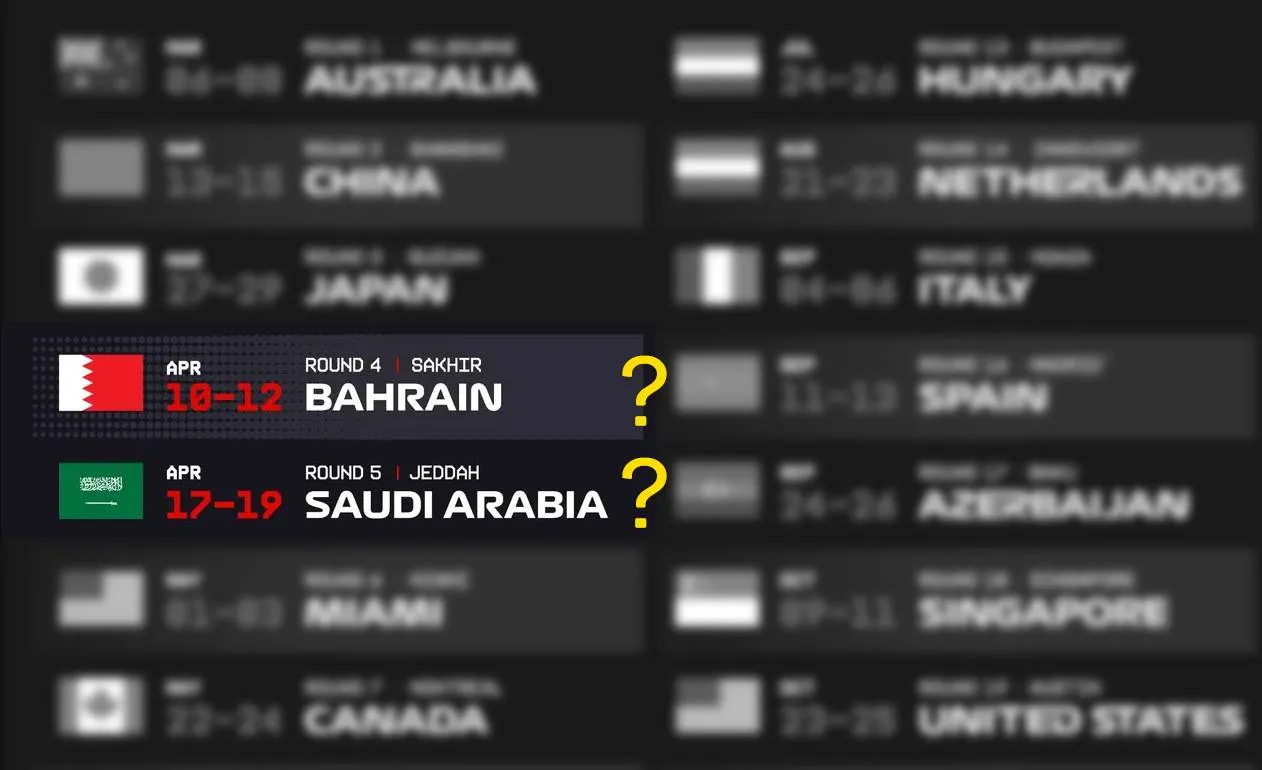
Several international mainstream outlets, including BBC, Reuters and Sky Sports, report that the Bahrain race is considered highly unlikely to proceed as planned. The Saudi Arabian Grand Prix, scheduled for April 17 to 19 in Jeddah, is also under review because of the regional security situation.
If Bahrain is removed from the schedule the 2026 Formula 1 calendar would drop from 24 races to 23. If Saudi Arabia is also cancelled, the championship would shrink to 22 races.
At present, Formula 1 has no replacement races prepared to fill the potential gaps. Calendar congestion and logistical challenges make it extremely difficult to add alternative venues at short notice. Should both Middle East rounds disappear, the championship could face a lengthy break before the European season begins.
For now, the Bahrain Grand Prix remains officially listed on the calendar. However, with missiles striking infrastructure across the country and air defence sirens regularly sounding across Manama, the likelihood of Formula 1 returning to Sakhir next month appears increasingly remote. And possibly not at all this year.
Latest News








Loading

