Formula 1: Bahrain and Saudi races unlikely to happen as USA Israel Iran war hits hard
F1 NewsTuesday, 03 March 2026 at 13:02
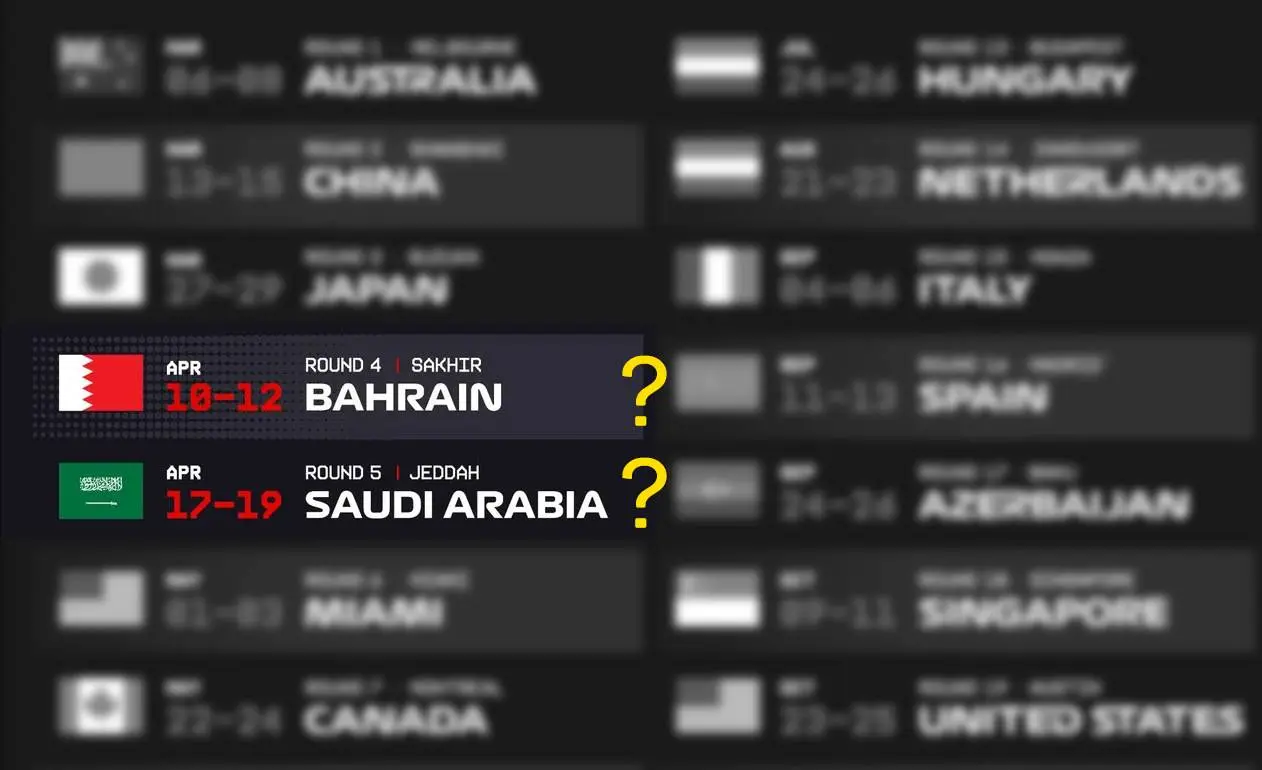
Formula 1 is closely monitoring four Middle East Grands Prix as tensions between the United States, Israel and Iran intensify, with the Bahrain and Saudi Arabian rounds emerging as the most immediate concerns on the 2026 calendar.
According to multiple reports in early March 2026, the situation is being treated internally as a live operational issue rather than routine event planning, with safety, insurance and logistics all under review.
The Bahrain Grand Prix on 12 April is considered highly exposed due to its proximity to the conflict zone. Pirelli has already cancelled a planned tyre test in the country, while reports indicate Iranian-linked strikes occurred near areas used by potential paddock personnel.
One week later, the Saudi Arabian Grand Prix on 19 April is also under scrutiny, given its regional location and immediate scheduling after Bahrain.
The Qatar Grand Prix in November and the season-ending Abu Dhabi Grand Prix in December are not under immediate threat, but could be impacted if instability persists long-term.
Fédération Internationale de l'Automobile and Formula 1 are understood to be actively monitoring the situation, with the safety and well-being of team personnel the primary consideration.
At present, the upcoming races in Australia, China and Japan are not considered at immediate risk.
However, the broader impact of the conflict is already being felt. Airspace closures and maritime route disruption are affecting both personnel travel and freight movements. Teams have begun rerouting flights to avoid certain corridors, leading to longer transit times and increased costs.
Active monitoring and contingency planning

Sources indicate that contingency planning is underway. Circuits such as Emilia Romagna Grand Prix at Imola have reportedly been discussed as potential replacement venues should Middle Eastern rounds be deemed unsafe.
No cancellations have been announced. Bahrain and Saudi Arabia remain on the calendar. But insiders describe the situation as fluid.
Formula 1’s operational model depends on the seamless movement of more than 2,000 personnel and hundreds of tonnes of freight between races. Even in the absence of direct security threats at circuits, government-issued do-not-travel advisories could trigger insurance complications for teams, suppliers and broadcasters.
Should advisories remain in place, hosting events becomes legally and commercially complex.
Teams also maintain semi-permanent garage installations and freight bases in Bahrain to support the Gulf leg of the calendar. If races are postponed or cancelled, that equipment would need to be repatriated or redirected, creating further logistical strain.
For now, the championship continues as scheduled. The 2026 season begins in Melbourne without an immediate threat.
But with Bahrain and Saudi Arabia just weeks away, Formula 1 faces a period where geopolitical developments may dictate the structure of its calendar as much as sporting performance.
The coming weeks will determine whether the Middle East rounds proceed as planned or force the first major reshuffle of the 2026 season.

Latest News








Loading