Outside Line: Three-Car, One-Car and Customer Teams Part I
F1 NewsSaturday, 22 September 2018 at 16:36
An idea that is once again being bandied about with the recent turnover in young drivers, three-car teams are once again in the news. Are they a viable solution, or a pipe dream? To find an answer, first we must go back to F1's early days…
78 years into Formula 1's existence, right now might be the worst time
ever to be a young driver. Both the amount of competition, and the number of seats themselves, means only a select few ever actually get to take part in a grand prix, and that's as likely to be down to one's financial backing as it is their outright performance.
Even when you get there, you can do most everything right and still lose your seat if your team's finances take a nose-dive, or an even younger, sexier driver comes along.
Already this year, we've seen Pascal Wehrlein and Stoffel Vandoorne shown the door, while Esteban Ocon looks likely to follow them – by themselves, any one of those names exiting the sport is a great shame, together it's a borderline tragedy.
If F1's future is to be brighter than its present, this is a situation that can't be allowed to continue. Indeed, Mercedes boss Toto Wolff's suggestion of three-car teams has already gained some traction, and while such an idea still needs honing, it at least has historical evidence to back it up, as that, and other possible practices such as customer- and one-car teams are as old as the sport itself.
When the inaugural Formula 1 "World Championship of Drivers" kicked-off at Silverstone in 1950, Alfa Romeo ran four works cars, Talbot ran four works and one customer car, while Maserati was represented by one works car and six customers.
Such practices continued largely unabated over the next two decades, although two-car teams were increasingly the norm.
It wasn't until the eighties that the definition of a "team" as we know it today began to take shape, with 1981's Concorde Agreement prohibiting the use of customer cars, Renault making the last three-car entry at the 1985 German Grand Prix (teams were limited to a maximum of two cars from 1986 onwards), and Simtek the last single-car entry at the 1994 Canadian GP.
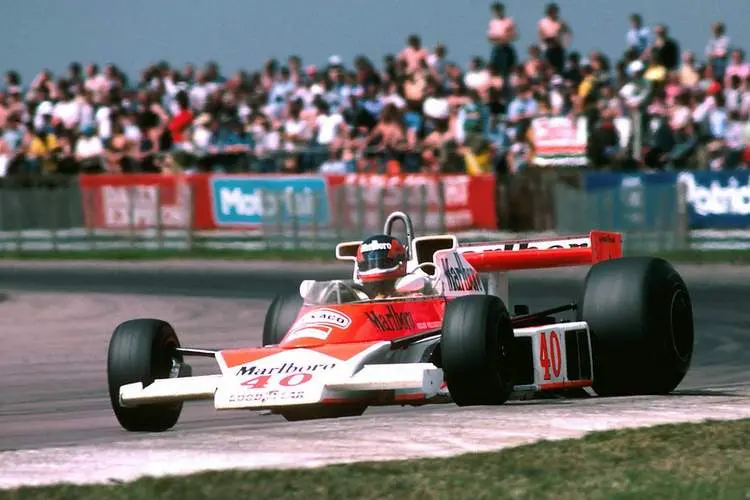
Over that time, some very well-known names got their starts in such teams, including Pedro Rodriguez (driving a third works Lotus at the 1963 US and Mexican Grands Prix), Mario Andretti (1968 Italian GP, in a third Lotus), Ronnie Peterson (as Colin Crabbe Racing's sole entry for 1970), Jody Scheckter (1972 US GP, in a third McLaren), James Hunt (Hesketh's only driver for 1973), Gilles Villeneuve (pictured above at 1977 British GP, also a third McLaren) and Rene Arnoux (sole driver for Martini in 1979).
While it's impossible to say how those drivers would've turned out had they not
Of course, to say the current state of F1 is different to that of the sixties and seventies would be a bigger understatement than saying Lewis Hamilton has a few small tattoos, but at least illustrates why increasing the opportunities for young drivers is so important. Now, let's figure out how we can do it.
https://www.grandprix247.com/2018/09/22/outside-line-three-car-one-car-and-customer-teams-part-ii/
Latest News








Loading